
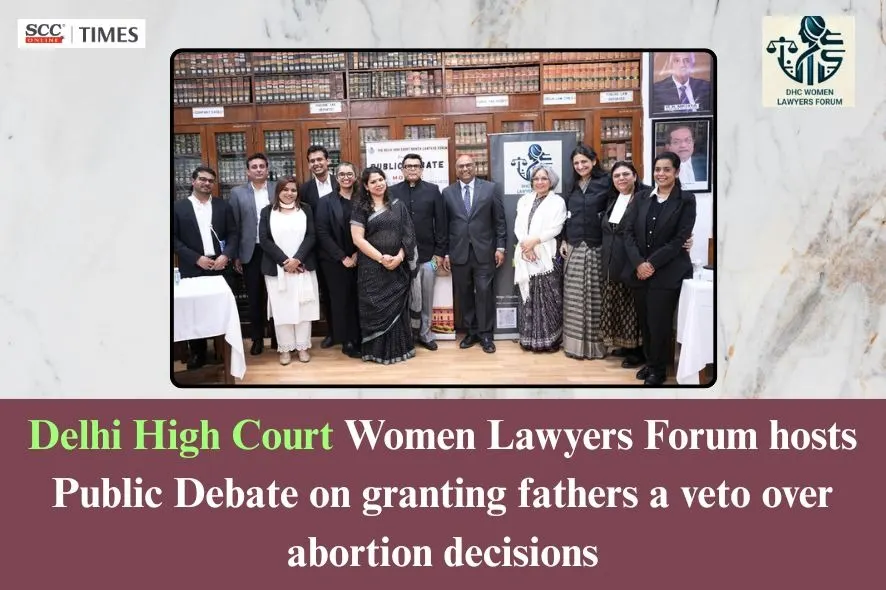
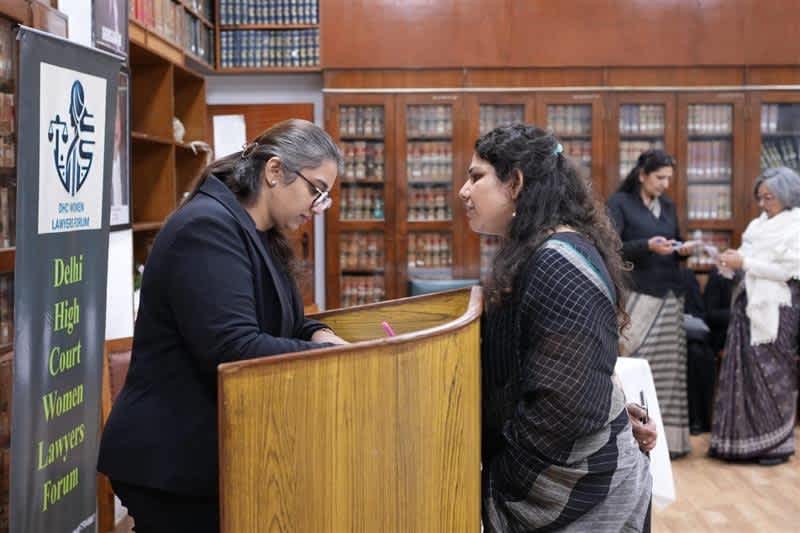
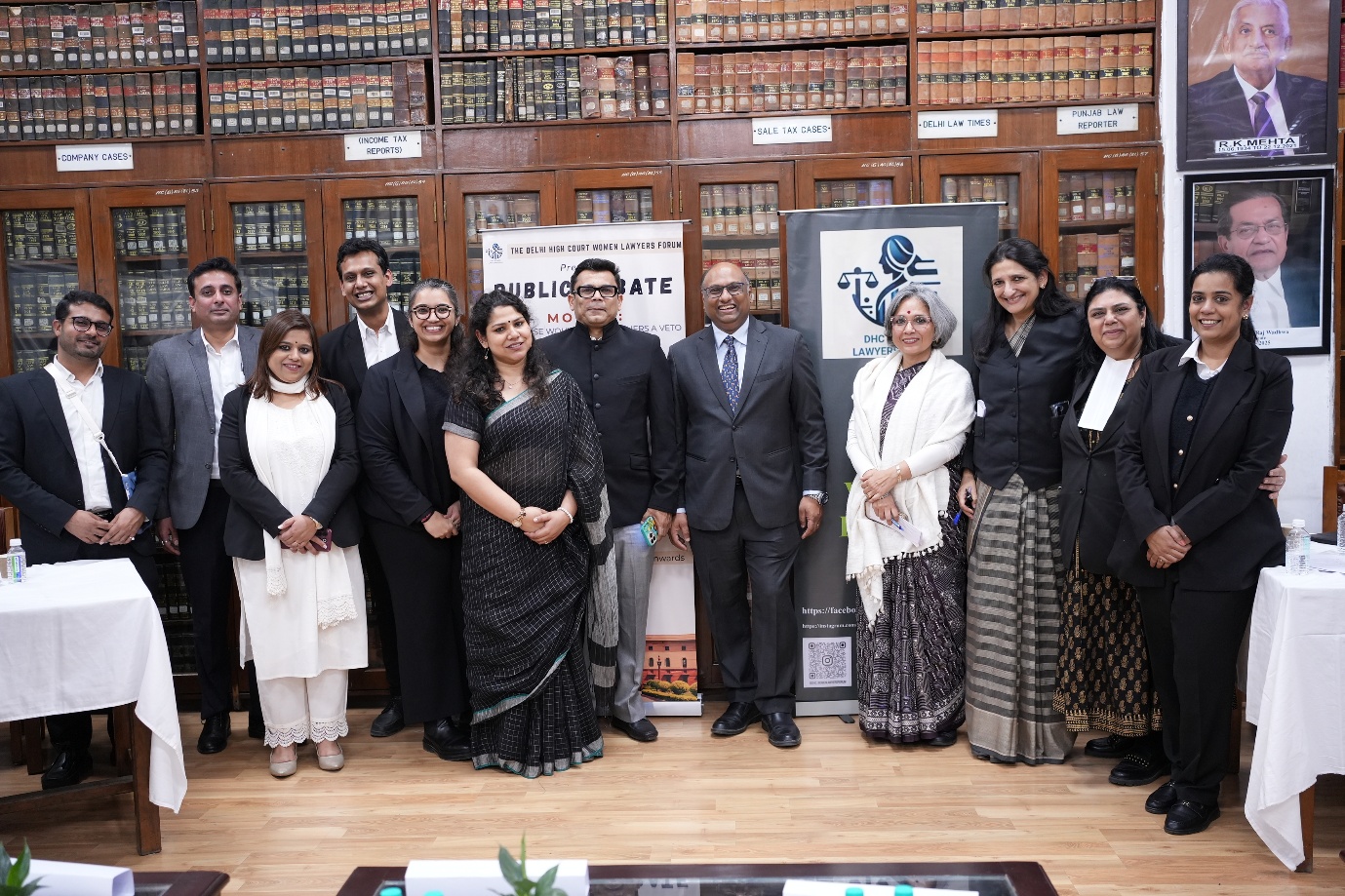
The Delhi High Court Women Lawyers Forum organised a public debate on the motion “This House Would Grant Fathers a Veto Over Abortion Decisions” on 13-02-2026 at the Bar Room No. 18, Old Building, Delhi High Court. The event was organised by Advocates Abiha Zaidi, Suriti Chowdhary, and Meenal Duggal, and it witnessed participation from senior advocates, young practitioners, members of the judiciary, and law students.
The initiative was conceived as part of a larger effort to revive structured, informed, and respectful public discourse within the legal community. In an age marked by rapid digital communication, artificial intelligence, and the proliferation of misinformation, the forum sought to reaffirm the importance of in-person deliberation and reasoned engagement.
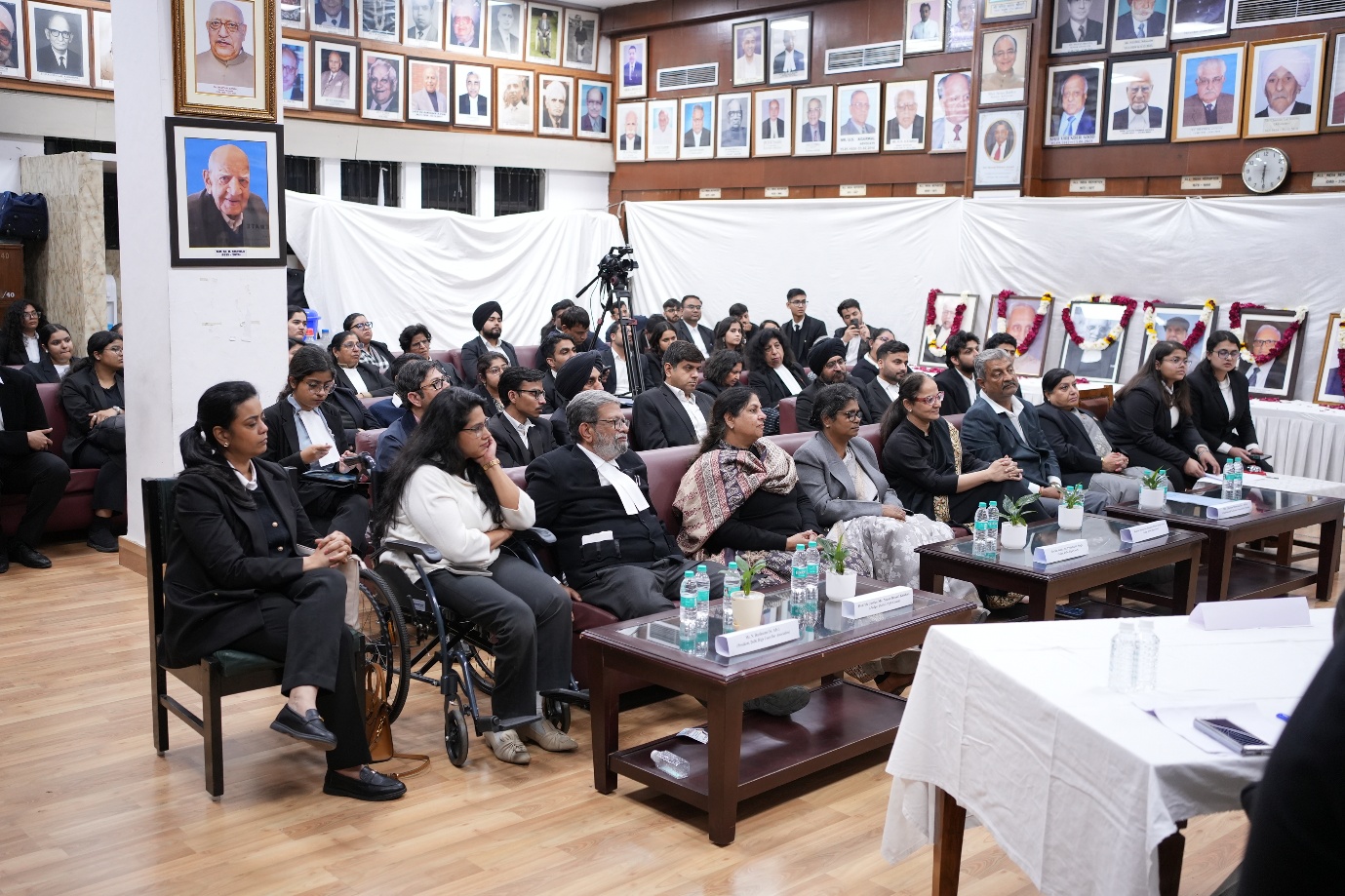
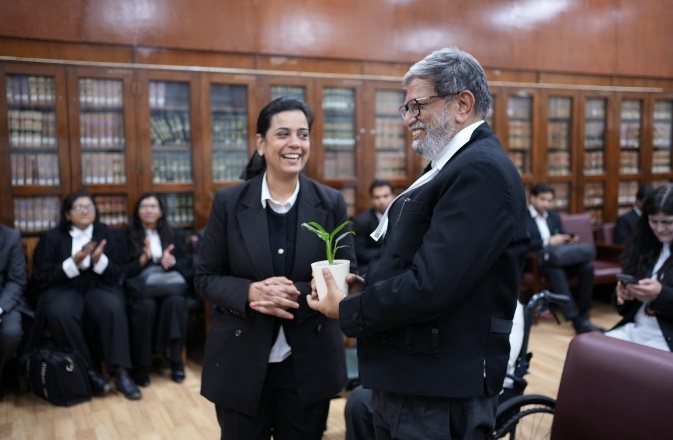
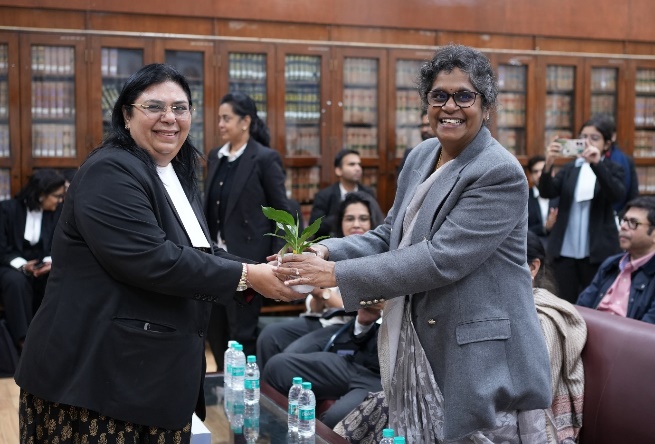
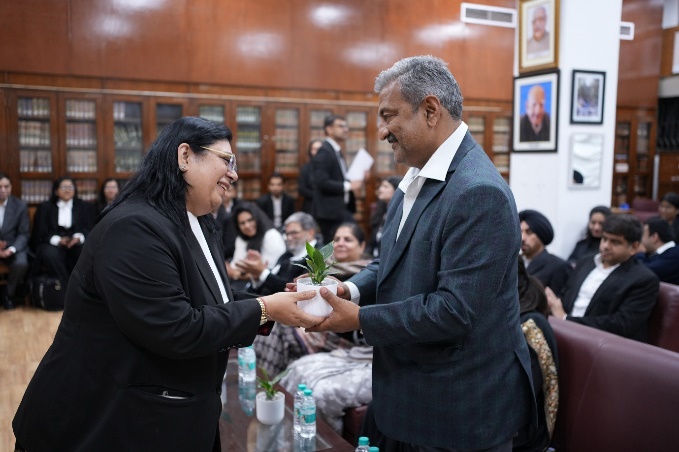
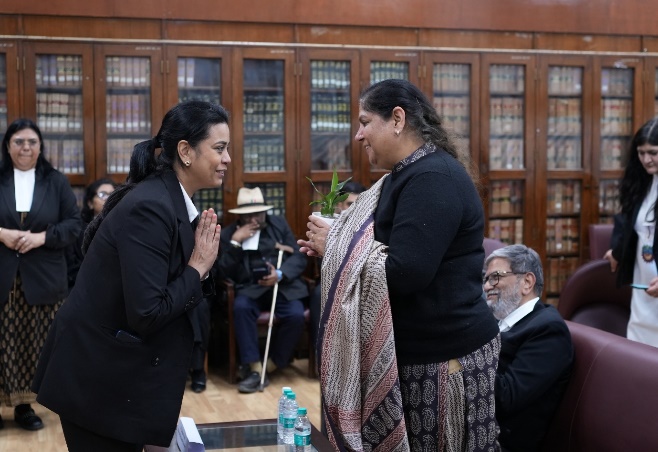
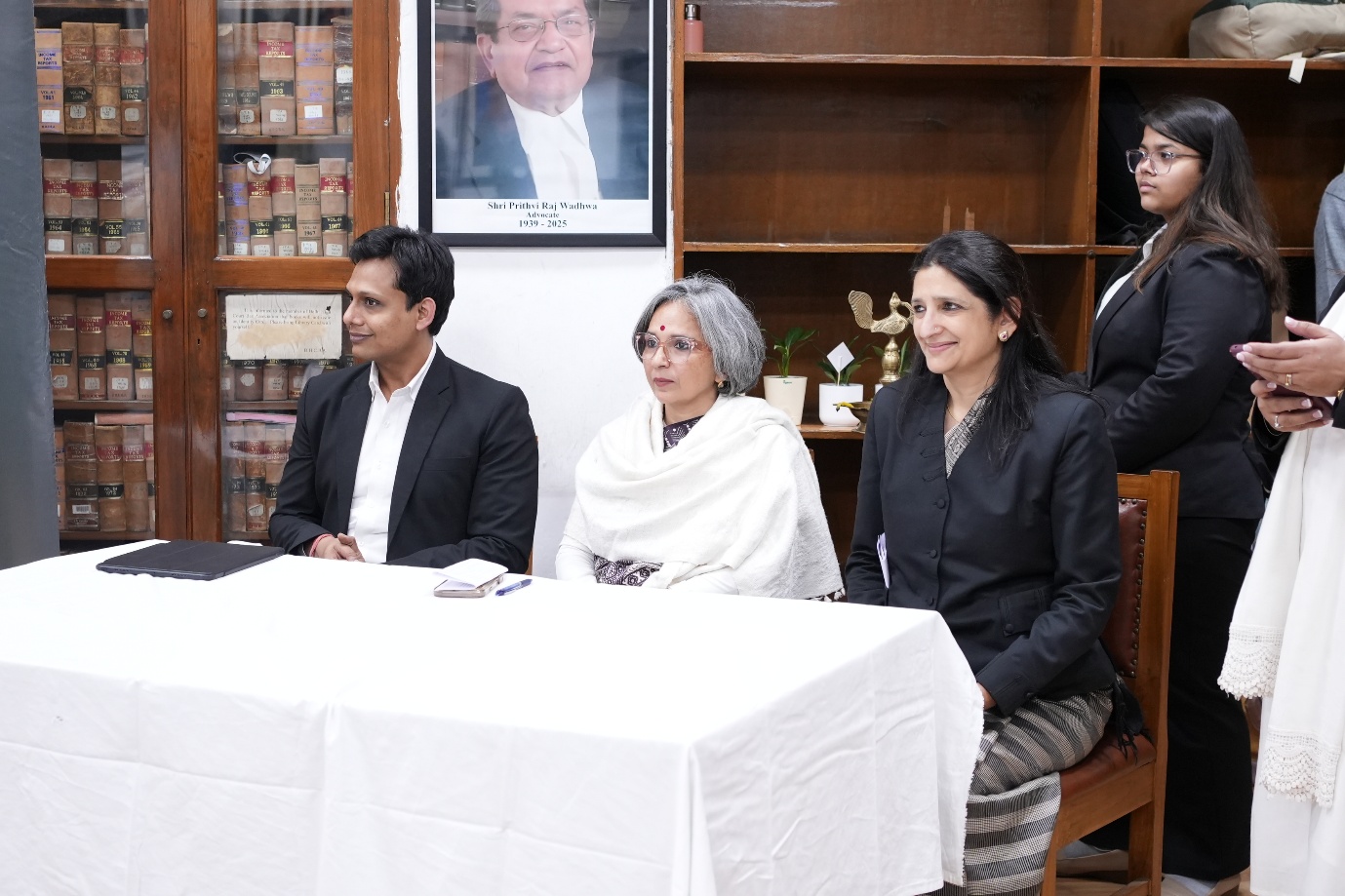
The formal proceedings commenced with felicitation of distinguished members of the judiciary and the Bar, including Justice Pratibha Singh, Justice Neena Bansal, Justice Manmeet Pritam Singh Arora, Senior Advocate Chetan Sharma, ASG High Court of Delhi and Senior Advocate Hariharan N, President Delhi High Court Bar Association (DHCBA). Their presence underscored the significance of the initiative and reflected the continued engagement of senior members of the profession in nurturing public deliberation.
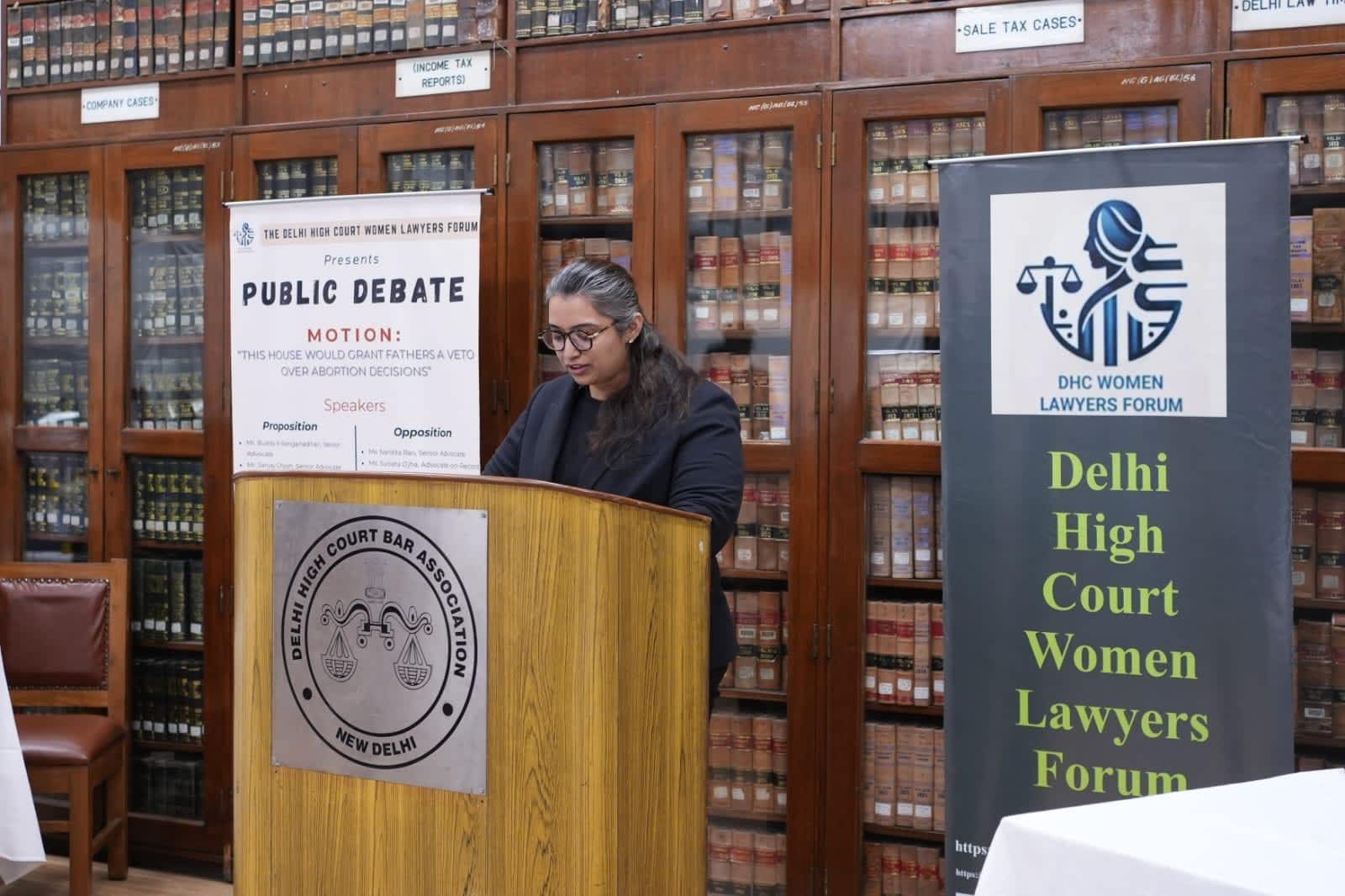
The moderator, Ms. Suriti Chowdhary, kickstarted the debate by remarking:
“At a time when conversations are often reduced to headlines and hashtags, this platform is an attempt to bring back something very important. It is important to bring back thoughtful face-to-face dialogue where people listen before responding and reflect before reacting.”
In their inaugural remarks, the dignitaries emphasised the contrast between impulsive expression on digital platforms and thoughtful legal reasoning developed through debate. The addresses highlighted debating as a foundational exercise in legal education and advocacy, essential for cultivating analytical clarity, ethical reasoning, and professional discipline.
DEBATE OVERVIEW
The debate was conducted in the Asian Parliamentary format, wherein each speaker was allotted 5 minutes to present their arguments.
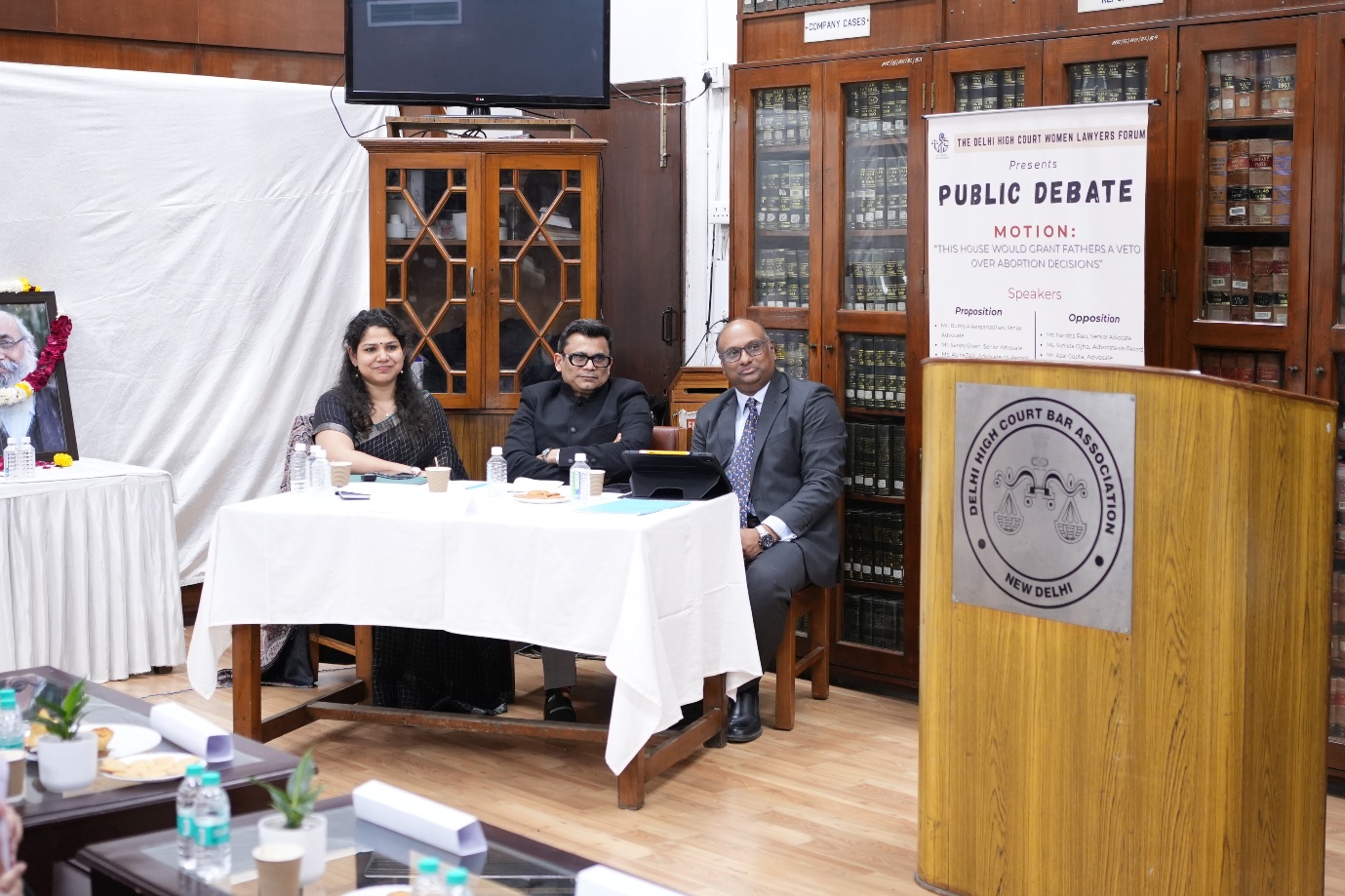
The Proposition team comprised of Mr. Buddy A. Ranganadhan, Senior Advocate; Mr. Sanjoy Ghose, Senior Advocate; and Ms. Abiha Zaidi, Advocate-on-Record. The Opposition team consisted of Ms. Nandita Rao, Senior Advocate; Ms. Sunieta Ojha, Advocate-on-Record; and Mr. Apar Gupta, Advocate.
The Motion
The motion under consideration, of granting fathers a veto over abortion decisions, presented a complex intersection of constitutional rights, personal autonomy, family relationships, and public policy. The subject was deliberately chosen for its unconventional and challenging nature, encouraging participants to engage with competing legal, ethical, and social considerations.
The debate unfolded against the broader backdrop of evolving jurisprudence on reproductive rights, privacy, gender equality, and state responsibility.
Case of the Proposition:
The Proposition sought to situate its arguments within the framework of consensual relationships and shared moral responsibility. The team contended that when individuals engage in consensual reproductive activity, they create mutual emotional and ethical stakes that should be recognised in decision-making processes.
It was argued that reproductive choices, while deeply personal, also carry implications for both prospective parents. The Proposition emphasised that its case was confined to limited circumstances, including consensual relationships, identifiable parenthood, absence of coercion, and lack of medical risk to the woman.
The proposed “veto” was presented as a qualified and conditional mechanism, intended not as an instrument of control, but as a means of acknowledging paternal involvement and emotional investment. The speakers clarified that their position did not seek to undermine bodily autonomy or advance pro-life ideology, but rather advocated consultative participation in exceptional cases.
Linking their arguments to broader notions of equality in partnerships, the Proposition submitted that shared responsibilities in parenting and domestic life should extend to participation in major reproductive decisions. The team further argued that recognising paternal interests was consistent with evolving conceptions of equal partnership and responsible fatherhood.
Case of the Opposition:
The Opposition grounded its submissions in constitutional principles, statutory frameworks, and historical experience. Central to their case was the assertion that reproductive autonomy forms an integral part of personal liberty, dignity, and privacy.
Relying on constitutional jurisprudence and legislative policy, the speakers emphasised that decisions relating to pregnancy directly affect a woman’s physical and mental health and therefore warrant primary decisional authority. The unique biological, emotional, and social burdens associated with pregnancy were highlighted as justifying this legal position.
The Opposition also referred to historical practices of familial and societal control over women’s reproductive choices, including sex-selective abortions and coercive decision-making. These experiences were cited as cautionary examples of how veto-like powers had previously operated to the detriment of women’s rights.
From a public policy perspective, the team underscored the prevalence of unintended pregnancies, particularly among vulnerable populations, and pointed to systemic delays in legal processes. It was argued that introducing an additional layer of consent or litigation would disproportionately affect women from rural and economically disadvantaged backgrounds and impede timely access to healthcare.
The speakers maintained that the existing legal framework already reflects a calibrated balance between autonomy, medical oversight, and social considerations. Introducing a paternal veto, it was submitted, would disturb this equilibrium and weaken established protections.
The Opposition also addressed the semantic distinction between “veto” and “having a say”, contending that changes in terminology could not neutralise the substantive imbalance inherent in granting overriding authority to one party.
Audience Participation and Deliberation:
Interactive elements, including a show of hands and a QR-code-based secret ballot, were incorporated to encourage audience engagement. These mechanisms enabled participants to reflect on the arguments presented and register their views anonymously.
The audience response reflected a measurable shift during the course of the debate. At the beginning of the session, the Proposition received limited support. By the conclusion of the debate, the anonymous ballot indicated that approximately 36.5% of participants favoured the case presented by the Proposition, while the Opposition secured a majority. This shift reflected the impact of structured submissions and sustained engagement.
The observations of the judges and the responses of the audience contributed to a dynamic and engaged atmosphere throughout the event. The session was marked by active participation, thoughtful exchanges, and moments of measured humour. The discussions extended beyond the formal speeches, encouraging continued reflection and interaction among participants. The overall engagement underscored the potential of such initiatives to strengthen and promote a sustained debating culture within the court.
Concluding the debate, a vote of thanks was delivered by Advocate Suriti Chowdhary, acknowledging the speakers, dignitaries, organisers, and participants for their contributions.