
Bombay High Court: In a case dealing with the issue whether the prosecution had successfully proved the foundational elements of demand, acceptance and recovery of illegal gratification under the Prevention of Corruption Act, 1988 (‘PC Act’), along with conspiracy under Section 120-B Penal Code, 1860 (‘IPC’), a Single Judge Bench of Nivedita P. Mehta, J., held that the prosecution had failed to build a chain of circumstances to establish the essential ingredients for the charges and each link in that chain was weakened by procedural irregularity, documentary incompleteness, or forensic insufficiency. Consequently, the Court set aside the conviction and sentence imposed by the Trial Court and acquitted the accused officials of all charges.
Background:
The complainant was engaged in an unlicensed business of selling food items to passengers on trains between Badnera and Wardha Railway Stations. He employed five boys for this purpose. He alleged that certain police officials demanded a monthly ‘hafta’ or bribe from him amounting to Rs 1500 per month, for permitting the continuation of his unlicensed activity. He contacted Accused 2 to resolve the harassment and illegal demand by negotiation but when that failed, he approached the Central Bureau of Investigation (‘CBI’) and lodged a written complaint for bribery detailing the demand against Accused 1 and 2. A trap was organized by the CBI, during which currency notes, treated with phenolphthalein powder were allegedly handed over to Accused 3, a fruit vendor.
The prosecution examined 10 witnesses, relied on oral testimony, documentary evidence, electronic recordings, and panchanamas to prove the demand and acceptance. The accused were convicted under Section 7 of the PC Act and sentenced to undergo rigorous imprisonment for one year and to pay a fine of Rs 1000, and in default, to suffer simple imprisonment for one month each. They were further convicted for the offence under Section 13(1)(d) read with Section 13(2) of the PC Act and sentenced to undergo rigorous imprisonment for one year and to pay a fine of Rs 1000, and in default, to suffer simple imprisonment for one month each. They were also convicted under Section 120-B IPC and sentenced to undergo rigorous imprisonment for one year and to pay a fine of Rs 500, and in default, to suffer simple imprisonment for one month each. All substantive sentences were directed to run concurrently.
The counsel for the accused persons argued that Accused 3 had received the amount towards the complainant’s outstanding dues and not illegal gratification. They contended that the prosecution failed to fulfil foundational requirements for admissibility of tape-recorded evidence and argued that the conversation between the complainant and Accused 3 allegedly took place at the latter’s fruit stall, where the shadow witness was not present, and therefore the testimony of the complainant regarding this conversation was uncorroborated, making the recovery of currency neither credible nor legal. It was further submitted that the sanctioning authority did not apply its mind, as material documents were not considered. Thus, they contended that the essential ingredients of ‘demand’ and ‘acceptance’, being sine qua non for conviction under the charges of the PC Act and elements of criminal conspiracy under Section 120-B IPC were not proved beyond a reasonable doubt.
On the other hand, the respondent’s counsel supported the trial court’s judgment, asserting that demand, acceptance, and recovery were proved, thereby invoking the statutory presumption under Section 20 of the PC Act.
Analysis and Decision:
The Court opined that in appreciating the evidence, the Court is conscious that offences under the PC Act require strict proof of the twin elements of demand and acceptance and that mere recovery of tainted currency or mere existence of electronic recordings, without reliable proof of demand, is insufficient to convict unless it is accompanied by credible proof of demand.
The Court noted that the complainant’s testimony had notable inconsistencies like his written complaint was not contemporaneously prepared, his recollection of conversations was memory-dependent, and several material facts were omitted from his initial statement. He also conceded that he had not personally handed over the money to Accused 1. These omissions, coupled with the fact that crucial interactions occurred in crowded public places, cast serious doubt on the reliability of his version.
The Court observed that the prosecution failed to establish the critical elements of the offence, particularly demand and acceptance through credible, reliable, and legally admissible evidence. While the prosecution attempted to build a chain of circumstances, each link in that chain was independently weakened by irregularities and incompleteness, and therefore, the chain could not sustain a finding of guilt.
The Court noted that the electronic evidence, which was the backbone of the prosecution case, was fundamentally compromised by a lack of sealing, the absence of hash values, the failure to establish a chain of custody, the lack of verification of the identity of speakers, and unscientific voice identification procedures. The trap proceedings themselves suffered from the absence of independent verification, lack of visual confirmation, failure to record crucial third-party witnesses, and failure to record contemporaneous statements of the accused. The cumulative effect of these lapses raised substantial and reasonable doubt regarding the prosecution’s narrative.
The Court noted that the prosecution had not produced any certificate under Section 65-B of the Evidence Act, 1872 (‘Evidence Act’); none of the electronic devices were sealed; and the expert opinion itself was inconclusive, offering only a ‘probable’ match. Further, it did not produce the alleged voice files and played the same along with the tape recorder alleged to have been used in the trap proceedings. The prosecution also did not produce the original electronic medium duly sealed and secured to establish that the material has remained intact and free from tampering as mandated by Rule 24 of the Criminal Manual issued by the Bombay High Court.
The Court observed that as the witnesses had not actually seen the demand for gratification, and the audio recording produced did not comply with Section 65-B of the Evidence Act and Rule 24 of the Criminal Manual, it could not be concluded that the recording was unaltered. The Court held that this dual failure struck the root of the prosecution case as without adherence to the statutory and procedural safeguards designed to prevent fabrication or manipulation; the alleged electronic evidence lost all credibility.
The Court referred to CBI v. Ashok Kumar Aggarwal, (2014) 14 SCC 295, where it was held that for a sanction to prosecute a public servant, the prosecution must prove that all relevant material such as the FIR, statements, recovery memos, and the draft charge-sheet was placed before the sanctioning authority. The authority must then personally and consciously examine the entire record, apply its independent mind, and decide whether to grant or refuse a sanction. Sanction is not a formality; it is a serious safeguard meant to protect public servants from frivolous or vexatious prosecutions while ensuring public interest. However, in the present case though the sanctioning authority had legal competence, the sanction for prosecution was accorded on incomplete material and without full and independent consideration.
The Court relied on State of Lokayuktha Police v. C.B. Nagaraj, 2025 SCC OnLine SC 1175, where it was emphasised that the law requires proof of demand, acceptance, and recovery collectively, and that mere recovery of money even if tainted cannot substitute proof of demand. If the initial demand itself remained unproven, the legal chain required for conviction remains incomplete. Consequently, the statutory presumption under Section 20 of the PC Act could not apply. The Court therefore observed that in the present factual matrix, the prosecution failed to establish the chain of events, i.e., from the demand for gratification to the recovery.
The Court relied on Ramesh Thete v. State of M.P., 2009 SCC OnLine MP 671, and held that the transcripts of conversation between complainant and accused were not acceptable in the absence of a tape-recorded version. The Court also observed that the prosecution failed to establish criminal conspiracy beyond a reasonable doubt as it was unclear from the evidence on record as to how the accused persons agreed. Apart from the telephonic conversation which could not be admitted in evidence due to procedural irregularities, no other evidence was brought on record to show a prior meeting of the minds.
The Court concluded that the evidence presented did not establish a reliable, corroborated, or legally admissible chain of proof connecting the accused persons with the alleged demand or acceptance of illegal gratification, and therefore the benefit of doubt must unquestionably go to them.
Consequently, the Court while allowing the criminal appeal, quashed and set aside the impugned judgment and acquitted the accused persons of all the charges.
[Ravindra v. CBI, 2025 SCC OnLine Bom 4833, decided on 02-12-2025]
Advocates who appeared in this case:
For the Accused Persons: Prakash Naidu with J.D. Bastian, J.R. Kidilay, Advocates.
For the Respondent: P.K. Sathianathan, Counsel.
Buy Prevention of Corruption Act, 1988 HERE
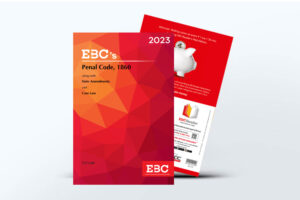
Buy Penal Code, 1860 HERE