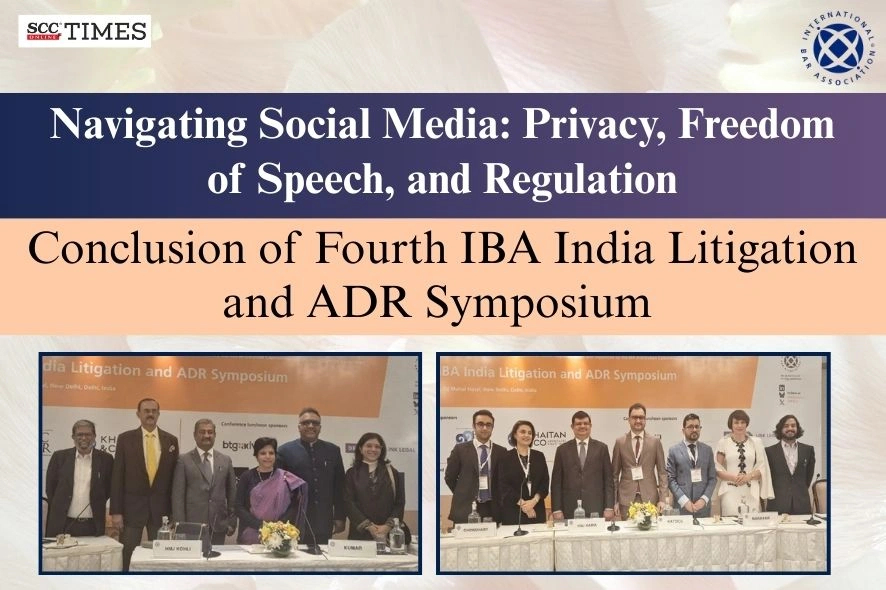
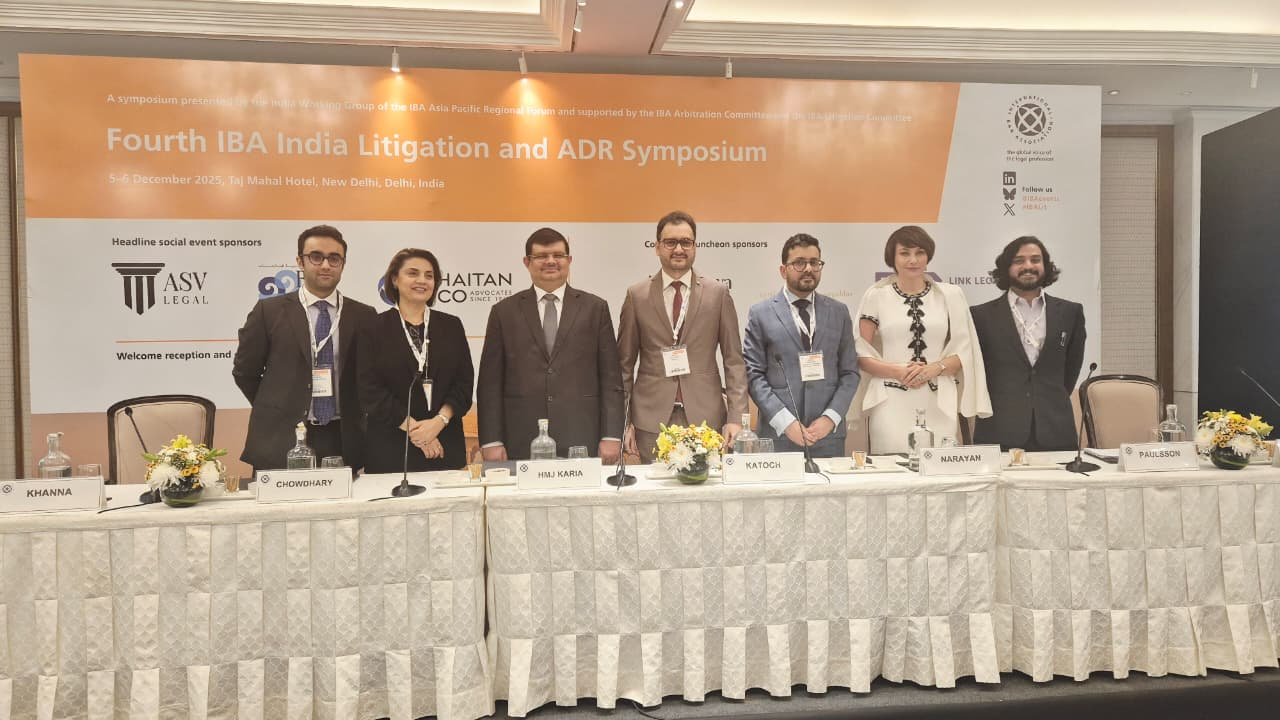
The Fourth IBA India Litigation and ADR Symposium organised by the India Working Group of the IBA Asia Pacific Regional Forum and supported by the IBA Arbitration Committee and the IBA Litigation Committee, was held on 5 and 6th December 2025 at the Taj Mahal Hotel, New Delhi, India.
The symposium brought together leading legal professionals and esteemed luminaries from across the world to discuss emerging trends, challenges, and innovations in litigation and alternative dispute resolution.
Session 4: Privacy, GDPR and the new Digital Personal Data Protection Act: Where is the freedom of speech on the one hand and regulation of social media on the other?
While the session was moderated by Ms. Manjaree Chowdhary, General Counsel & Chief Compliance Officer, Maruti Suzuki India, and Mr. Arush Khanna, Numen Law Offices, and Membership Officer, IBA Young Lawyers’ Committee, the esteemed panelists consisted of Justice Tejas Karia, Judge, Delhi High Court; Mr. Pavit Katoch, General Counsel, Inshorts; Mr. Rahul Narayan, AOR and Head of Disputes, Chandhiok & Mahajan; Ms. Marike Patrani Paulsson, Secretary General, Council for International Dispute Resolution of the Kingdom of Bahrain; and Mr. Amaan Shreyas, Advocate.
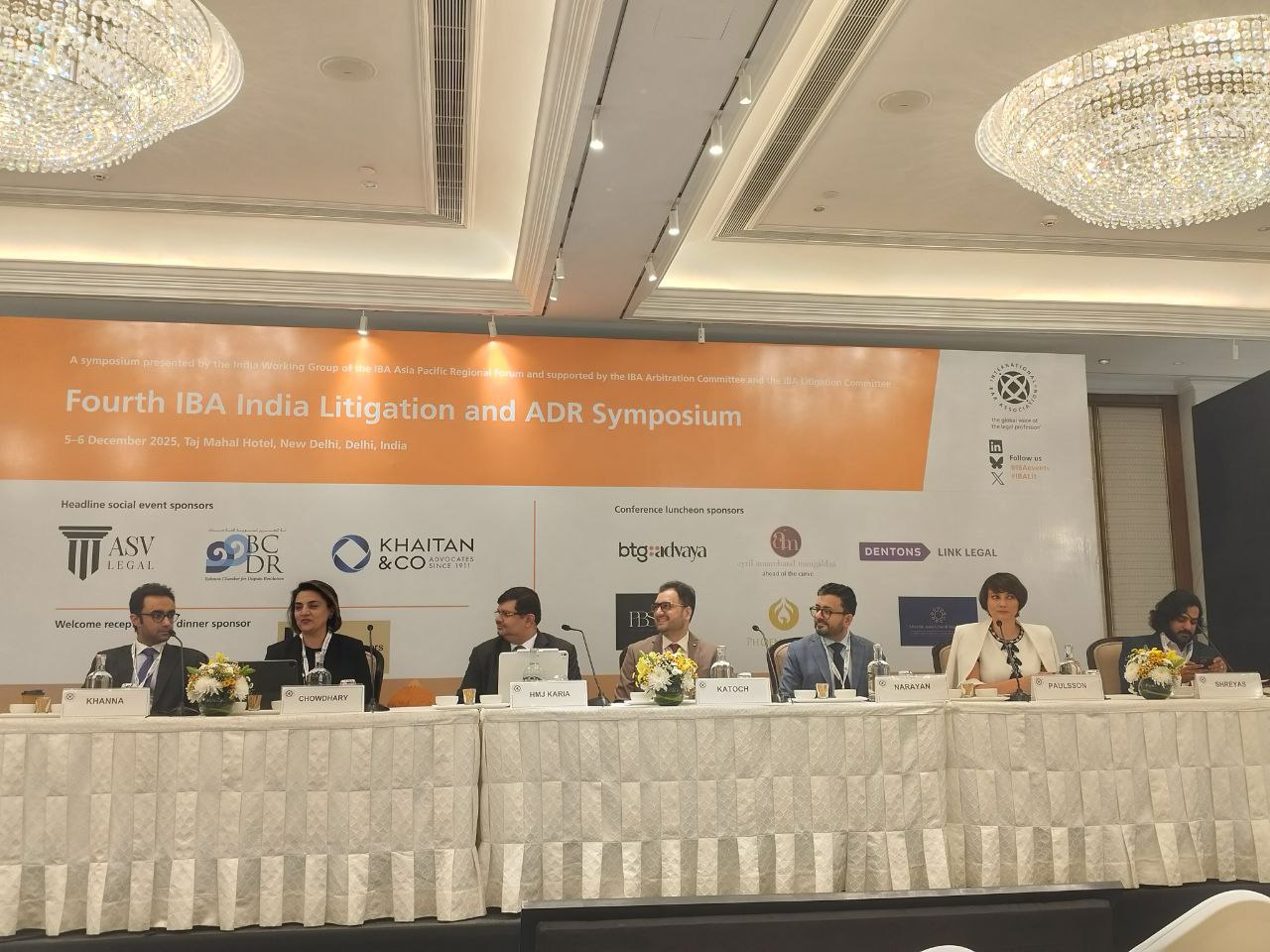
After introducing the panelists, Ms. Manjaree Chowdhary provided a brief overview of the discussion, stating that with right to privacy being a fundamental right and the enforcement of Digital Personal Data Protection Act (DPDP), 2023, there were questions regarding reasonable restrictions, areas of concern and resolution of such concerns.
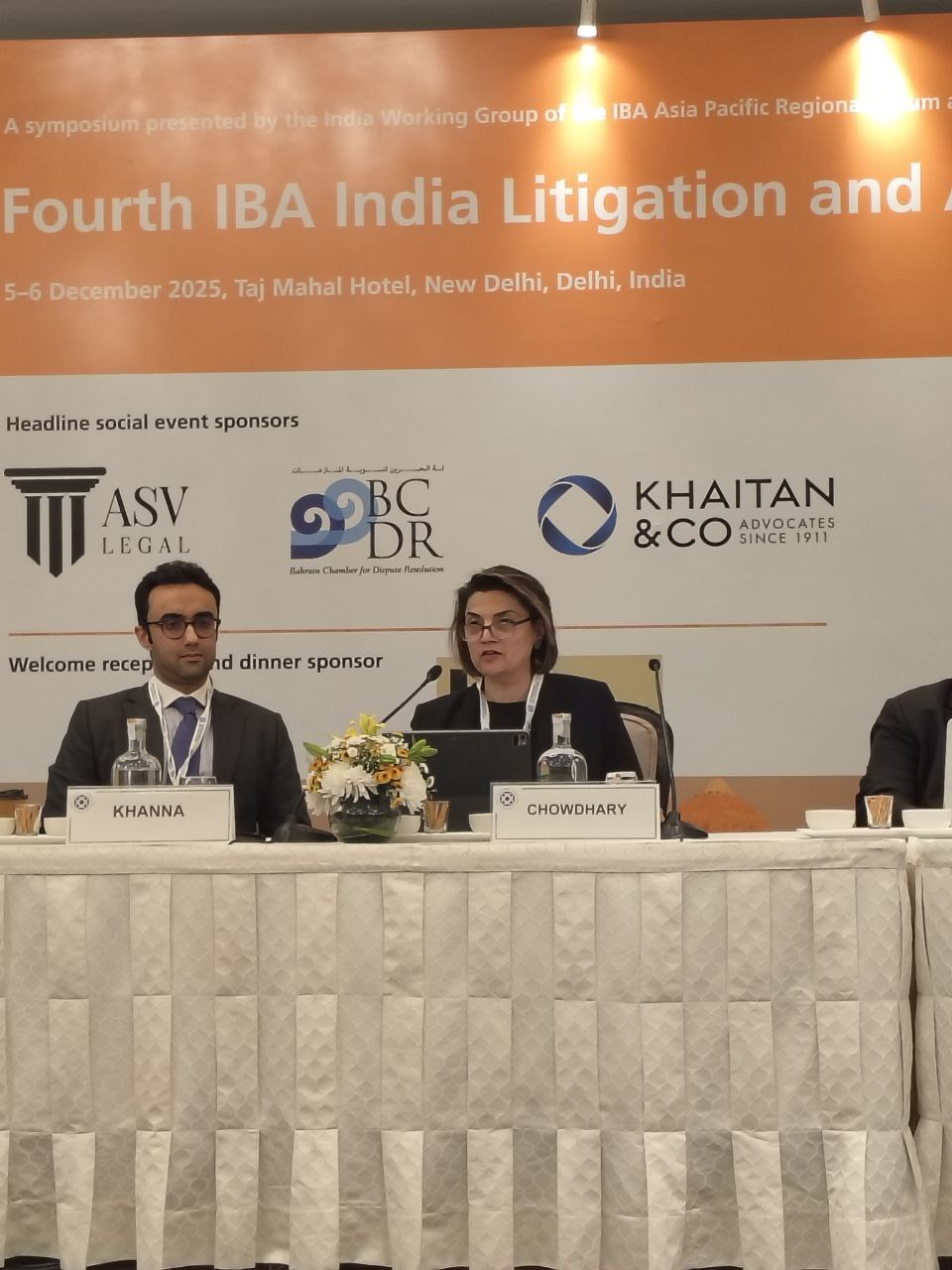
Balancing right to privacy and reasonable restrictions:
Opening the floor for Justice Tejas Karia, Ms. Chowdhary asked him to share his insights on how the interplay between the freedom of expression and the right to regulate has panned out in Courts in recent times.
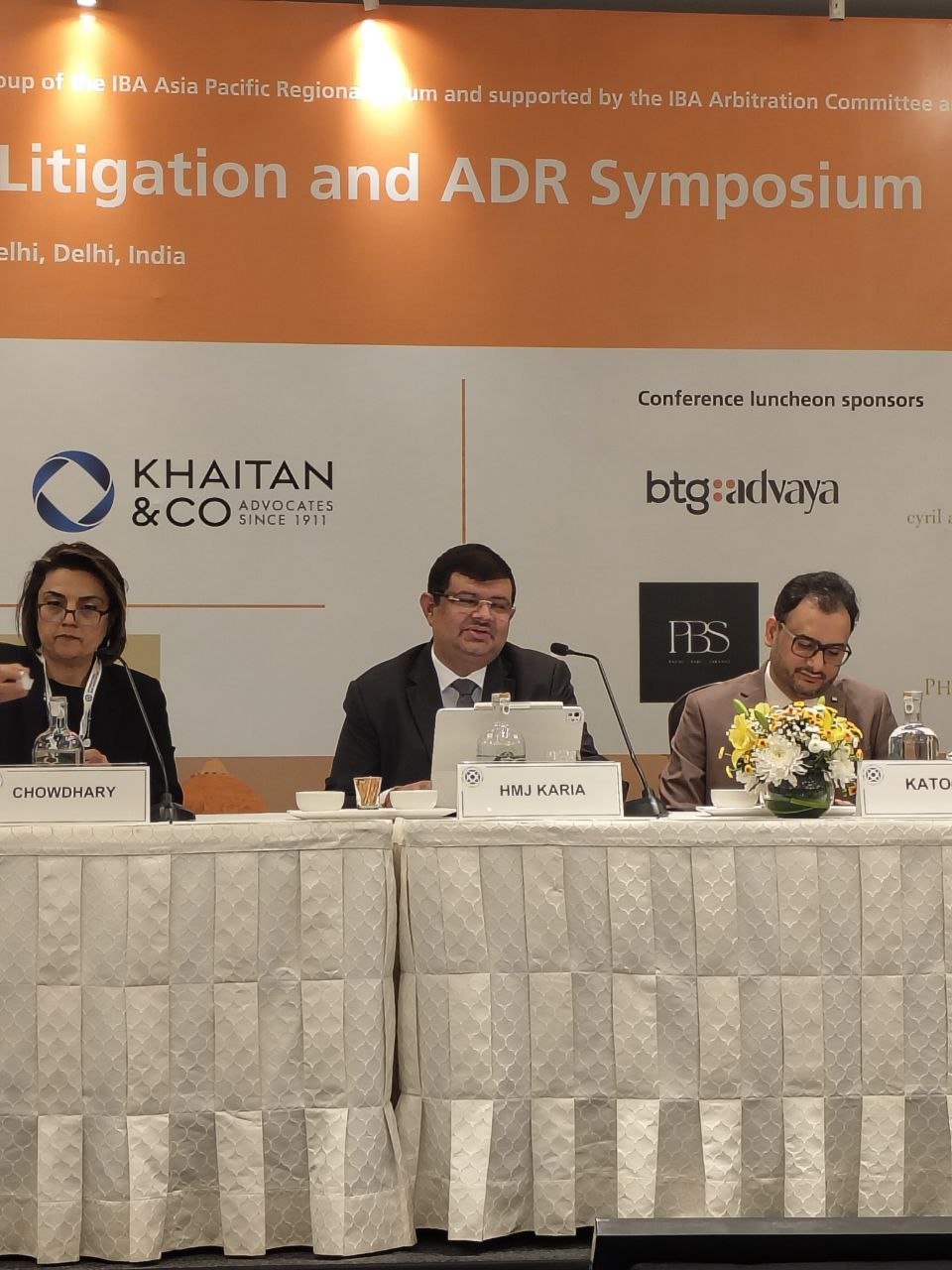
Justice Karia responded that freedom of speech and privacy were both fundamental rights but question arose as to how can privacy be maintained when our digital footprints were public and what regulations were necessary to ensure privacy was not violated under the guise of freedom of speech or right to do business or right to give information. In this regard, he briefly traced the jurisprudential arc from K.S. Puttaswamy (Privacy-9J.) v. Union of India, (2017) 10 SCC 1 to the recently notified DPDP Rules, 2025. He remarked that India had taken a slightly different approach than Europe’s GDPR.
He added that India recognised freedom of speech but with well-defined reasonable restrictions and emphasised that privacy and free speech are not opposing forces but complementary constitutional guarantees that must co-exist through principle-based, proportionate and transparent regulation because data had to be processed responsibly.
Thereafter, Justice Karia laid down the following guiding principles for balancing right to privacy and right to freedom of speech:
-
Regulation must be principle based rather than prescriptive. The principles are lawfulness, fairness, transparency, purpose limitation, accountability and flexibility.
-
Regulation must be proportionate to the need for protection of the right.
“Right to privacy has to be protected, but it should not mute the freedom of speech”
-
Regulation must ensure transparency and informed consent taking
-
Regulation cannot succeed with coercion, it can only succeed with trust in tandem with educational initiative and digital literacy.
-
Platforms like social media or other data collection websites must be responsible as they are not just conduit or dump pipes.
-
Acknowledge the link between privacy and freedom of speech.
“What we need to do is have the regulation which is more balanced, transparent and also keep in mind the larger philosophical vision when we implement this regulation in India, because we need to have this culture of respecting personal space and personal data.”
He opined that both privacy and sharing of information were important and surveillance by state or corporation produces silence. Protecting privacy enriches speech.
“Privacy is the safeguard of solitude and the speech is celebration of community. Privacy gives us the space to form beliefs, speech gives us the stage to share those beliefs. Therefore, digital regulation should nurture both, it should not create society where the individuals live under constant surveillance nor a society where speech becomes a spectacle stripped of accountability.”
Lastly, he remarked that the ideal digital public space is one which powers the freedom of speech, individuals are respected, and the technology serves as a democratic project rather than overwhelming the freedom of speech or the right to privacy.
Guardrails in Journalism
Taking the conversation further on balancing freedom of expression with right to privacy as a journalist, Mr. Pavit Katoch agreed that the two rights had to be balanced, especially by the media. They had to ensure that they reported with fearlessness and responsibility. He highlighted the heightened ethical obligations on digital newsrooms and outlined guardrails for responsible content practices, including assessing the purpose of publication, public-interest or public curiosity tests, proportionality, data minimisation, protecting sensitive information, structured internal processes, content review frameworks, and differentiated risk assessment across content categories.
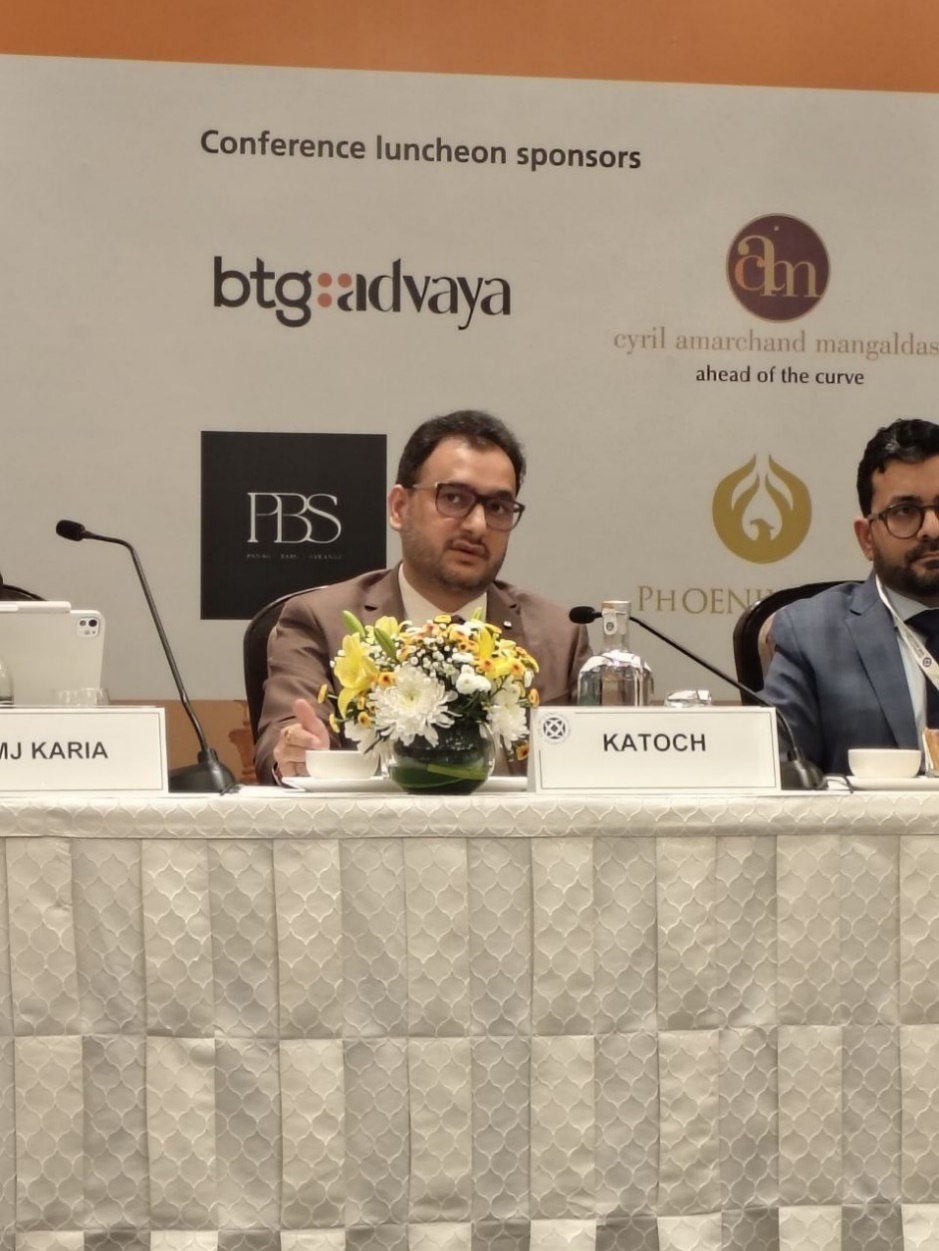
Mr. Katoch noted that Indian jurisprudence has always recognised the right of freedom of the press. However, lately the Courts were increasingly recognising the tension between press freedom and privacy, and giving preference to privacy, especially in cases involving minors, victims or sensitive personal data. They have shown willingness to uphold the “right to be forgotten” in appropriate circumstances.
“Privacy is a right which protects an individual whereas press protects the rights of a society.”
Agreeing with Mr. Katoch, Mr. Arush Khanna stated that the role of responsible media as a means of free and accurate expression is often understated. He remarked that though the Courts had consistently upheld the balance between expression of the media vis-a-vis safeguarding the private information of people/ individuals at large, there were still concerns surrounding media reporting.
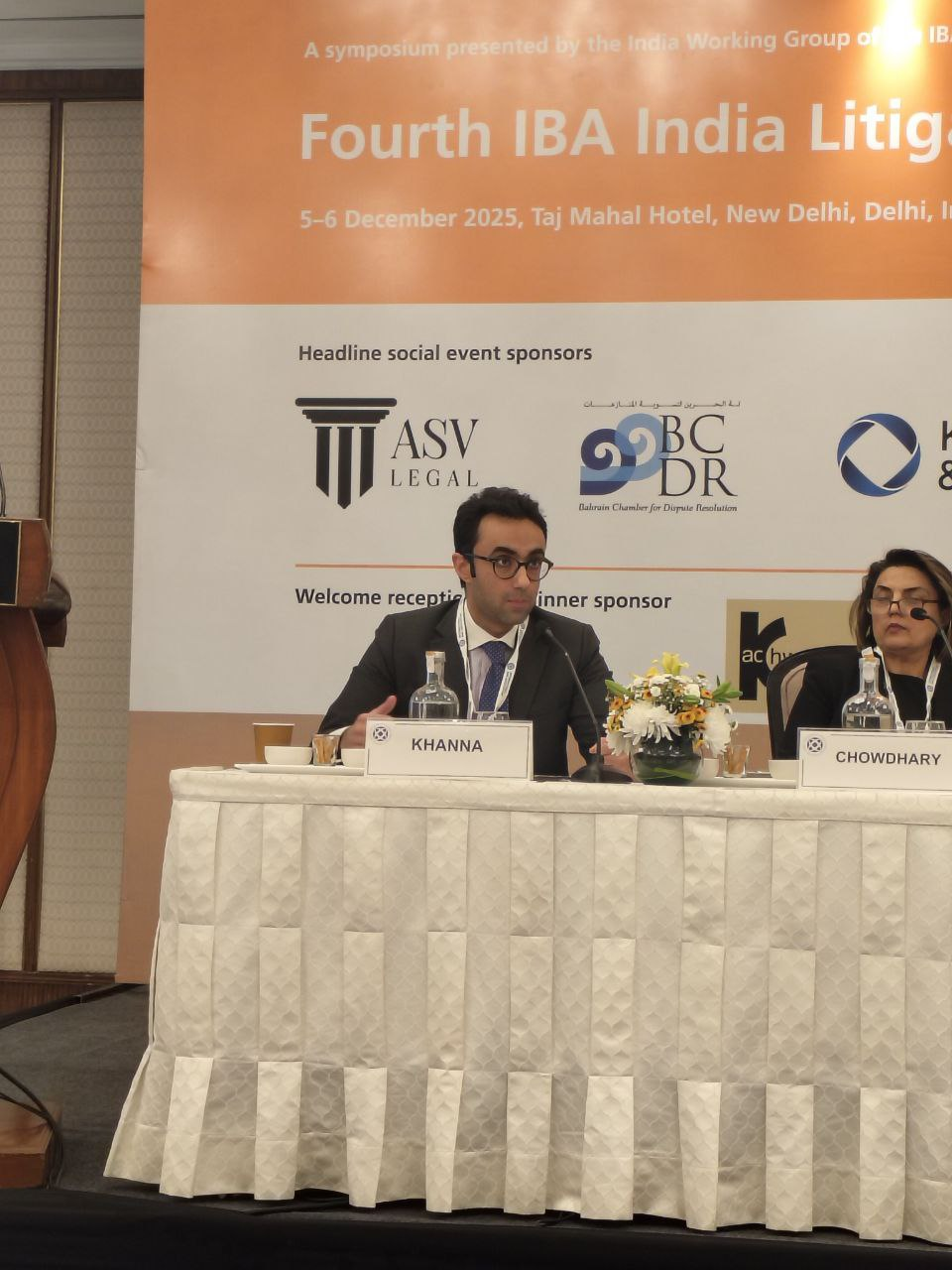
“Media needs to play the role of an informer and not an influencer. We need a reverse transition now where media starts restoring its credibility as an informer and not as an influencer and catering to popular perceptions of certain fragments of society at large.”
Evolving Jurisprudence of Privacy in India- Where do we stand
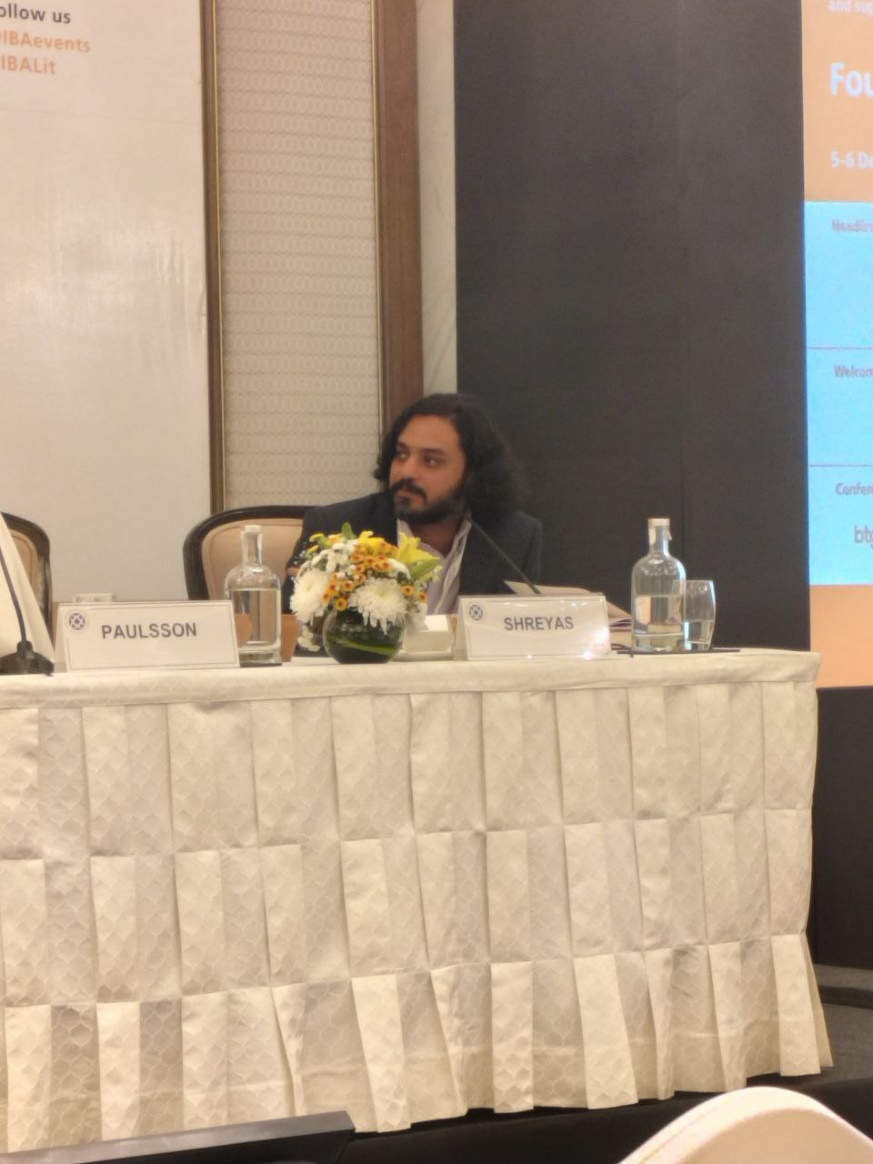
Considering the trajectory of Indian jurisprudence from Puttaswamy (supra) to the DPDP Act and Rules, Mr. Aman Shreyas critiqued the asymmetrical architecture of the Act, noting that while private entities face rigorous compliance obligations, the State retains expansive exemptions. It has forgotten the oldest intrusion into privacy, from the State.
“The government has basically said that yes, we are your government. Therefore, trust us.”
He questioned whether the DPDP Act would work since it does not cover everything and had apparent weaknesses despite having the scaffolding of a fairly robust data protection regime. He argued that the Act undermines the heightened scrutiny mandated in Puttaswamy (supra), potentially reducing privacy protections to matters of “executive convenience”. As surveillance powers expand, he warned, Courts may once again be called upon to restore balance.
Agreeing with Mr. Shreyas, Mr. Khanna opined that if India’s privacy and social media regulations had to be gold-standard, all stakeholders had to be consulted and the regulations could not be made on the instance of one large stakeholder like the State. To substantiate, he cited the recent instance of the government instructing phone manufacturers to mandatorily pre-install Sanchaar Sathi app and later recalling the direction.
“We cannot have a case of act first, think later every time. There needs to be a little more thought on drafting and curating regulation, because data is the new oil. We need to nurture it well and responsibly.”
-Mr. Arush Khanna
Free expression versus cross-border enforcement of privacy and data protection norms
Speaking from the global perspective of striking balance between free expression and data privacy, Professor Marike Patarani Paulsson opined that there was no balance and underscored the dichotomy between utility and dangers of social media. She situated India’s challenges within a broader geopolitical moment marked by rapid technological acceleration and rising authoritarian tendencies. She cautioned against rushed or overbroad national regulation, stressing that sovereignty, human rights and cross-border data regimes increasingly collide like “billiard balls rarely moving in the same direction.”
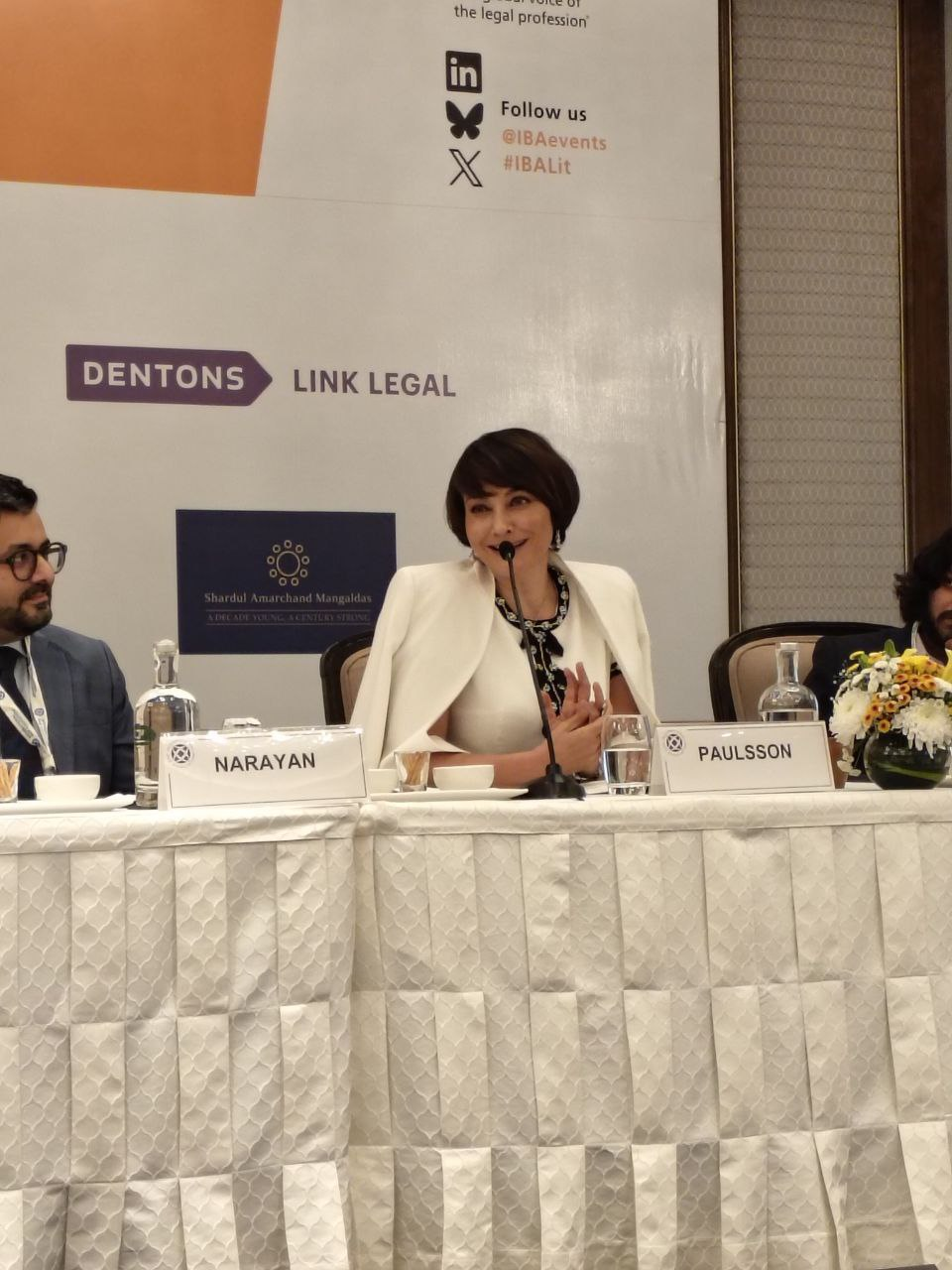
Prof. Paulsson opined that in today’s world, sovereigns were using the data protection regulations to gag freedom of speech in a totalitarian manner. She also stated that with the fast pace of technology and opposite speed of law making, we could no longer rely on those who served as sovereigns in positions that mattered, like the United Nations. Thus, she urged a renewed moral responsibility and accountability among individuals.
Implementation of the DPDP Act and possible concerns
At the outset, Mr. Rahul Narayan underscored the curious dynamic of privacy in India, stating that, “the State said that it wanted to protect us against Big Tech and Big Tech said it wanted to protect us against the State. And both of them decided that the best way to do this would be to have absolute power over our data.” He reminisced that the petitioners in Puttaswamy (supra) argued that the basic right of information and the right to privacy belongs to the individual. Thus, the best framework for this would be for the individual to be empowered, and both Big Tech and the government to respect that to the extent possible.
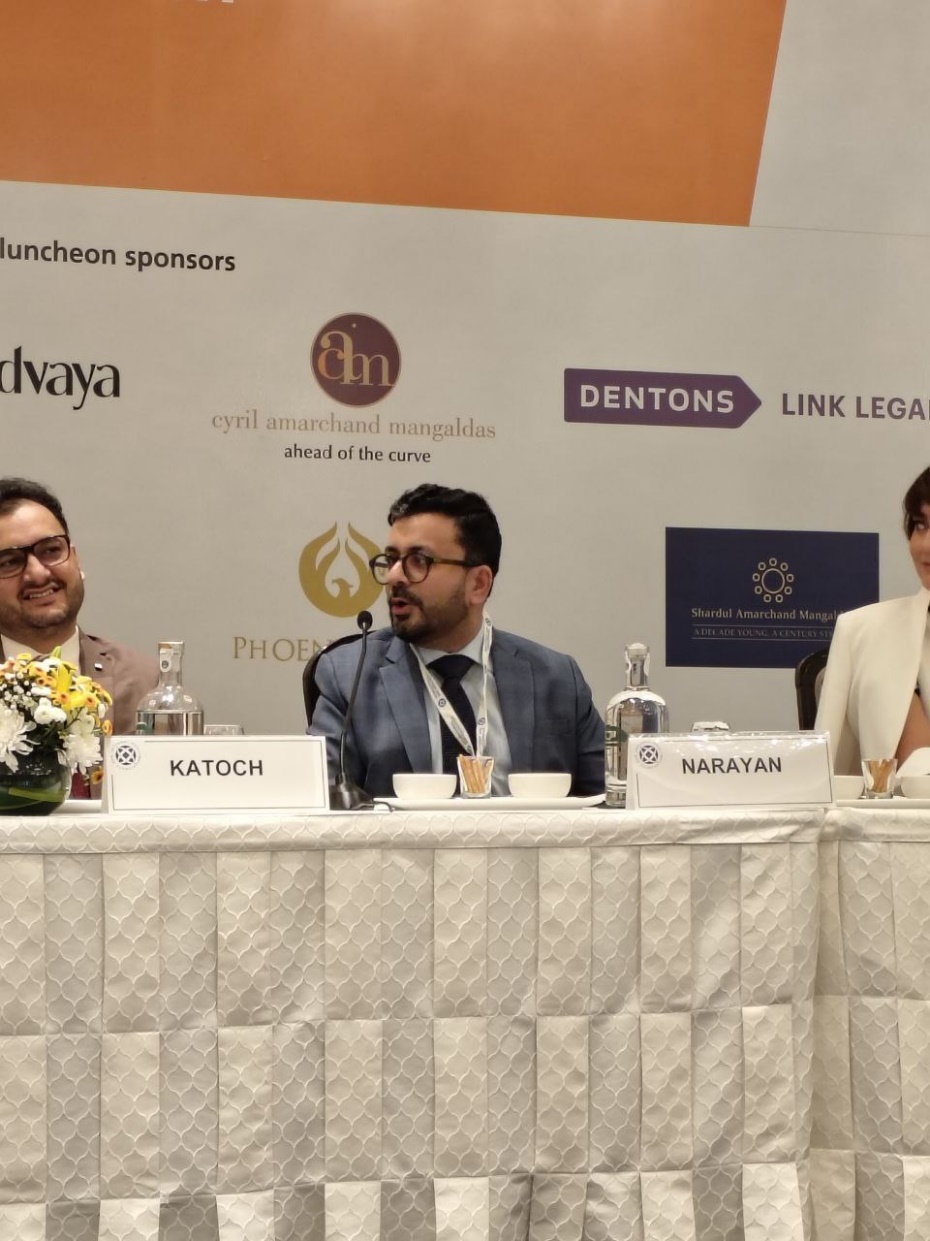
While acknowledging the progress made since Puttaswamy, he questioned whether the constitution and appointment model of the Data Protection Board is sufficiently independent, given the government’s dual role as regulator and data processor. He also underscored the conflict of interest of the State and suggested that a neutral regulator might have been a better alternative for transparency and the public interest in independence.
Thereafter, Mr. Narayan highlighted structural ambiguities, overlapping sectoral mandates and capacity concerns, noting that meaningful protection will ultimately depend on awareness, transparency and institutional independence.
Personality Rights
In the concluding segment, Justice Karia addressed the rising issue of personality rights, a subset of privacy increasingly threatened by AI-generated deepfakes and digital misuse to create viral content. While Indian courts have stepped in through injunctions and judicial innovation, he underscored the need for clearer statutory or rules-based protection akin to frameworks in Germany and Brazil to safeguard identity, dignity and commercial attributes from misuse in an era of seamless replication.
Session 6: Debate- This House believes that social media is the only safe and reliable outlet for real information in an increasingly regulated world.
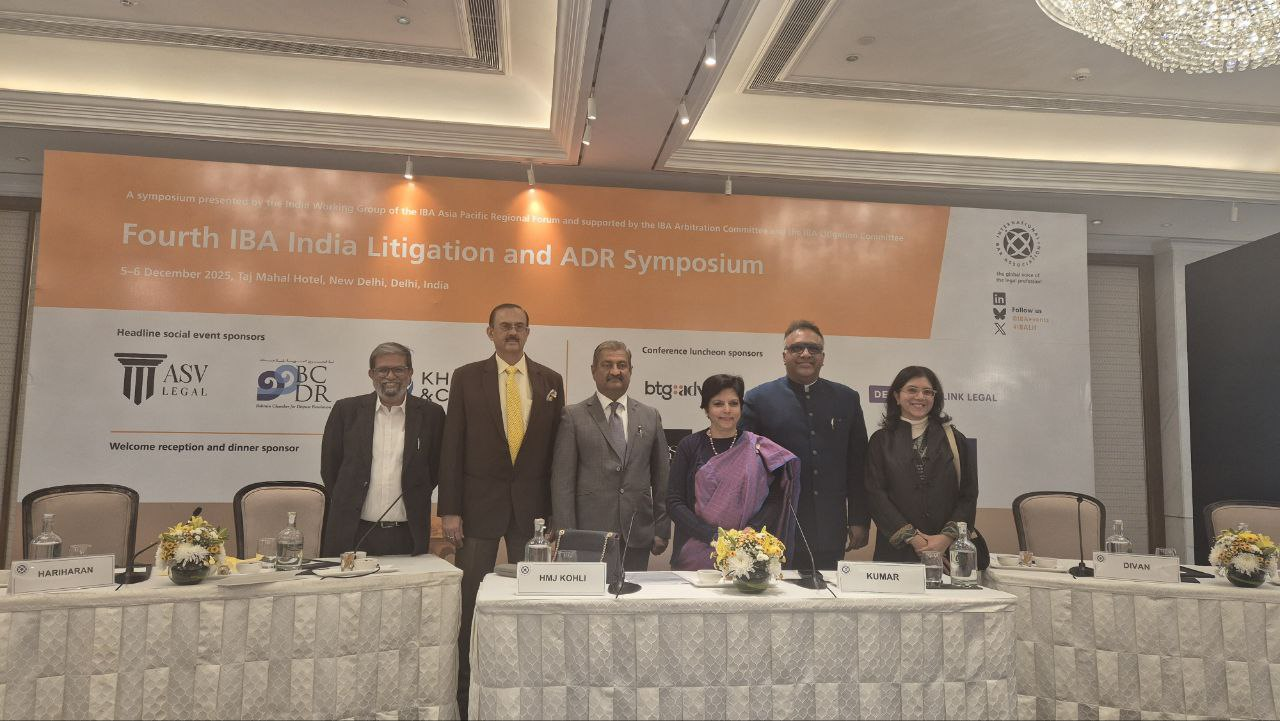
The debate was adjudicated by Justice Hima Kohli, Former Judge, Supreme Court of India, and Prof C Raj Kumar, Founding Vice Chancellor, O.P. Jindal Global University.
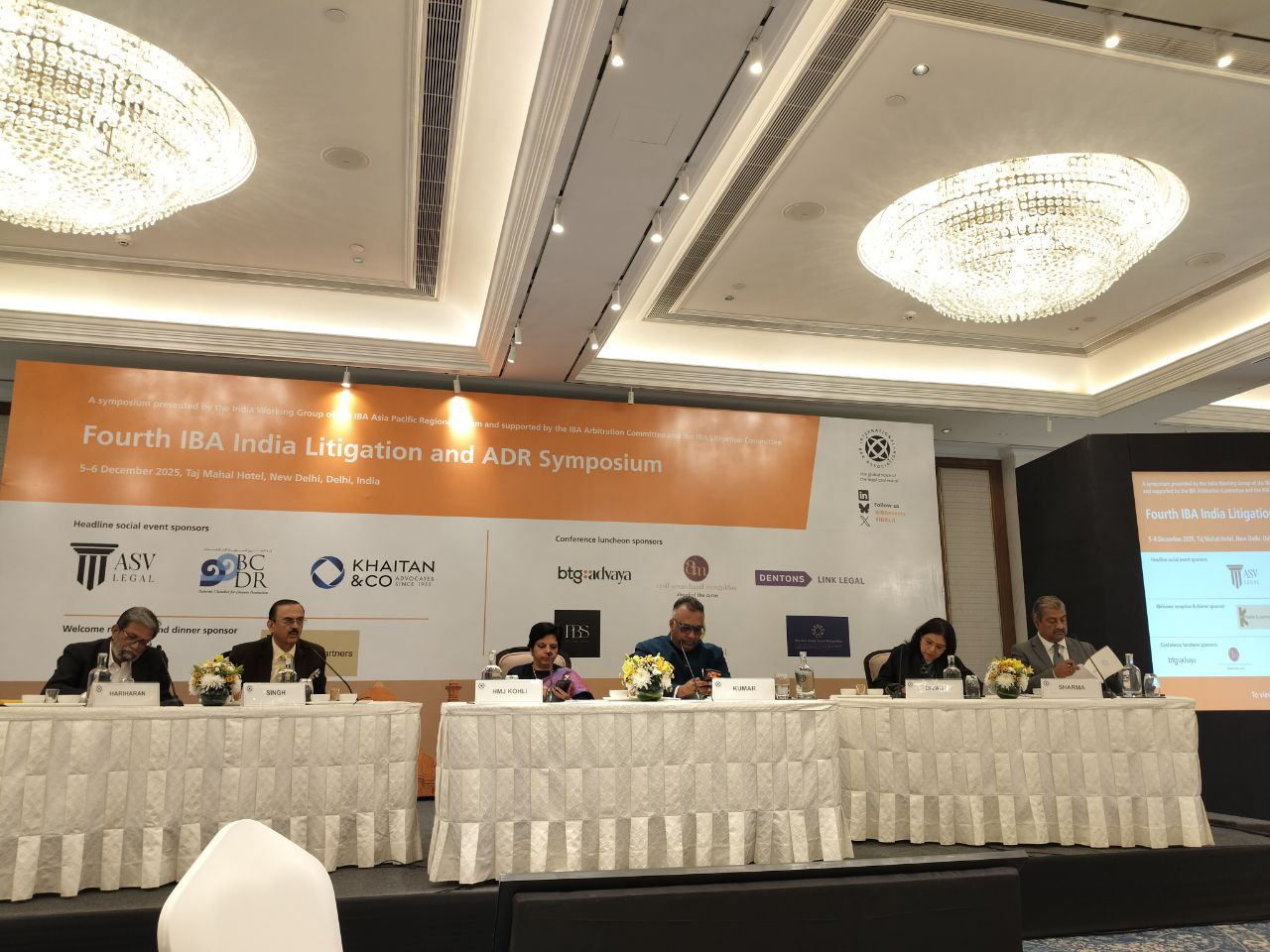
The proposition consisted of Mr. N Hariharan, Senior Advocate and President, Delhi High Court Bar Association, and Mr. Vikas Singh, Senior Advocate and President, Supreme Court Bar Association. Whereas the opposition consisted of Ms. Madhavi Divan, Senior Advocate and Former Additional Solicitor General of India, and Mr. Chetan Sharma, Senior Advocate and Additional Solicitor General of India.
In her opening remarks, Justice Hima Kohli laid down the context for the debate. While underscoring the speed of information transmission, she stated that the digital platforms, especially social media, used for the transmission were not neutral conduits. They used algorithmic architectures that determined what content is prioritized versus marginalized and what eventually reaches the public domain. This resulted in proliferation of digital echo chambers where users are repeatedly exposed to information that reinforces their pre-existing beliefs and preferences, while dissenting or contrary perspectives were often filtered out. She warned against the risks of such information sharing, cautioning polarisation, reduction in critical engagement, and distortion of public discourse.
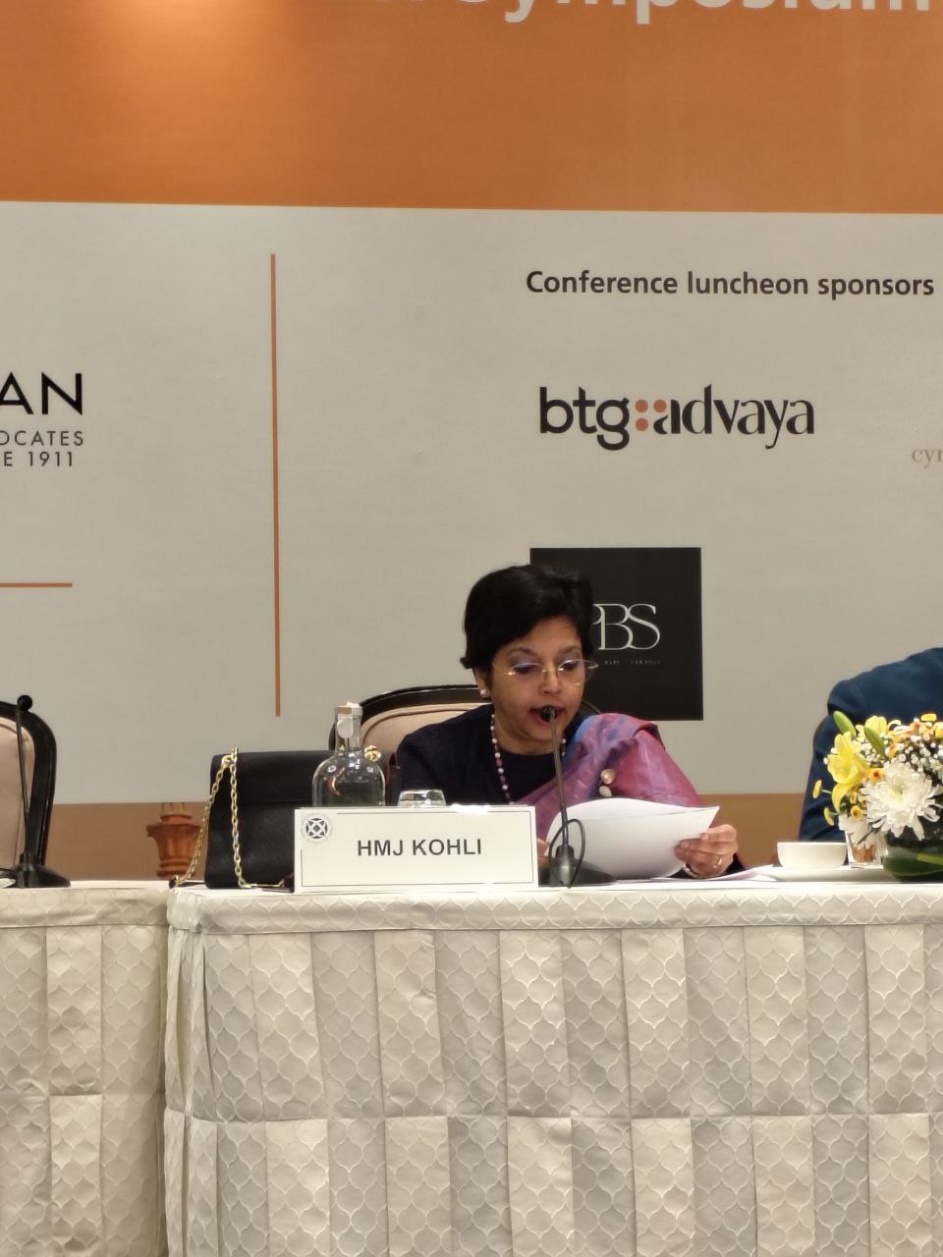
“Quite literally, information once out, leaps over continents, flies across oceans within fractions of a second. Once digital content is relayed in public domain, it spreads like wildfire through a parched forest. It is instantaneous, it is irreversible, and often beyond retrieval or correction before the effects are felt across geographical and societal boundaries worldwide.”
Justice Kohli underscored that the question was not merely about access or speed, but about quality, about integrity, and reliability of the information ecosystem and how it shaped public consciousness and deliberations. Lastly, she illustrated the statistics of social media usage to highlight how increasingly people were relying on social media for news and question how the same could be regulated.
Arguments FOR the Motion:
Speaker A: Mr. Vikas Singh
After tracing the history of news transmission and regulation in India, Mr. Singh shed light on how the fourth pillar of our democracy, i.e., the media had been taken over the industrial houses or companies recently, resulting in loss of credibility and reliability. This resulted in the birth and rapid growth of social media news outlets and accounts. He underlined how news that came from firsthand sources and credible individuals had a vast viewership owning to their perceived reliability.
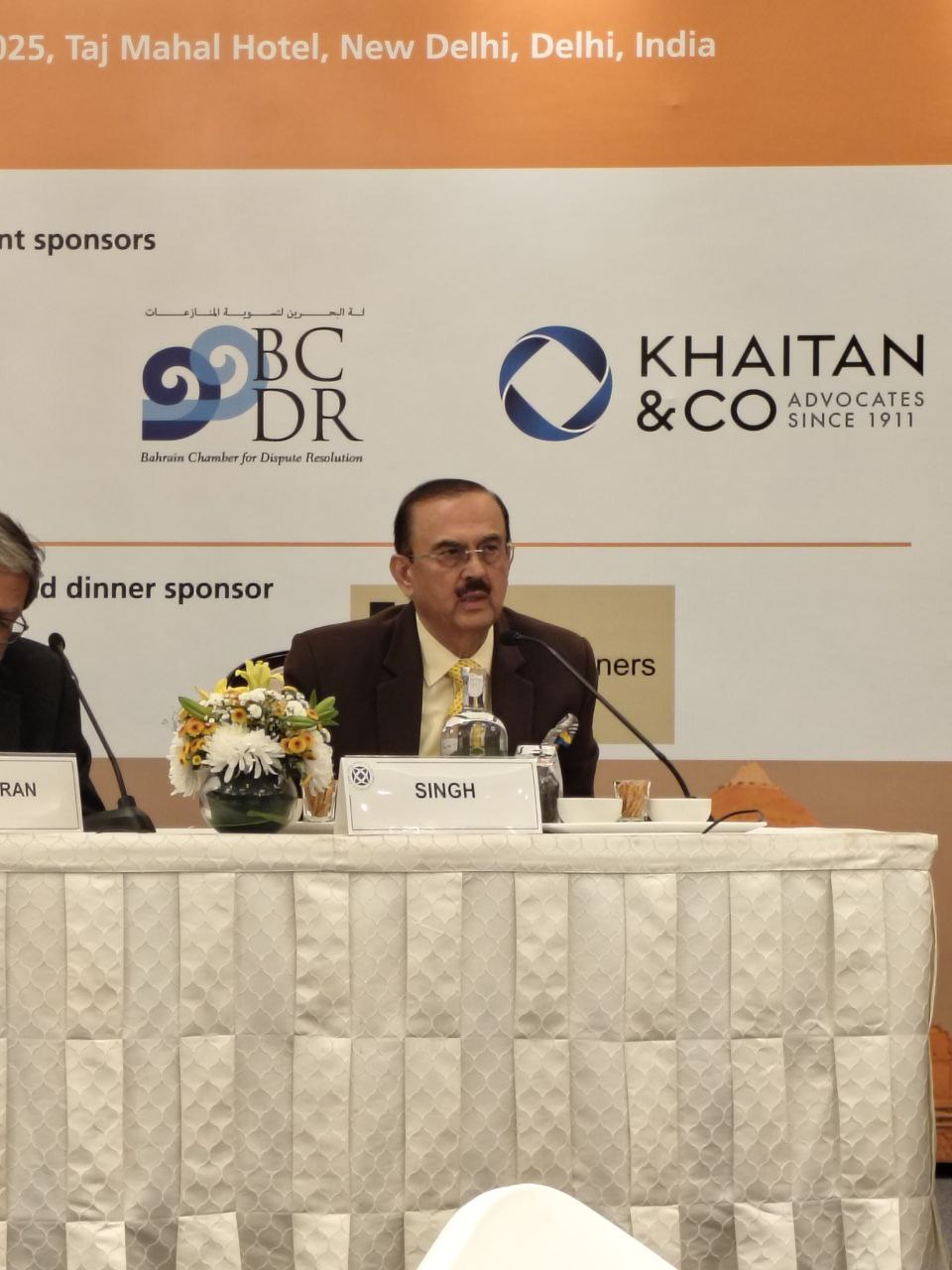
Earmarking the difference between newspapers and social media, he underscored that the extensive procedure for the publication of news in a newspaper acted as a hurdle, unlike the easy and fast publication of news on social media.
Lastly, he argued that though there were cons such as deep fakes and attempts at manufacturing disharmony which should be regulated, social media was fast, accessible, and independent. Thus, social media had come to stay and would increasingly dominate public information flows in the future.
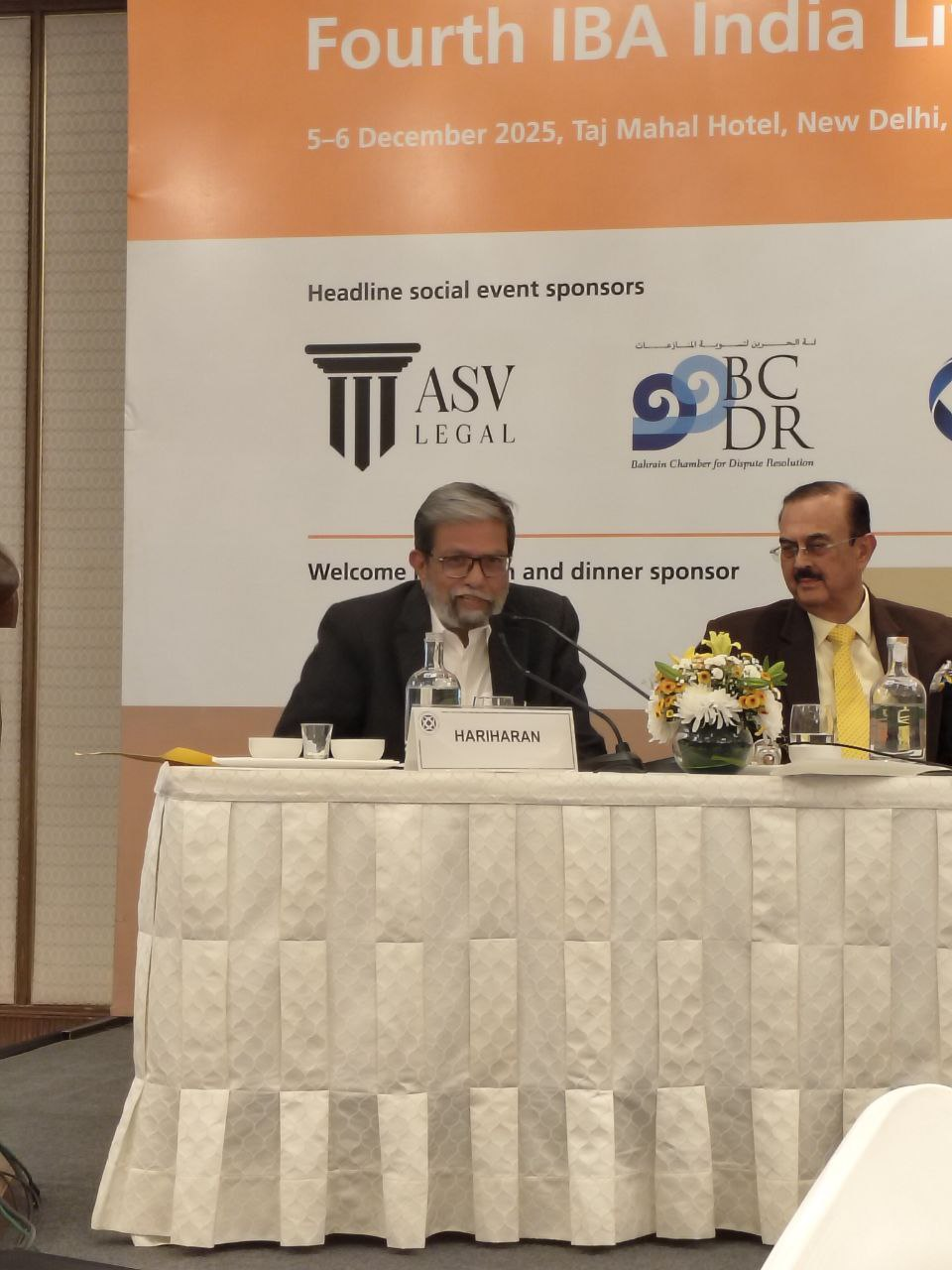
Speaker B: Mr. N Hariharan
Mr. Hariharan established three prongs of his argument:
-
Circumvention of censorship and propaganda by enabling direct unfiltered reporting:
He argued that social media essentially acted as a safety valve against censorship. To substantiate this, he illustrated how the news that a Khalistani Flag was hoisted at the Red Flag was fact checked by social media. Mr. Hariharan agreed with Mr. Singh that newspapers had a strict process and often operated under censorship due to threat of losing license.
-
Empowerment of citizen journalism and real time accountability
Mr, Hariharan argued that social media allowed citizens to express themselves freely and access multiple sources of information. Furthermore, the comment section and audience interactions would make the poster correct themself at a contemporaneous level by assenting and dissenting. This was unlike traditional media which takes its own time.
“If it is something which is broadcast through a channel, it will depend as to whether it is in alignment with the policy of the channel. So, the expression of diverse views is possible.”
-
Plurality of voices
Mr. Hariharan stated that the plurality of voices allowed by social media let people critique capitalism and voice opinions that was against the social media companies.
He highlighted that how a bystander’s video of George Floyd’s death led to the Black Lives Matter Movement that helped address America’s police brutality against black people. Further, during the Covid-19 pandemic, people in Delhi were using social media to access medicines and oxygen tanks and social media highlighted the lack of such amenities.
“In social media where expression of truth happens in so many diverse forms, it in fact augurs what would be the actual intent of a democracy because it is more participative in nature.”
Arguments AGAINST the Motion
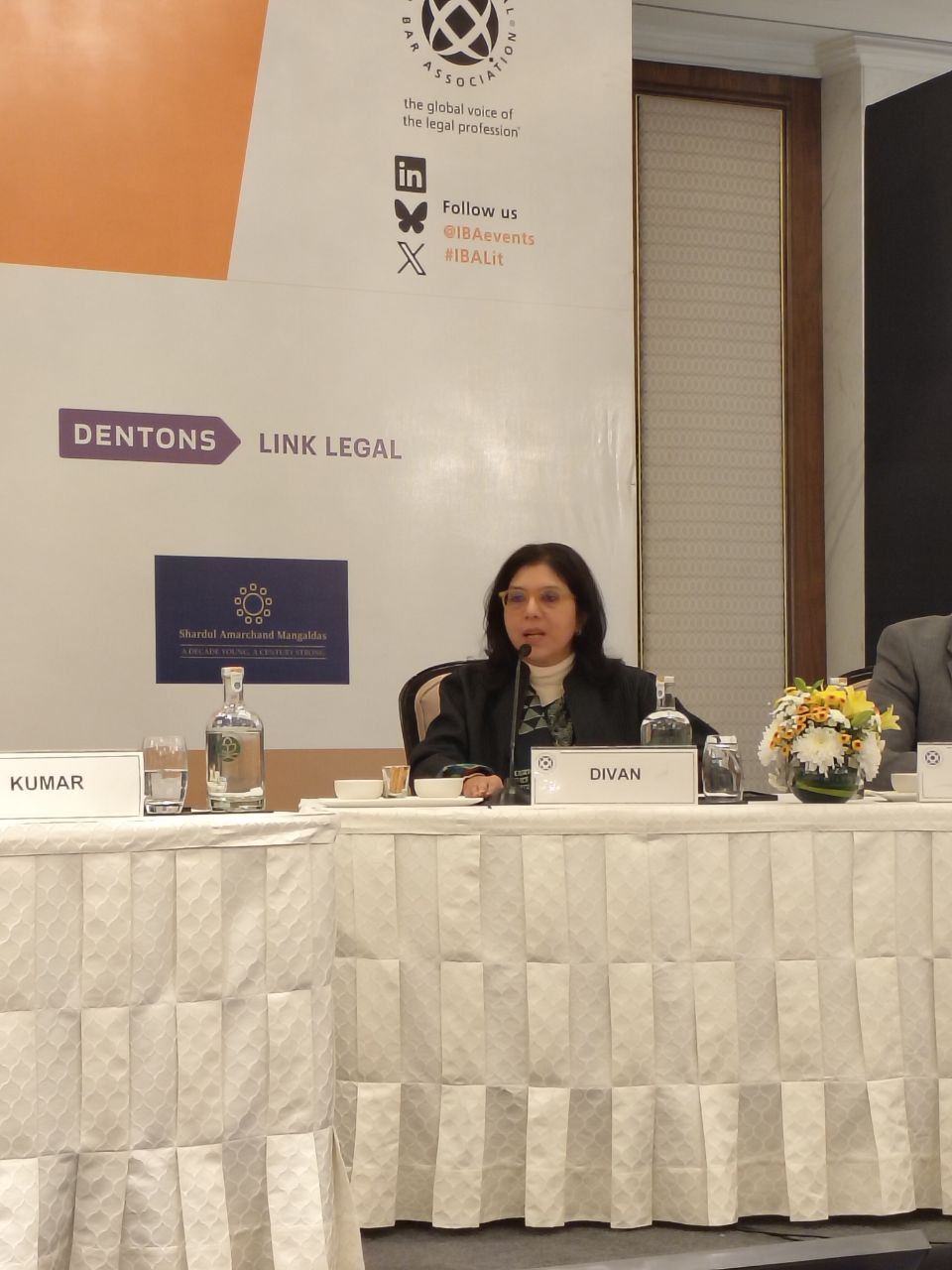
Speaker A: Ms. Madhavi Divan
At the outset, Ms. Divan sharply reframed the motion, stating that it was fundamentally flawed as it assumes social media is safe and reliable in the first place. Though traditional media in India had indeed worsened with screaming news anchors, she opined, it did not mean that social media was a reliable or safe alternative.
“In India, we are facing a huge vacuum and a huge deficit of information which can be trustworthy and credible.”
She stated that social media had much lower standards than traditional media and the fundamental issue was the business model that drives it. She explained that people had become accustomed to the idea of enjoying free social media services but nothing was free and the cost was our privacy. Social media survives on surveillance capitalism, attention economy, algorithmic manipulation, and commodifying users. In this regard, she illustrated the case of Cambridge Analytica, a political consulting firm in USA, that harvested personal data from up to about 87 million Facebook users without their consent, vacuuming up effectively people’s personal details and creating psychographic profiles to micro-target voters with tailored political advertisements.
“The very design and fabric of social media platforms is addictive and consuming, so as to draw out more and more data from unsuspecting users.”
“Interestingly, it is not as if voters are entirely unaware that there is data out there being mined, that it is being monetized to all of these ends, but the magic of social media is this, that it’s quite like a pied piper, which is alluring people into its vortex and even dulling or lulling us into a sense of surrender where we have stopped questioning.”
Accordingly, she questioned that social media, which influenced our thoughts, posed threat to our livery of thought and expression. It does not give you the range of information that traditional newspapers would, but rather fosters echo chambers and restricts exposure to opposing viewpoints. Thus, the news and information were so customized and agenda-driven that it was not safe or reliable. Ms. Divan also cautioned against social media personalities bypassing traditional media and influencing unsuspecting users for a quid pro quo or spreading propaganda or political messaging.
Underscoring safety concerns surrounding social media, she illustrated the examples of Christchurch shooting livestream, Rohingya violence in Myanmar, and other crises show the lethal spread of content. Additionally, in the age of AI and deep fakes, there was a crisis of credibility, leading to the “liar’s dividend” i.e., people dismiss genuine content as fake.
Thus, she concluded by stating that social media was neither safe nor reliable, far less the only such outlet.
Speaker B: Mr. Chetan Sharma
At the outset, he stated that the proposition asked to accept a world where truth survives exclusively on platforms that had repeatedly shown themselves to be fertile breeding grounds for chaos, hate, manipulation and distortion.
“Social media ipso facto by its design is engineered for volatility, not truth.”
He opined that safety required predictability, accountability, and responsibility, but social media provided the opposite. These platforms were specifically constructed to maximize outrage over accuracy, speed over verification, and engagement over ethics.
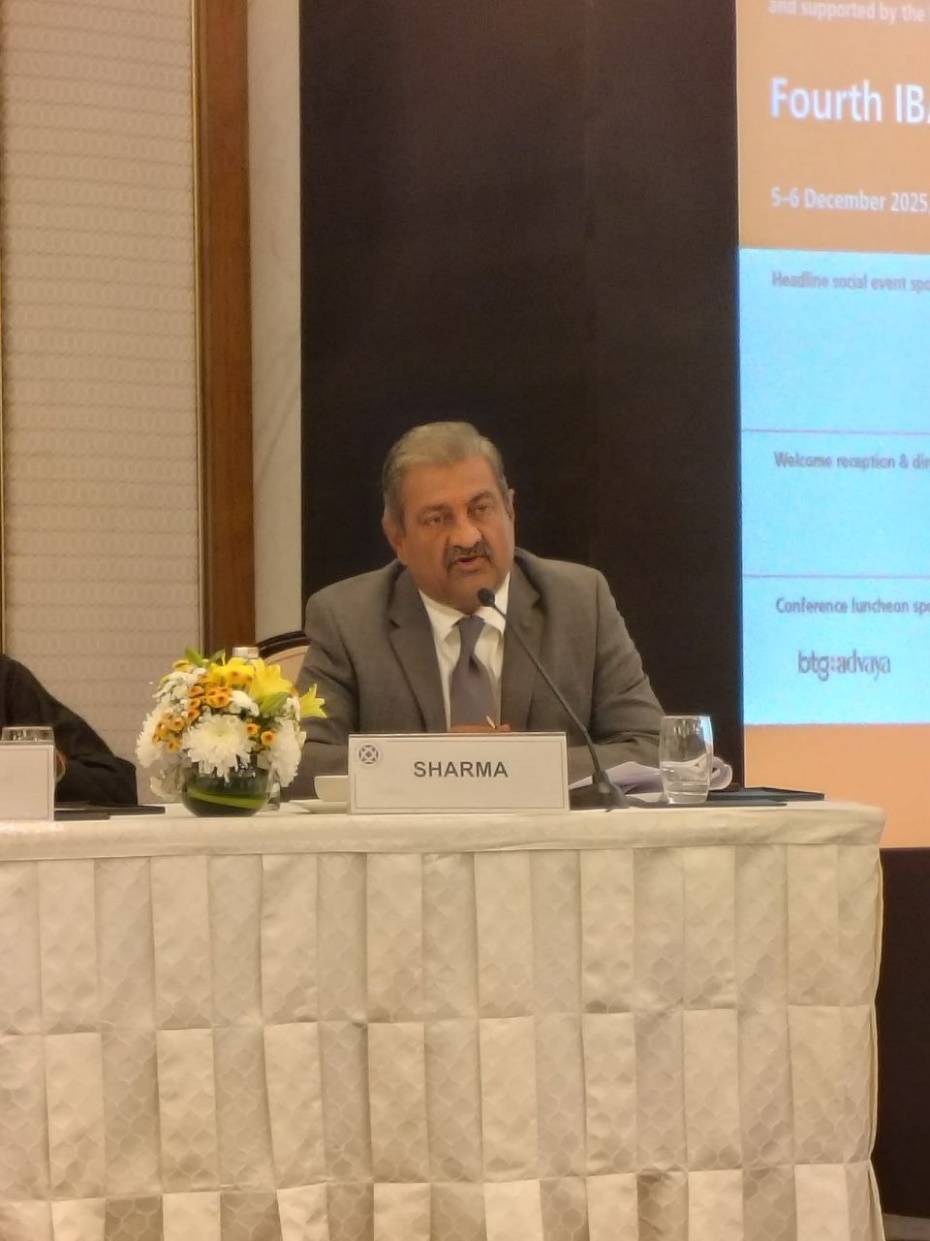
Mr. Sharma further argued that social media was structurally unreliable as verification was optional, and virality was mandatory. He illustrated how deepfakes could go viral, a bot could outperform a newsroom and misinformation was rampant.
Contesting the opposition which stated that social media is reliable because information can be traced, he said that such an argument was laughable in a world of AI generated faces, synthetic audio, edited videos, burner accounts, and VPN hopping.
“Even the most basic deception can acquire millions of views before the fact check catches up and by then the damage has been done.”
Mr. Sharma also cautioned that the fast speed of content consumption on social media endangered our ability to form opinions, in fact our opinions were being manufactured.
In conclusion, he remarked that, “A functioning democracy requires multiple channels of truth. Not a monopoly owned by billion-dollar corporations. Truth must come from Courts, legislatures, universities, newsrooms, and statutory bodies.”
Therefore, he cautioned that either control the screen or the screen will control the country. “Lies travel faster than institutions can respond. Truth becomes collateral”.
Rebuttal
The speakers for the motion rebutted that misuse was not a valid argument against social media’s importance, regulation could easily curb deepfakes, elimination of social media was neither viable nor desirable, opposition failed to provide an alternative to social media, traditional media was restricted while social media democratizes access, and real-world events like the Sudan conflict came to light only through social media,
The speakers against the motion rebutted that the debate was not about media vs media, but rather about the proposition’s absolutist claim; social media had given birth to unique issues such as hate speech, misogynistic content, and revenge porn, regulation protects truth, lack of filters harms the public, and social media must exist in a regulated manner.
Concluding remarks
Prof. C. Raj Kumar summarised the debate, stating that declining global press freedoms and corporatization challenged information access. While social media offered speed and democratization, it also had adverse effects such as misinformation, privacy violations, and polarization. He also shed light on disaster reporting by social media, easy correction and intervention, lack of safe spaces on the internet, threats posed to privacy, data exploitation, polarisation, etc.
Noting that while both sides raised compelling arguments, the absolutist nature of the proposition could not be defended. Thus, the motion was defeated and speakers against the motion won the debate.
Closing Address
The eventful IBA India Litigation & ADR Symposium 2025 concluded with closing remarks by Mr. Amir Singh Pasrich, International Law Affiliates, and LPD Secretary-Treasurer / IBA Treasurer, and Mr. Nusrat Hassan, Dentons Link Legal, Mumbai, and Co-Chair, India Working Group, IBA Asia Pacific Regional Forum. They thanked the panelists and speakers, sponsors, organizing team as well as the audience for making the symposium a success.