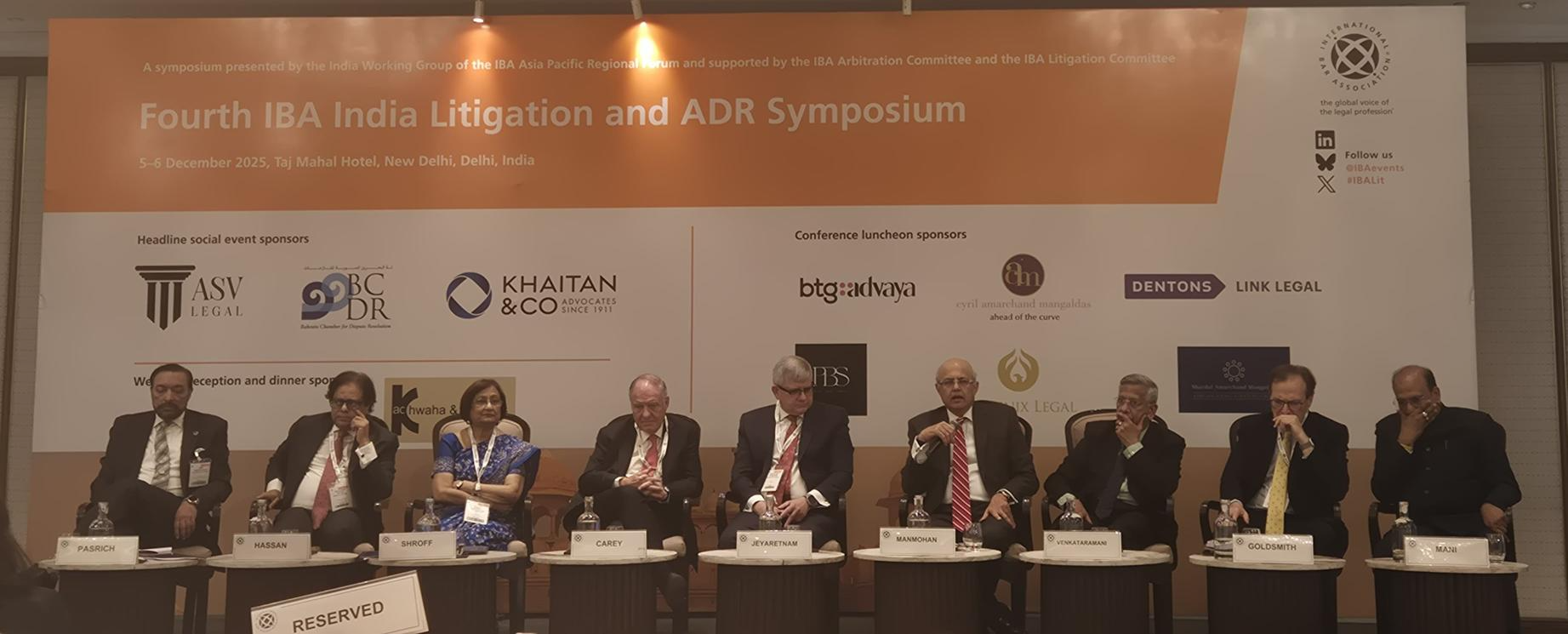
In the Day 1 Fourth IBA India Litigation and ADR Symposium, following the opening session, Mr. Amir Singh Pasrich, International Law Affiliates and LPD Secretary-Treasurer / IBA Treasurer, put forth a series of questions to the distinguished panel. The discussion navigated the evolving contours of the rule of law, judicial independence, access to justice, and alternative dispute-resolution mechanisms, both within India and in an international context.
The session provided a rare opportunity to hear from leading jurists, including Justice Manmohan, Judge, Supreme Court of India; Justice Philip Antony Jeyaretnam, Judge, Supreme Court of Singapore; Justice R. Venkatramani, Attorney-General for India; Lord Peter Goldsmith KC, Former Attorney General for England and Wales; and Mr. Rajiv Mani, Secretary, Legislative Department, Ministry of Law & Justice; who offered insights into landmark judgments, institutional reforms, and innovative legal models shaping the future of India’s legal landscape.
Comprehensive Questions
Justice Manmohan: Is there a Supreme Court judgment recognized internationally as promoting the rule of law?
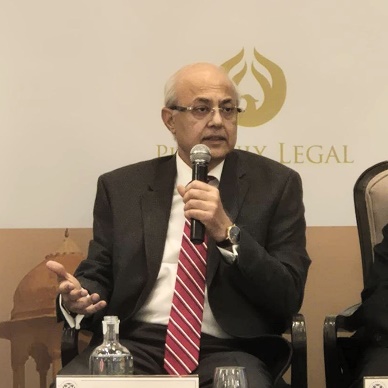
Justice Manmohan highlighted the landmark judgment in Kesavananda Bharati v. State of Kerala, (1973) 4 SCC 225, where a full bench of 13 judges ruled that while Parliament can amend the Constitution, it cannot alter its basic structure, which includes the rule of law and separation of powers. This doctrine has preserved India’s democracy, maintained institutional checks, and gained recognition in countries like Pakistan, Bangladesh, Malaysia, Taiwan, and Slovakia. He emphasized that judicial independence protects contract enforcement and ensures continuity for investors, explaining,
“No executive can influence the judiciary. The judiciary is separate and independent from the executive. And that is the rule of law that we have. No one can trample upon it.”
-Justice Manmohan
Justice Philip Antony Jeyaretnam: How does the Singapore International Commercial Court (‘SICC’) fit into the international disputes landscape?
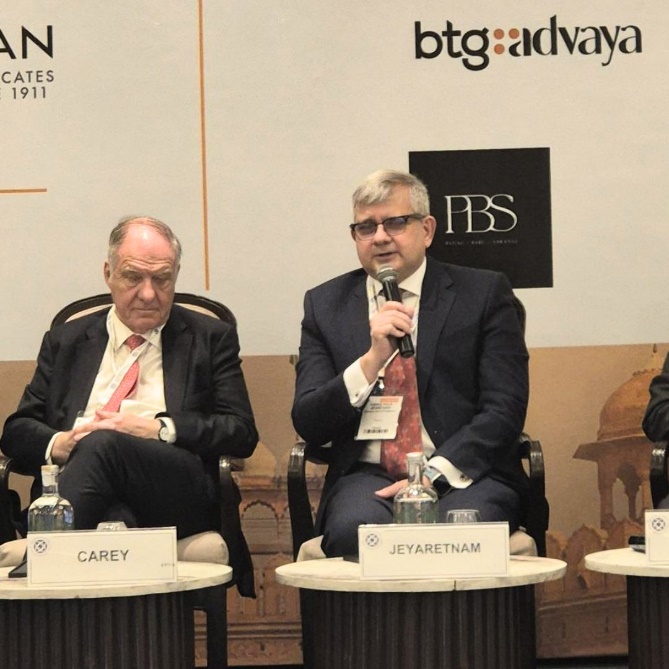
Justice Jeyaretnam explained that the SICC primarily addresses cross-border commercial disputes between parties from different countries. The Court includes a diverse bench of civil law and common law judges, including an Indian judge, and blends civil-law practices such as early active case management with common-law procedures like cross-examination. He emphasized that the SICC strengthens the rule of law in international commercial disputes by providing reasoned judgments, transparency, and a reliable legal framework, while also complementing arbitration mechanisms.
Mr. R. Venkatramani: Are rule of law and access to justice mutually reinforcing in impacting social, economic, and political outcomes?
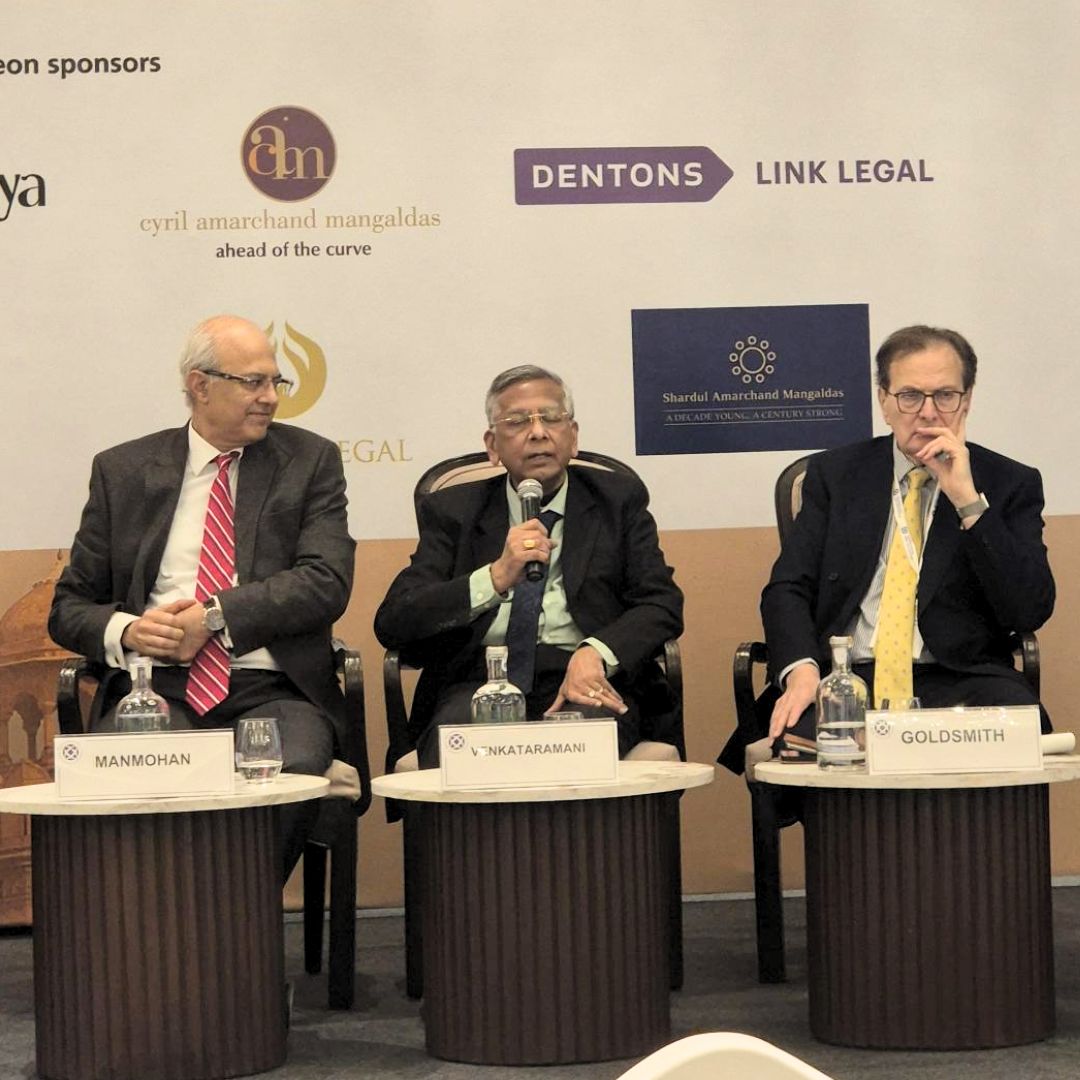
Mr. Venkatramani emphasized that India has successfully integrated fundamental rights, directive principles, and constitutional values into a framework that supports both rule of law and access to justice. He underlined that access to justice goes beyond institutional availability, requiring mechanisms that allow all sections of society to benefit from the legal system. Sharing a personal experience from 1983, he recounted how observing a rural panchayat school inspired him to file a petition advocating the Right to Education as a fundamental right, illustrating how legal action can reinforce equality and justice.
Lord Peter Goldsmith KC: How did the modern rule of law emerge, and how is it recognized as a constitutional principle in common law systems?
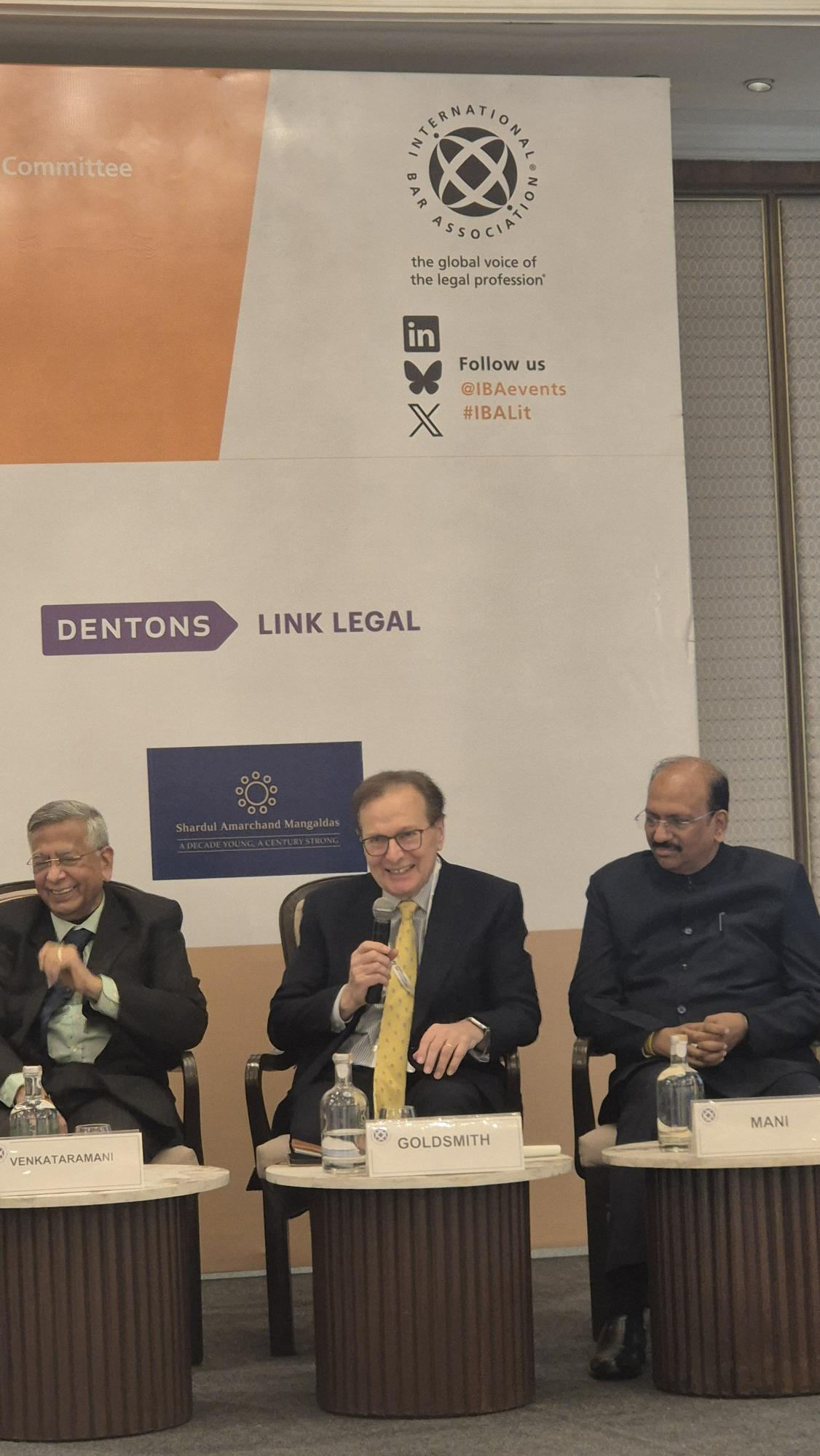
Lord Peter Goldsmith KC traced the origins of the rule of law to historic instruments such as Magna Carta (1215), highlighting Article 29 of the Constitution and its influence on subsequent global declarations of human rights. He contrasted India’s basic structure doctrine, which safeguards constitutional principles, with the UK’s parliamentary sovereignty. He stressed that the rule of law ensures that everyone, including governments and parliaments, is subject to the law, and cautioned against confusing it with mere rule by law or rule by lawyers.
Mr. Rajiv Mani: What elements of the Indian constitutional framework have helped India remain a rule-of-law-abiding jurisdiction for over 75 years?
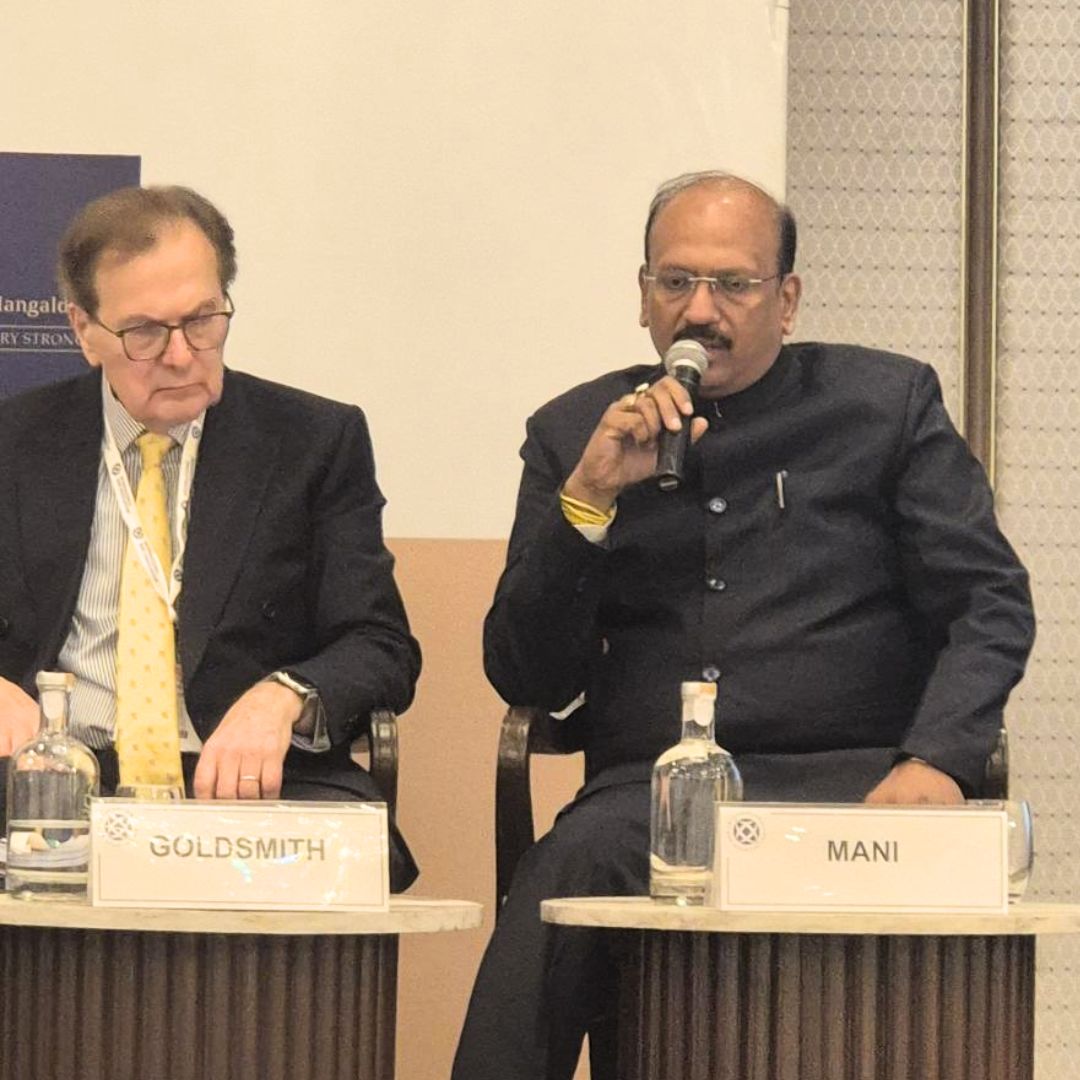
Mr. Mani highlighted India’s historical emphasis on dharma (duty and righteous conduct), enshrined in the Preamble, Part III, and Part IV of the Constitution. He noted that judicial independence, inclusive democracy, and the basic structure doctrine collectively ensure that India governs by rule of law rather than rule by law, protecting citizens’ rights and sustaining democratic governance.
Rapid Fire Questions
Following the detailed discussions, Mr. Pasrich began with the rapid-fire round, posing a series of concise questions to the panellists to gain quick insights on pressing issues and emerging trends in law, justice, and dispute resolution:
-
To Justice Manmohan: Please mention some nstances where weak judicial approach has led to a breakdown of rule of law.
To illustrate how weak judicial approach undermines the balance between society’s needs and individual rights, Justice Manmohan shared an example of a brilliant student forced into a career by his State. He explained how individuals cannot realize their potential in a society which has no rule of law.
-
To Justice Jeyaretnam: Singapore’s shift to therapeutic justice in family law.What does that entail?
Justice Jeyaretnam explained that therapeutic justice moves away from adversarial disputes to a system focusing on healing and family interests, especially the interests of children. It simplifies processes, reduces time and costs, and continuously reforms the justice system to serve users better, thereby promoting rule of law goals.
-
To Mr. Rajiv Mani: Legislative reforms to augment social, economic, and political welfare in India. What has India done differently, both procedurally and substantially regarding such legislations, which you felt can give a definitive advantage in its goal of becoming a developed nation?
Mr. Mani highlighted how India has pursued holistic reforms like the Jan Vishwas Act 2023, major amendments to the Companies Act, 2013, Arbitration and Conciliation Act, 1996 (‘Arbitration Act’), and the Commercial Courts Act, 2015. These aim to improve citizens’ lives, promote ease of doing business, and strengthen alternative dispute resolution mechanisms for a more effective rule of law.
-
To Lord Goldsmith: What does ‘rule of law’ mean in practice? Is it just about having laws and courts or are there other core components that must be present before we can say that the ‘rule of law’ truly exists?
Lord Goldsmith underscored that rule of law included five core elements: everyone is subject to the law, fairness, judicial independence, legal certainty, and access to justice. Beyond courts, it also involves ADR, arbitration, and the broader enforcement of social, economic, and human rights.
-
To Mr. Venkatramani: Can experiments in the making and working of institutions of justice and procedures, specific to a country, like the Singapore model of international commercial court, be replicated in India and elsewhere?
Mr. Venkatramani responded in positive, stating that such models can be adapted to local conditions. Replication should consider domestic realities, like Nyaya Gram experiments, and such ventures can help promote global rule of law and equality while enhancing access to justice for specific communities.
-
To Justice Manmohan: Could the Supreme Court’s decision to allow modification of arbitral awards (Gayatri Balasamy v. ISG Novasoft Technologies Ltd., (2025) 7 SCC 1) have an adverse impact on how the arbitration landscape in India is perceived globally?
Justice Manmohan explained that the modification power is limited and intended to prevent delays or unnecessary re-litigation. It aligns with the Arbitration Act’s objectives, using Article 142 of the Constitution to achieve complete justice while supporting the evolving arbitration framework in India.
The first day concluded on a thoughtful note, with the next panel session scheduled for 06-12-2025, promising to carry the discussion forward with deeper engagement on India’s evolving dispute-resolution and rule-of-law landscape.