
HIGH COURT AUGUST 2024 WEEKLY ROUNDUP| Stories on Yuvraj Singh; Rajdeep Sardesai; Malabar Gold; International tax charges; and more
A quick review of reported cases this week from various High Courts across the country
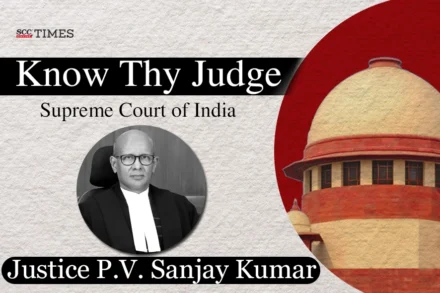
Justice PV Sanjay Kumar is a sitting Judge of the Supreme Court of India. He has formerly served as the Chief Justice of Manipur High Court and as Judge of Punjab & Haryana High Court as well as Andhra Pradesh High Court.
The taxpayer is nowhere distinguished between NRIs and Indian Citizens. The notice issued under Section 148 of the Income Tax Act, 1961 must comply with the requirement of the Scheme whether or not the taxpayer is NRI/Indian Citizen.
A quick review of reported cases this week from various High Courts across the country
The State Government is directed to frame guidelines for extending benefit of accreditation to journalists working in small newspapers in district and constituency levels based on a fair and rational criteria.
Have a quick look at what the High Courts across the country adjudicated on through this week.
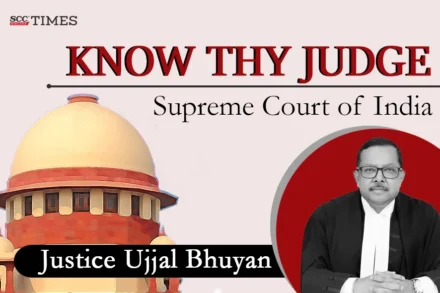
On 05-07-2023, the Supreme Court Collegium had recommended the appointment of Justice Ujjal Bhuyan, Chief Justice, High Court for the State of Telangana to the Supreme Court of India. Upon acceptance of the recommendation by the Law Ministry, Justice Bhuyan took oath as Supreme Court Judge on 14-07-2023.
Nowhere, in the Holy Book, the Almighty prohibited women from entering prayer halls to offer their prayers and Chapter 2 Albakarah 222-223 makes it evident that except during a particular period which is given as ‘rest period’ for women by the Nature itself, there is no bar against women to offer prayers.
The foundation of show cause notice itself was bad in law and the assumption that return could not have been filed in the GST portal of Telangana did not flow from Section 140 of the Central Goods and Services Tax Act, 2017.
A quick legal roundup to cover important stories from all High Courts this week.
The Court opined that the press conference was held to update the media about the status of the proceedings before the Commission and the extract of the press conference did not contain any material indicating that Respondent 3 pre-judged the issues pending before him.
As per petitioners, the Chief Minister is responsible for tweeting fake circular of closure of hostels and messes in the Osmania University due to acute shortage of water and electricity.
The Court opined that the allegation that money is obtained to bribe the judges of this Court casts a serious doubt on the independence of judiciary and implies that justice is up for sale and such serious allegations need to be investigated.
The Court is empowered to permit release of such percentage of amount under Section 19 of the MSME Act, 2006, deposited to the supplier as it considers reasonable under the circumstances of the case, subject to such condition as it deems necessary to impose.
The Court stated that due to the non-obstante clause in Chapter X-A i.e., the General Anti-Avoidance Rules (‘GAAR’), its provisions get an overriding effect over and above the other existing provisions of law.
There is a distinction between “Law and Order” and “Public Order”, i.e., offences that target specific individuals fall under the category of “Law and Order” and it is only when the criminal activities of an individual adversely affect the public at large that their conduct is deemed to disturb “Public Order”.
The Telangana High Court noted that multiple issues could have driven Rohith Vemula to commit suicide and further, it could also not be established that the actions of the petitioners had driven Rohith Vemula to commit suicide.
The High Court found the cause of action to be untenable as the petitioners were already accused in a similar case.
Under Rule 6(1)(a) of the 1977 Rules, a manufacturer is required to mention on every package the name, address, telephone number, e-mail address of the person or the office that could be contacted in case of a consumer complaint.
Petitioners sought relief under Article 226 of the Constitution, to consider the letter and do the needful by nominating a Shia Muslim community member in Telangana Legislative Council under Governor’s quota for upliftment of their community.