Bombay High Court lays down test for culpability in ‘Abetment of Suicide’ cases
“A fatal impulse or ill-fated thoughts of the suicide, however unfortunate and touchy it may be, cannot fray the fabric of the provision contained in Section 306 IPC.”
Although much emphasis is laid on the calls received by the deceased on the day of his death and the petitioner has sought to argue that the manner of demanding repayment constitutes as harassment, in the opinion of this Court, even if the allegations are taken at the highest, such incessant pestering still falls short of instigation.
“When the deceased came to know that the accused was about to marry another woman, she inquired about the same over the phone, and enraged by the query, the accused scolded the deceased and said, ‘go away and die’. The deceased feeling mentally disturbed, jumped into a well along with her daughter and committed suicide.”
“In the case on hand, even if we believe that the accused due to opposition and pressure from his family declined to get married with the deceased, it could not be said that he led to a situation by which the deceased was left with no other option but to commit suicide.”
“Reading of the complaint, filed in the present case, would go to show that, necessary ingredients to attract the alleged offence is not found.”
“Every dispute, quarrel or altercation arising from the matrimonial life are not criminal offence. It will take colour of Criminal law only when there are no alternatives for the wife but to put an end to her life, because of the harassment.”
The counsel submitted that considering the social background of all parties involved, as they were living in the vicinity where relatives and neighbours do not hesitate to intervene in each other’s affairs, it cannot be said that the appellants spoke to encourage the minor girl in committing suicide.
The suicide note has no date, creating doubt about when it was written. It neither spells out any circumstance, which can be labelled as abetment on the part of wife and her brothers, nor does it disclose any proximate reason for the suicide.
Instigation or incitement on the part of the accused person was the gravamen of the offence of abetment to suicide but a mere allegation or accusation of harassment made by the deceased prior to his death, cannot be held as the fulcrum of an offence under Section 306 IPC.
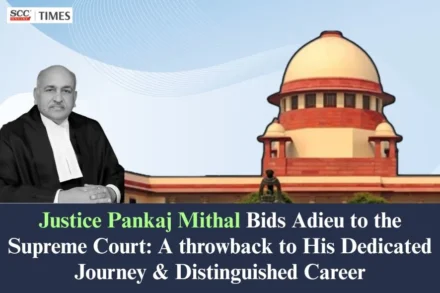
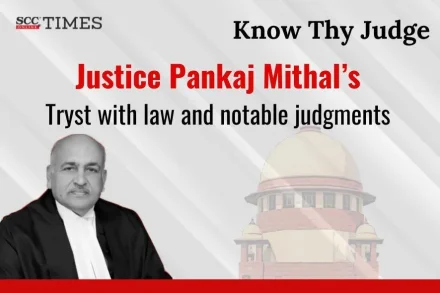
Sitting Judge of the Supreme Court of India, Justice Pankaj Mithal began his career in law in the 1980s and subsequently went on to become Chief Justice of High Courts of J&K and Ladakh and Rajasthan.
Arbitration and Conciliation Act, 1996 — Ss. 11, 12(5) and 18 — Unilateral appointment of sole arbitrator/curating panel of arbitrators: Unilateral appointment
“Every case of suicide does not amount to abetment and therefore, the Court has to see whether the conduct of the accused was such that a normal person, not merely a hypersensitive one, would have been driven to suicide.”
Even after assuming, that such relationship existed between petitioner and his sister-in-law, or demeaning language in reference to the deceased, was exchanged via WhatsApp between them, these facts, stand alone, do not, prima facie, disclose the specific ingredients of cruelty or harassment related to dowry demand.
“A remark such as asking the deceased to not be alive if she cannot live without marrying her lover will also not gain the status of abetment. There needs to be a positive act that creates an environment where the deceased is pushed to an edge in order to sustain the charge of Section 306 IPC.”
“There must be a close proximity between the positive act of instigation by the accused person and the commission of suicide by the victim.”
“It is essential to establish that the death was a result of suicide and that the accused actively abetted its commission. This can involve instigating the victim or engaging in specific actions that facilitated the act. The prosecution must prove beyond doubt that the accused played a definitive role in the abetment. Without clear evidence of an active role in provoking or assisting the suicide, a conviction under Section 306 IPC cannot be sustained.”
“To convict a person for abetment of suicide under Section 306 IPC, there has to be a clear mens rea on the part of the accused to abet such a crime and it requires an active act or a direct act leading to the commission of suicide.
The family of four committed suicide near railway tracks, allegedly due to atrocious and forcible demand for money which they owed to co-accused.
At this stage, averments made in the petition that the allegations levelled against accused is false, cannot be looked into while exercising powers under Section 528 of the Nagarik Suraksha Sanhita, 2023.