
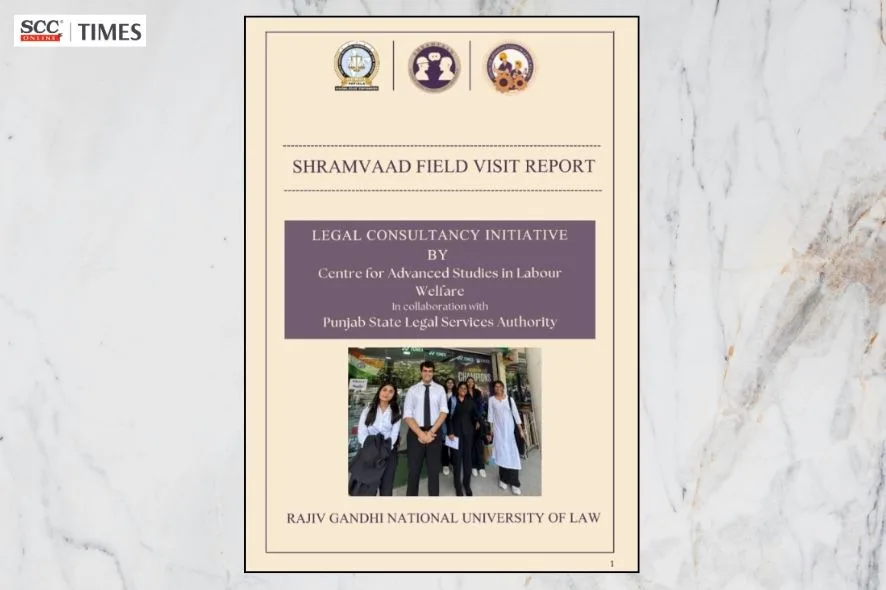
The survey was undertaken under the SHRAMVAAD Legal Consultancy Initiative, led by the Centre for Advanced Studies in Labour Welfare (CASLW), Rajiv Gandhi National University of Law, Punjab, in collaboration with the Punjab State Legal Services Authority on 8th October 2025. The primary purpose of the survey was to examine the extent to which labour welfare legislations are understood, implemented, and complied with at the grassroots level, particularly within small establishments and the informal sector.
Conducted as a field-based empirical study in Patiala, Punjab, the survey covered retail shops, food and beverage establishments, service outlets, and street vendors. It focused on compliance with the Punjab Shops and Establishments Act, 1958, allied labour legislations (including wage, social security, and maternity benefit frameworks), and the Street Vendors (Protection of Livelihood and Regulation of Street Vending) Act, 2014. Data was collected through structured interviews with employers, informal interactions with employees, direct observation of workplace conditions, and limited review of statutory records and registers.
The survey sought not only to measure formal compliance but also to identify gaps between statutory mandates and actual workplace practices, including issues relating to working hours, overtime compensation, leave entitlements, women’s labour protections, minimum age norms, wage payment practices, occupational safety, and enforcement mechanisms. Particular emphasis was placed on understanding how lack of awareness, administrative opacity, and weak inspection regimes contribute to persistent non-compliance.
The findings reveal a pattern of partial compliance: while most formal establishments were registered, statutory display requirements were widely ignored, managerial awareness of specific legal obligations remained limited, and lawful overtime compensation was entirely absent despite extended working hours being common. Higher compliance was observed in areas influenced by social sensitivity and reputational concerns, such as restrictions on night work for women and minimum age of employment, while maternity benefits were unevenly implemented and often underutilised. Wage payments showed increasing formalisation through digital modes in organised establishments, yet labour inspections were infrequent and enforcement weak. Street vendors operated in near-total regulatory invisibility, with no registration or awareness of statutory protections, underscoring the persistent gap between legislative intent and workplace realities in the unorganised and semi-organised sectors.
To know more click here