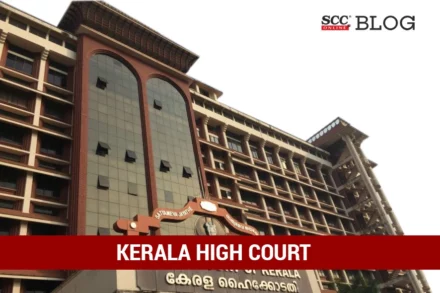
Kerala High Court refuses to quash case against priest accused of rape on pretext of marriage
Kerala High Court said that there was no undue delay in filing the FIR, as the relationship was predicated on the promise of marriage
The Court directed the company’s Internal Complaints Committee to hold an enquiry into the complaint of the petitioner in accordance with the provisions of PoSH Act, 2013 and complete the process as expeditiously as possible within an outer limit of 90 days.
The Court strictly observed that the offence against the petitioner is a shade more than horrendous. “More than horrendous, I say, for the reason that the petitioner is a teacher (…) If this cannot become a crime, it is not understandable as to what else can be”.
It was said that since all sub-sections of Section 354A of IPC start with the words ‘a man’, a female accused would not be covered under this Section.
The question of limitation is a mixed question of law and fact and, therefore, the issue of limitation could not have been decided by the local committee at the threshold stage without evidence.
The Court stated that only because respondent is police personnel, it cannot be a ground to hold him guilty without conducting the statutorily prescribed departmental enquiry and that too in a matter, where the complainant and the witnesses are also police personnel.
GNLU was directed to disclose the measures taken by the ICC to ensure that the complaints lodged before the Committee reach them without any manual intervention or external pressure.
“The medical board has opined that the petitioner required regular medical care and supervision and the support of the family members for his compliance to the medical treatment.”
Kerala High Court scrutinized the definition of ‘sexual assault’ and expressed that the same has to be construed as sexual offence against a victim, including sexual harassment.
“Looking to the nature and gravity of the offences and owing to the close relationship between the accused and the complainant, the Uttaranchal High Court exercising its powers under Section 482 of the Criminal Procedure Code, 1973, quashed the FIR.”
“During the said period of trial, there is no occasion for the applicant to keep him languishing behind the bars, as it would serve no purpose especially in view of the aforesaid and as it is a trite law that no person is presumed guilty until proven otherwise.”
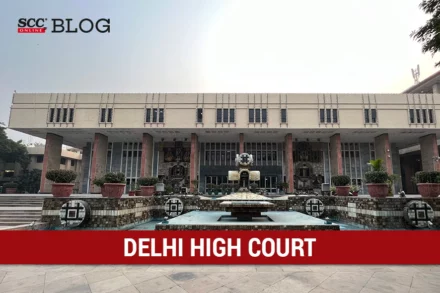
Delhi High Court observed that what ultimately turned decisive was a voluntary acknowledgment by the appellant-professor of his acts of indiscretion in getting attracted by the charms of a young female student.
Delhi Court observed that it is crucial for Delhi Commission for Women to focus on substantive actions rather than superficial gestures just for the sake of publicity and bringing the name in newspaper or to find fault in the other institution when equal responsibility lies with them also.
The Court strictly observed that in India, Gurus/teachers are considered akin to God and the Government Teacher’s perverse acts have created fear in the minds of the parents of minor girls students.
Kerala High Court observed that “The materials placed by the prosecution prima facie disclosed the existence of all ingredients constituting the alleged offences.”
The Supreme Court attributed the reluctance on the part of victims of Sexual Harassment at workplace to report the misconduct to, (i) uncertainty about who to approach under the Act for redressal of their grievance; and (ii) lack of confidence in the process and its outcome.
The Court was of the view that the petitioner’s utterances towards the victim and the allegations stated in the FIR, prima facie attract the penal provisions related to sexual harassment.
This order will not stand in the way of the Committee constituted under the Chairmanship of Justice K.Kannan (Retd.) to enquire into the matter as per the terms of reference and there will also be no fetters on the law enforcing agency from proceeding with the investigation in accordance with law.
by Tanya Agarwal†
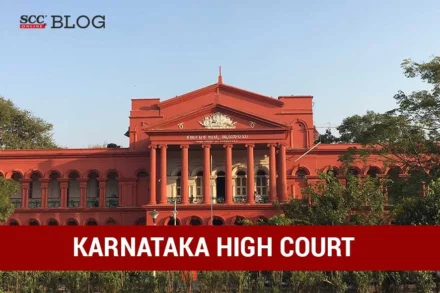
The Karnataka High Court while expressing its shock over unlikeliness of sexual abuse in open places, quashed the charges of sexual harassment and fraud against the petitioner