
Delhi HC: Mere Non-Return of Stridhan Insufficient for Section 406 IPC Without Specific Entrustment
In Harcharanjeet Bains v. State (NCT of Delhi), the Delhi High Court partly quashed criminal proceedings arising from a matrimonial dispute. The

Bringing you the Best Analytical Legal News


In Harcharanjeet Bains v. State (NCT of Delhi), the Delhi High Court partly quashed criminal proceedings arising from a matrimonial dispute. The
The Delhi High Court has notified the High Court of Delhi Designation of Senior Advocate Rules, 2026, replacing the framework notified in

The Gauhati High Court has held that Talaq-E-Hassan is a valid and recognised form of Talaq and is not prohibited under law.

Addressing the FIDIC Global Infrastructure Conference 2026, the Chief Justice of India underscored that the Rule of Law was integral to infrastructure delivery, calling for clear contractual obligations, balanced risk allocation and effective dispute resolution mechanisms.
The Supreme Court of India announces to launch a Monthly Lecture Series on Law, Justice and Legal Education, creating a continuing platform for meaningful dialogue among the Bench, Bar, academia, experts and young legal minds, while also proposing the annual “Supreme Court Nyaya Shiksha Samman” to recognise distinguished contributions to legal education.
The Supreme Court has issued detailed directions to tackle delays in dowry and cruelty cases. From framing charges within 60–90 days and
The National Company Law Tribunal has introduced uniform Registry and case-listing practices, preparation of daily cause lists, prescribing timelines for first listing and a “With Defects” mechanism for matters requiring judicial determination
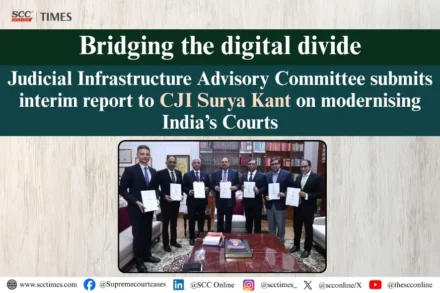
The Judicial Infrastructure Advisory Committee, constituted by CJI Surya Kant, has submitted its interim report outlining a blueprint for modernising Courts across the country, addressing infrastructural deficiencies, strengthening e-Courts and citizen-centric services, and establishing modern court complexes.
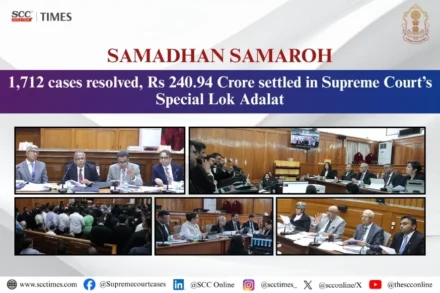
The three-day Special Lok Adalat under SAMADHAN SAMAROH 2026 listed 3,285 cases and settled/disposed of 1,664 cases, with 48 additional cases resolved through mediation, taking the total disposals to 1,712.
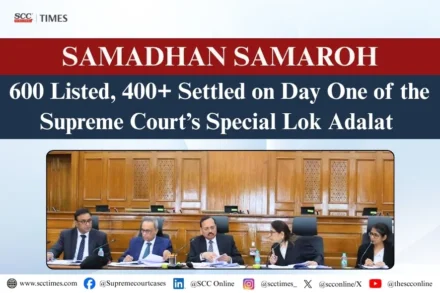
More than 600 cases were listed for settlement before 16 Special Lok Adalat Benches of the Supreme Court on the first day of the Special Lok Adalat, with over 400 cases being amicably settled through dialogue between the parties.
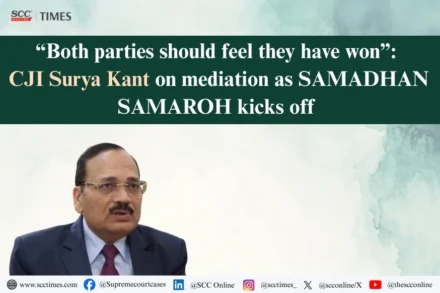
In separate interactions, CJI Surya Kant discussed the vision and objectives behind the initiative, while Justice P.S. Narasimha explained its implementation, the role of mediation and the need to institutionalise the process for long-term dispute resolution.
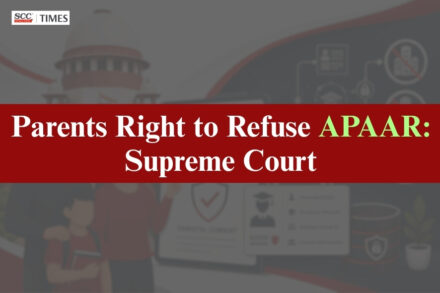
The Supreme Court has directed that the APAAR consent form must expressly allow parents or guardians to refuse consent. The Court also

Neytra and Saurav are part of the firm’s Corporate & Commercial and Capital Markets & Securities Law practice groups.

In December, states and UTs rolled out key reforms including Gujarat’s Shops and establishment reform, Rajasthan’s decriminalisation ordinance, and Karnataka’s police service revamp.

Dive into November 2025’s state legislative landscape, spanning tenancy reforms in Jammu & Kashmir, workplace regulation updates in Haryana, Kerala’s push for citizen centric public service delivery, and digital governance initiatives across Maharashtra and other landmark reforms.

by Siddharth R. Gupta* and Shaina Masih**

Explore key legal and policy developments across Indian states from July to September 2025. Covering reforms in education, taxation, labor welfare, and clean energy, this roundup reflects India’s growing momentum toward transparent, technology-enabled, and citizen-first governance.

by Siddharth R. Gupta* and Maahi Mishra**

UK’s arbitration law has been reshaped by the Arbitration Act 2025, introducing reforms that enhance procedural clarity, reinforce tribunal authority, and align the framework with global standards.

by Siddharth R. Gupta* and Vedanshi Gangrade**