DIFC Court refuses indemnity costs despite ‘highly disruptive’ litigation conduct
The Court accepted most complaints but found no dishonesty, bad faith or abuse of process.

Bringing you the Best Analytical Legal News


The Court accepted most complaints but found no dishonesty, bad faith or abuse of process.

The Court further remarked that another important effect of the Social Audit is that the management of these institutions sometime misbehave with the residents, especially women and children; this way, they would always be cautious that they were being observed.
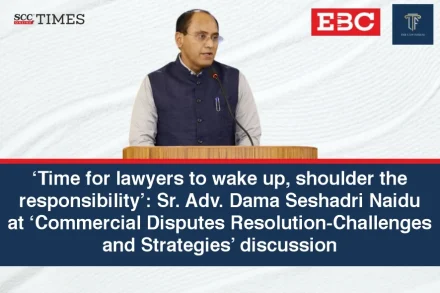
EBC in collaboration with The Law Forum hosted a discussion on ‘Commercial Disputes Resolution- Challenges and Strategies’ at the Delhi High Court on 22-05-2025.
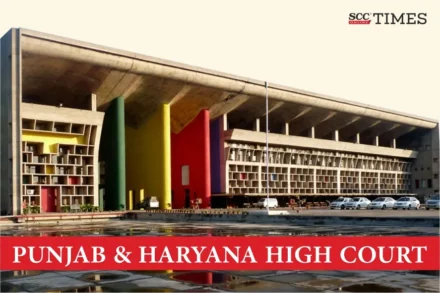
As the poor person has been unnecessarily forced to approach this Court for seeking parole, the Court was inclined to impose exemplary costs on respondent 4 and 5, but the assurance is given that in future, parole matters shall be decided based on material available on record.
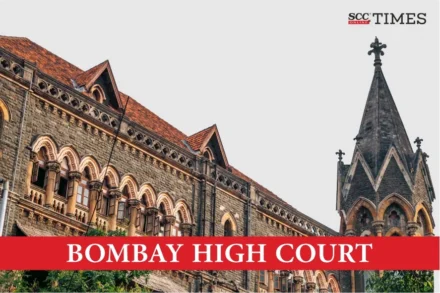
The present petition is instituted to question the show cause notice dated 07-12-2023 only after the show cause notice is adjudicated and the order dated 22-07-2024 is made.

For such a legal misadventure resulting in the wastage of precious judicial time of the High Court, which could have been better spent answering the call of justice raised by the teeming millions, the Court imposed costs of Rs.1,20,000/- on the appellant.
Respondents cannot have an approach that the orders passed by this Court issuing specific directions are rendered meaningless and the proceedings are to be listed only to be adjourned.
Respondents have not shown any active role of petitioner in the capacity of the promoter, in the management of the company, Shrenuj, and any role and obligation factually fastened on petitioner in the various compliance which are required to be undertaken under SEBI (LODR) Regulations, at the time of freezing of his demat accounts.
The Court stated that the State may recover the amount of cost after fixing the “responsibility on some erring officer who has derelicted in not complying with the order in time”.
After considering the inventory of the infringing products and the conduct of defendants, the Court decreed the suit in favour of plaintiff for Rs 50 lakh on account of damages and Rs 2 lakh are awarded as costs.
Madras High Court said that if the Arbitrators are not paid their fees / costs on account of the moratorium order, the object of arbitration will get defeated, as competent Arbitrators will hesitate to become Arbitrators in a dispute involving Companies facing financial crisis.
“The mere insertion of  figure above the word
 in the defendant’s mark does not mitigate the fact of infringement or of the defendant consciously seeking to pass off its products as those of the plaintiff.”
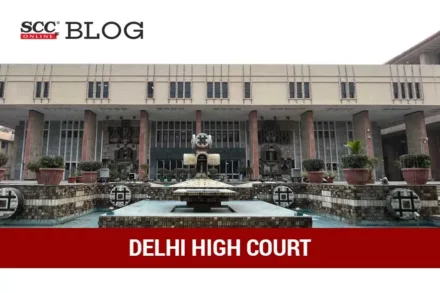
The use of ‘VIVANTA VACATION CLUB' as a part of a trade name will likely deceive unwary consumers of their association with the mark ‘VIVANTA' as a domain name can have all the characteristics of a trade mark and could result in an act of passing off.
The Delhi High Court observed that ‘VOLVO' mark was blatantly infringed as branded stickers and infringing products bearing the said mark were found on the premises of the defendant.
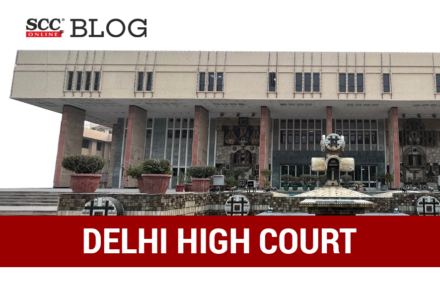
The Delhi High Court opined that the defendants took unfair advantage of the reputation and goodwill of Louis Vuitton (LV) marks and deceived the unwary consumers of their association with the LV marks.
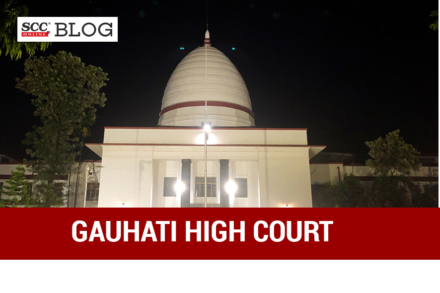
Gauhati High Court was faced with a peculiar case where “petitioner” had followed every rule in the book to file a well-planned petition; however, in reality the petitioner did not exist!
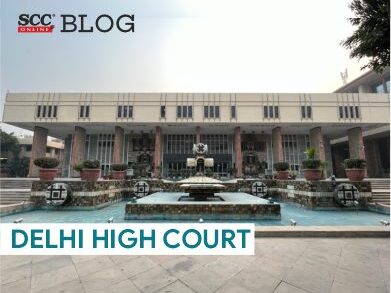
The Delhi High Court granted permanent injunction to RPG Enterprises Ltd. for its mark ‘RPG’. Further, RPG Developers (P) Ltd. were restrained from offering/rendering any services using the impugned trade mark ‘RPG’ and/or ‘RPG DEVELOPERS’ and/or artistic work which was a colourable imitation of the plaintiff’s artistic work or any other trade mark/artistic work deceptively similar to the ‘RPG’ marks of the plaintiff. Additionally, Rs. 3 lakhs were awarded as damages to the plaintiff.
The Delhi High Court held that Facebook posts cannot be treated as determinative of the location of a person at a particular point of time. Therefore, the Court set aside the order of Intellectual Property Appellate Board and restored the rectification petitions filed before the Intellectual Property Appellate Board for re-hearing.
It is found that taking undue advantage of the previous Notice, by which parties’ Advocates were permitted to indicate the date of
Delhi High Court: A Bench comprising of Valmiki J. Mehta, J. dismissed an application for recalling of its earlier order, whereby the