NCLT Targets Case Backlog with Single-Judge Benches—What Changes Now
The National Company Law Tribunal has issued an order streamlining proceedings by empowering Single Judicial Member Benches to hear defined classes of matters across all benches.
Corporate Laws (Amendment) Bill, 2026 was introduced in Lok Sabha to propose wide-ranging reforms to the Companies Act, 2013 and the LLP Act, 2008, focusing on decriminalisation, ease of doing business, improved governance, and compliance rationalisation.
The transaction involved demerger and amalgamation of NBFC and asset management businesses, alongside regulatory, ESOP, and competition law advisory.
“When an employee submits resignation, the employer has a duty to accept and relieve, subject only to any contractual conditions, or if it does not follow a stipulated procedure. He can also refuse acceptance when disciplinary proceedings are contemplated against the employee for grave misconduct or causing monetary loss to the establishment.”
The transaction marks the first phase of consolidating L&T’s real estate assets into a unified entity positioned for India’s growing property market.
MCA redefined small companies by raising the paid-up capital limit to ₹10 crores and the turnover limit to ₹100 crores, expanding coverage and easing compliance.
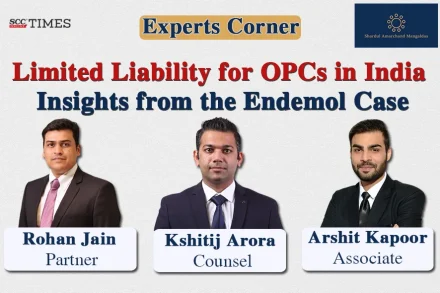
by Rohan Jain*, Kshitij Arora** and Arshit Kapoor***
MCA expand fast-track merger eligibility and introduce new compliance forms and procedures for smoother regulatory approvals under Companies Act 2013.
“A business failure could not lead to an assumption of commission of the offence of cheating, as the primary ingredient for such an offence was a dishonest or fraudulent intention from the very beginning.”
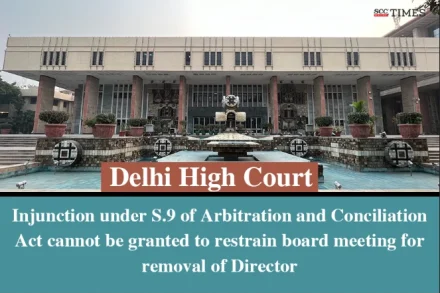
The remedy under Section 9 is equitable, discretionary in nature and primarily exercised to preserve subject matter of arbitration or to prevent frustration of arbitral proceedings. Such power must be exercised cautiously, particularly where interim relief sought effectively amounts to grant of final relief or impinges upon statutory powers conferred under Companies Act, 2013.
Bombay Stamp Act, 1958 (60 of 1958) — Ss. 33, 34, 37, 4(2), 4(1) and Sch. I Art. 25 Expln. I — Stamp duty on agreement to sell — Liability to pay under the 1958 Act
It is the duty of the auditor to conduct audit with professional skepticism and due diligence and report their opinions in an unbiased manner and the same was not done in this case.
“Provisions in the Customs Act, 1962 do not negate or override the statutory preference in terms of Section 529A of the Companies Act, 2013”.
Supreme Court observed that if the interpretation that once an auditor resigns, the proceedings under Section 140(5) stand terminated and are no longer further required to be proceeded, an auditor may resign to avoid Tribunal’s final order and its consequence as provided under the second proviso to Section 140(5).
Central Goods and Services Tax Act, 2017 — S. 174(2)(c) — Scope of: First part protects any right, privilege, obligation, etc. under
The Supreme Court observed that the important role of the Regulator cannot be circumvented by simply asking for rectification under Section 111A of the Companies Act, 1956.
On 2-1-2023, the Ministry of Finance has notified the Securities Contracts (Regulation) Amendment Rules, 2022 to amend the Securities Contracts
The Delhi High Court ruled that the moratorium granted by the NCLAT, staying the institution of suits and proceedings against the Corporate Debtor, after the resolution process was initiated against it under Sections 241 and 242 of the Companies Act, 2013, was akin to an order of moratorium passed under Section 14 of the Insolvency and Bankruptcy Code, 2016.
Arbitration and Conciliation Act, 1996 — Ss. 7, 8 and 11 — Essential requirements of arbitration agreement: When there is discernible intention
Calcutta High Court | While dismissing a writ petition challenging the capacity of Registrar of Companies (ROC) to initiate multiple/