2026 SCC Vol. 7 Part 2: Key Supreme Court Cases on Constitution, Government Grants, and Criminal Law
Key Supreme Court rulings on Article 21, government grants, arrest, and preventive detention.
Public order cannot be invoked merely because bovine animals were allegedly transported without permission; where the detenue is not informed of his right to represent before the detaining authority, preventive detention becomes constitutionally unsustainable.
Supreme Court Quashes FIRs, Invokes Article 142 and Directs Pan-India Compensation for Students’ Families in NEET-UG 2026 Protests
Supreme Court clarified that “criminal antecedents” in its NEET 2026 protest order refers only to “grave and heinous offences” and held that NCT of Delhi and other States are at liberty to decide closure or withdrawal of FIRs in accordance with law.
Explore the latest Supreme Court Cases in 2026 SCC Vol. 6 Part 2 on freedom of speech, preventive detention, separate trials, pandemics, and more.
The Court directed that all CCTV footage, drone footage, body-worn camera recordings, videography, wireless communication records, and PCR lodge collections related to the students’ protest be preserved.
Kerala HC stated that the duty of the Court is to uphold the democracy and ensure that the democratic procedures are strictly followed. However, in extraordinary situation, Court must take extraordinary decision to protect the democratic principles and people’s mandate.
A quick roundup to cover all the important legal developments and cases this week.
The High Court held that where ordinary criminal law provides adequate remedies, the State cannot bypass judicial scrutiny and directly invoke preventive detention merely because the accused has secured bail or because prosecution under ordinary law may involve procedural rigours.
Allahabad High Court explains when an offence transcends law and order to affect public order, upholding preventive detention under NSA.
“Despite being public servants, their conduct reflects scant respect for law of land the dereliction of duty on their part, which can be considered to be misconduct in service on their part, since they have failed to perform their duties in accordance with law.”
“Where potentiality of the act is to disturb the even tempo of the life of the community, it would be prejudicial to the maintenance of public order”
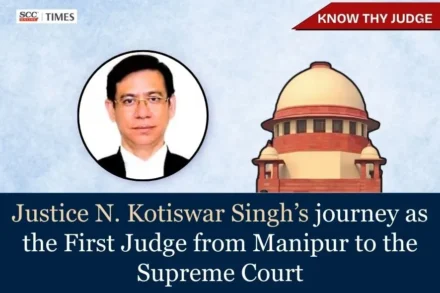
Justice Nongmeikapam Kotiswar Singh served as the Chief Justice of Jammu & Kashmir and Ladakh High Court, prior to being elevated as Judge of the Supreme Court of India on 18-7-2024.
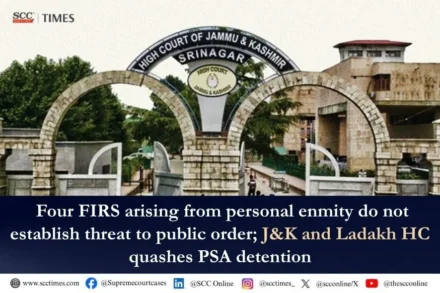
“The ‘Law and Order’ problems typically affect only individuals or small groups, whereas ‘public order’ disruptions affect the community’s normal functioning.”
“The Detaining Authority ought to have examined whether they were sufficient to curb the evil of further indulgence in identical activities which is the very basis of the preventive detention order.”
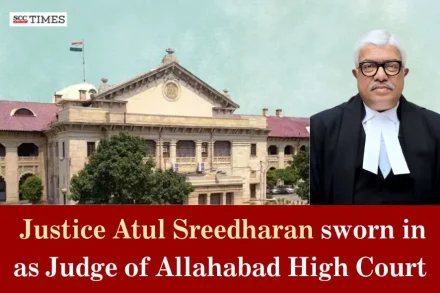
Justice Atul Sreedharan’s transfer recommendation to Chhattisgarh High Court was modified by the SC Collegium in October 2025.
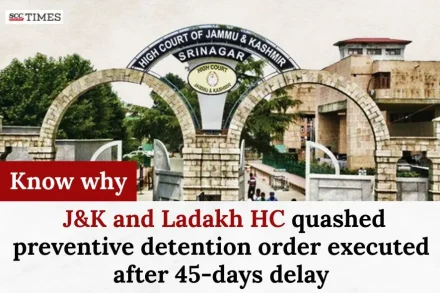
“If a detenue satisfied the Court that there was an unexplained delay in execution of the detention order, then such an order would be interpreted as breaking the live-proximity link in between the event of detention and passing of the detention order.”
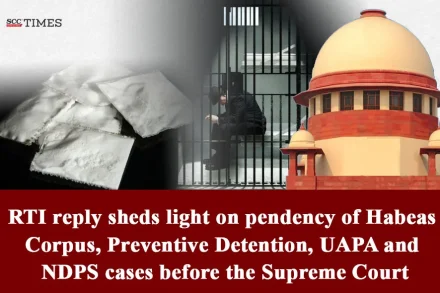
In September 2025, a RTI query was filed before the designated CPIO of the Supreme Court, seeking the statistics on pendency and disposal of cases by the Supreme Court.
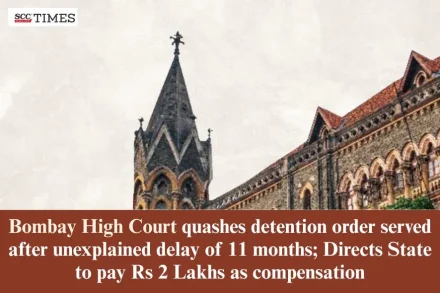
“The live and reasonable nexus between the alleged activities and purpose of detention was irretrievably lost by the unexplained delay of nearly over a year.”
“Sometimes offences are grievous, and sometimes, the manner in which a person behaves (someone with criminal antecedents) also creates fear amongst people. Therefore, for maintaining public order, peace, and tranquility in the region, this is a restraining step required in the attending set of facts.”