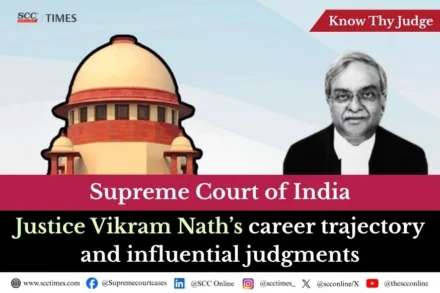
Know Thy Judge | Supreme Court of India: Justice Vikram Nath’s career trajectory and influential judgments
Justice Vikram Nath, a fourth-generation legal luminary and sitting Judge of the Supreme Court of India, joined the legal profession in 1987.

Bringing you the Best Analytical Legal News


Justice Vikram Nath, a fourth-generation legal luminary and sitting Judge of the Supreme Court of India, joined the legal profession in 1987.
The Supreme Court declined to reconsider the constitutional validity of hanging as the method of execution for death sentences in India. The
A three-Judge Bench of the Supreme Court in Deena v. Union of India, (1983) 4 SCC 645, specifically analysed and evaluated comparative merits of different methods of execution of death sentence and upheld the constitutional validity of hanging as mode of execution of death penalty.
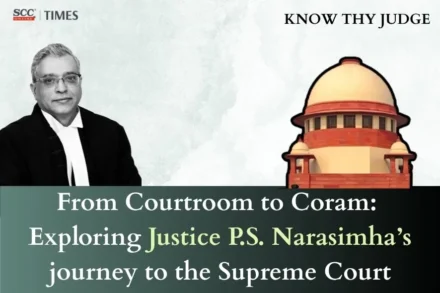
Appointed directly from the Bar as a Judge of the Supreme Court of India, Justice P.S. Narasimha’s tenure as an advocate and as a Judge boasts of several landmark cases.

The Court reiterated that though in a rape and murder case based on circumstantial evidence, the death penalty can be awarded in the ‘rarest of rare’, normally imprisonment for life without any remission may be awarded, unless a death sentence is inevitable.

A Bangladesh Tribunal on 17-11-2025, gave death penalty to the ousted PM as well as former Home Minister Asaduzzaman Khan Kamal. Sheikh Hasina also got a life sentence under charges for crimes against humanity.

Justice Joymalya Bagchi formerly serving as Judge of Calcutta High Court was appointed to the Supreme Court on 10-3-2025 and is in line to become the CJI in 2031.

Justice Vikram Nath, a fourth-generation legal luminary and sitting Judge of the Supreme Court of India, joined the legal profession in 1987.

In a significant decision, a 3-Judge Bench of the Supreme Court explored the contours of Article 32 of the Constitution to answer whether death sentence which has attained finality, can be revisited at all?
“Creating a false appearance of having solved a case by presenting that the accused had been brought to justice gave a misleading sense of resolution. This deceptive closure undermined public trust and falsely reassured society, while in reality, the true threat remained at large.”

“Admittedly, none of the witnesses examined on behalf of the prosecution has claimed to have seen the convict committing the murder of the victim. The case is entirely based upon circumstantial evidence.”
While the crime was heinous and against a child, the Court noted that although the act was “barbaric”, it could not be termed “brutal” in the sense that it required capital punishment.

Appointed directly from the Bar as a Judge of the Supreme Court of India, Justice P.S. Narasimha’s tenure as an advocate and as a Judge boasts of several landmark cases.

Justice Joymalya Bagchi formerly serving as Judge of Calcutta High Court was appointed to the Supreme Court on 10-3-2025 and is in line to become the CJI in 2031.

“Article 21 of the Constitution does not end with the pronouncement of the sentence but extends to the execution stage of that sentence. An inordinate delay in the execution of the sentence of death has a dehumanising effect on the accused. An inordinate delay caused by circumstances beyond the prisoners’ control mandates the commutation of a death sentence.”

This report covers the Supreme Court’s Never Reported Judgment, on commutation of sentence, dating back to the year 1954.

Read about the significant criminal law matters heard and decided by the Supreme Court and High Courts in October 2024

The accused was arrested in 2012 on the suspicion of murdering his wife, mother and 2-year-old daughter. In 2016, the Trial Court convicted him and imposed death penalty which was confirmed by Bombay High Court

The Court affirmed the father’s conviction but converted the death penalty to 20 years’ rigorous imprisonment without remission considering several mitigating factors favouring the accused.
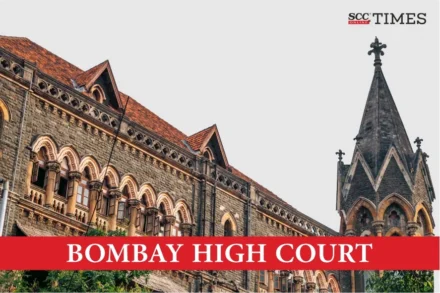
The present case is the most brutal, barbaric, and gruesome murder of a 60-year-old mother by her son on 28-08-2017 at Makadwala Vasahat, Kolhapur, where her body parts, i.e., liver, intestine, heart, rib and breast were eviscerated outside