








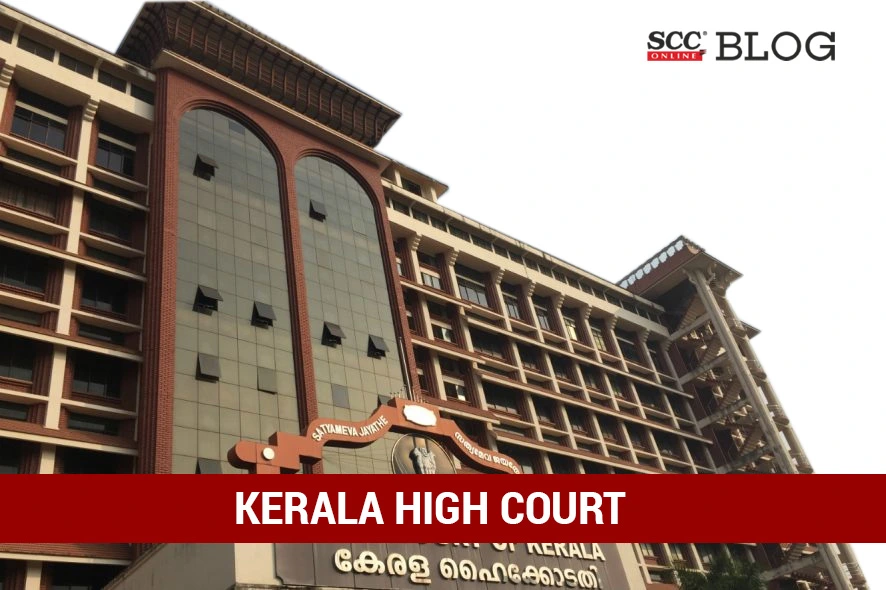
Kerala High Court: In a petition under Section 482 of Criminal Procedure Code, 1973 (‘CrPC’) challenging order dated 23-3-2023 passed by the Additional Sessions Judge allowing application under Section 36-A(4) of the Narcotic Drugs and Psychotropic Substances Act, 1985 (‘NDPS Act’) allowing detention of accused for another 180 days without informing the accused or his counsel to affirm information regarding pendency of such application, Raja Vijayaraghavan V. quashed the orders allowing extended detention and dismissal of bail, and released the accused on regular bail.
It was alleged that the Additional Sessions Judge failed to act in accordance with the provisions of 36-A(4) of NDPS Act by extending detention of the accused for a further period of 180 days without informing him about filing of such an application and giving a chance to object to the same.
Court’s Analysis on Time Limit for Filing Chargesheet in NDPS Act
The Court scrutinized Section 36A(4) of NDPS Act which requires investigation in NDPS matters to be completed within 180 days’ period instead of 90 days as against Section 167(2) of CrPC, which may be extendable to a period of 1 year if specific reasons are provided as laid in M. Ravindran v. Directorate of Revenue Intelligence, (2021) 2 SCC 485.
The Court further pointed towards the pari materia proviso of Section 20(4)(bb) of Terrorists and Disruptive Activities (Prevention) Act, 1987 (‘repealed TADA Act’) which empowers the Court to extend period mentioned under Section 167 CrPC. The same was considered in Hitendra Vishnu Thakur v. State of Maharashtra, (1994) 4 SCC 602 wherein, the Court talked about submission of the investigating agency to the scrutiny of public prosecutor in the first instance and to satisfy him with the progress in investigation while furnishing reasons for seeking further custody of the accused, who in turn applies his mind before submitting a report before the Court. It was further held that “if any extension is granted under clause (bb), the accused must be put on notice and permitted to have his say so as to be able to object to the grant of extension.”
Regarding requirement of such notice to be in written form, the Court relied on Sanjay Dutt v. State through CBI, Bombay (II), (1994) 5 SCC 410, wherein, the Court held that “All that is contemplated to safeguard the rights of the accused is the production of the accused in court and the furnishing of information that the question of extension for the period for completing the investigation is being considered.” Further, in Jigar v. State of Gujarat, 2022 SCC OnLine SC 1290, the Court regarded the failure to inform the applicant regarding consideration of extension of custody by the Public Prosecutor not a mere procedural irregularity but gross illegality.
Court’s Analysis
The Court observed that the impugned order merely stated that the accused was informed through the Jail Superintendent, although was virtually present, there was no confirmation on the accused actually being informed about the said application and given the option to object. The Court pointed that the application was filed on 176th day and the impugned orders were passed on the very next day and said that “There was no tearing hurry to dispose of the matter as few more days were left to reach the cutoff date of 180 days.”
The Court found the impugned order illegal due to failure to inform the accused regarding filing of application and his right to object. It further said that dismissal of application for statutory bail through order dated 31-3-2023 cannot be sustained in law. The Court quashed both the orders, i.e., the one allowing extension of custody and dismissal of application for bail by the accused. The Court released the accused on default bail under Section 167(2) of CrPC while stating a set of conditions to be satisfied.
[Sabarinath v. State of Kerala, 2023 SCC OnLine Ker 3666, Order dated 2-6-2023]
Order by: Justice Raja Vijayaraghavan V.
Advocates who appeared in this case :
For Petitioner: Advocate M.J. Santhosh, Advocate Arun Antony;
For Respondents: Senior Public Prosecutor Vipin Narayan.
Buy Code of Criminal Procedure, 1973 HERE









0 replies