








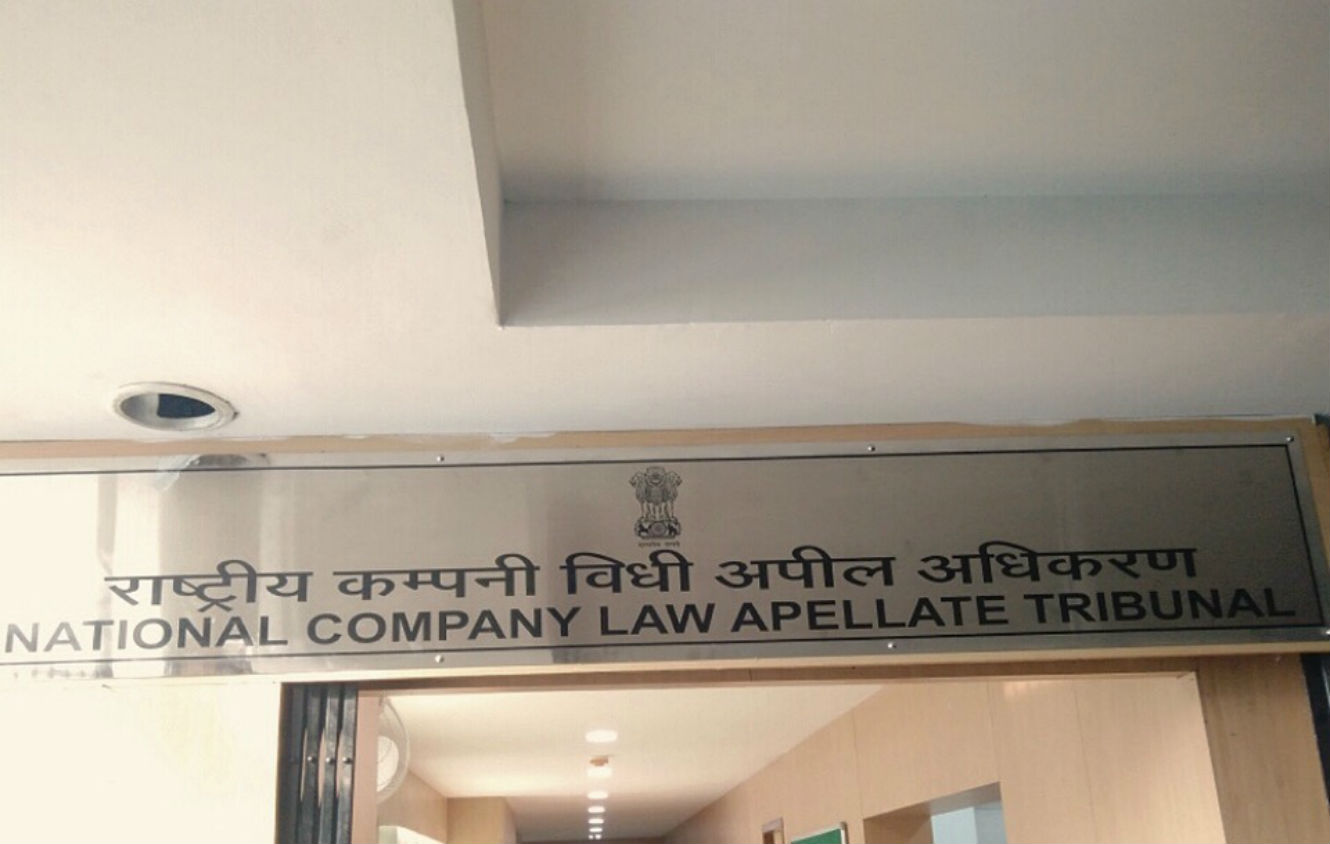
National Company Law Appellate Tribunal(NCLAT): The Division Bench of Justice Bansi Lal Bhat (Acting Chairperson) and Shreesha Merla (Technical Member), while addressing the present appeal observed that:
Exercise of inherent powers under Rule 11 has limitations and same cannot be enlarged to review the decisions.
Company Appeal titled Anubhav Anilkumar Agarwal v. Bank of India, Company Appeal (AT) (Insolvency) No. 1504 of 2019, was dismissed by this Appellate Tribunal, with the observations that the application filed under Section 7 of I&B Code by the Bank of India seeking initiation of Corporate Insolvency Resolution Process against ‘RNA Corporation Ltd.’ who was the Guarantor.
The instant application was filed by the appellant under Rule 11 of the NCLAT Rules, 2016 to review the above-stated decision on the ground that this Appellate Tribunal made an inadvertent error ignoring various documents placed on record by both the parties which included the Deed of Guarantee executed by Chamber Constructions and consequent to the error there was no debt due payable in law by Corporate Debtor as respondent 1.
It was contended that this Tribunal ought not to have upheld the order of the Adjudicating Authority admitting the application under Section 7 which was with respect to the same claim and the same default of the Corporate Debtor since the same has the effect of simultaneously claiming the same amount twice over.
In appellate tribunal’s Judgment in the case of Dr Vishnu Kumar Agarwal v. Piramal Enterprises Ltd. — Company Appeal (AT) (Insolvency) No. 346 of 2018, it was held that once a claim is admitted for a set of claim against one Corporate Debtor in an application under Section 7, a second application by the same financial creditor against another Corporate Debtor, be it a Guarantor or Principal Borrower, would not be maintainable.
Power of Review
Rule 11 of the NCLAT Rules, 2016:
“11. Inherent powers.-Nothing in these rules shall be deemed to limit or otherwise affect the inherent powers of the Appellate Tribunal to make such orders or give such directions as may be necessary for meeting the ends of justice or to prevent abuse of the process of the Appellate Tribunal.”
Dealing with the scope of review in ‘Lily Thomas v. Union of India’, (2000) 6 SCC 224, Supreme Court summed up its conclusions as under:
“56. …..Such powers can be exercised within the limits of the statute dealing with the exercise of power. The review cannot be treated like an appeal in disguise. The mere possibility of two views on the subject is not a ground for review.”
Bench observed that the power of review has not been expressly conferred on this Appellate Tribunal and the power vested in this Appellate Tribunal under Rule 11 can only be exercised for correction of a mistake.
This Appellate Tribunal does not enjoy power of review under Rule 11. The power of review is not an inherent power which cannot be exercised unless conferred specifically or by necessary implication.
Further, the Tribunal noted that the error apparent on the face of the record must be manifest and self-evident and impermissible to travel beyond the record to see whether the judgment is correct or not.
With regard to the reappraisal of evidence, the tribunal stated that:
Reappraisal of evidence for examining correctness or otherwise of the finding would amount to sitting in appeal in disguise.
Findings of fact, how-so-ever erroneous they may be, cannot be revisited and substituted within the limited scope of exercise of powers under Rule 11.
Rehearing
Hence, Tribunal held that the applicant cannot be permitted to seek rehearing of the appeal or reconsideration of the Judgment in regard to a finding, even when the same is erroneous.
Misreading of evidence/material or drawing of a wrong conclusion from it which involves the application of mind, would not justify invoking of inherent powers to substitute the findings and alter the judgment.
Decision
Applicant’s primary grievance in the instant case was the finding recorded by this Appellate Tribunal in para 14 of the judgment, that there was nothing on record to suggest that with regard to the very same debt ‘M/s Chamber Constructions Pvt. Ltd.’ had issued any Guarantee.
Tribunal opined that acceding to the prayer of Applicant would result in substituting the observations and findings recorded in para 14 of the judgment, which are beyond the ambit and scope of Rule 11 of NCLAT Rules and would amount to substituting of finding by a reappraisal of evidence, a power only exercisable by a competent court while sitting in appeal.
Hence, Rule 11 of NCLAT Rules, 2016 cannot be invoked in the instant case.[Anubhav Anilkumar Agarwal v. Bank of India, 2020 SCC OnLine NCLAT 795, decided on 07-12-2020]









0 replies