








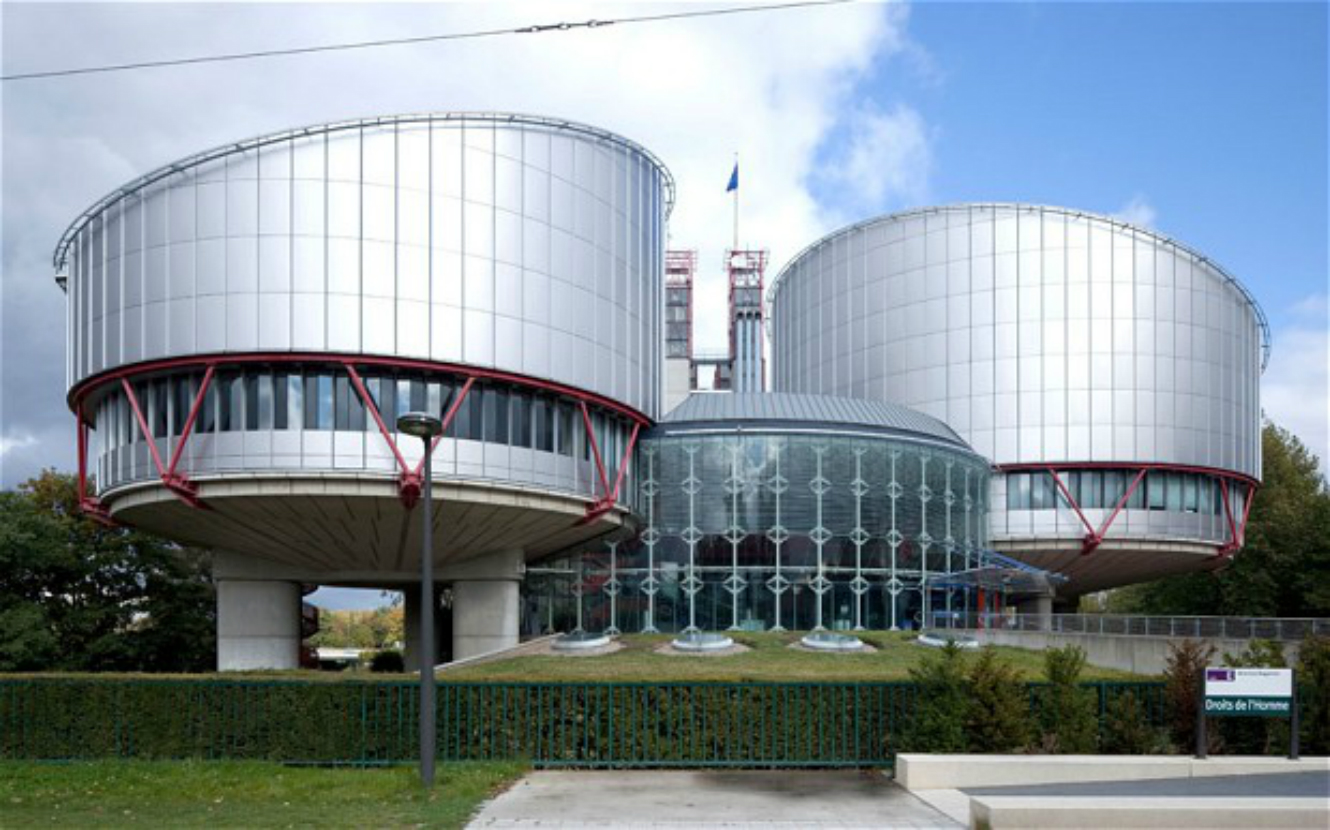
European Court of Human Rights: The Seven-Judge Bench comprising of Robert Spano, President; Paul Lemmens, Ledi Bianku, Julia Laffranque, Valeriu Gritco, Stephanie Mourou-Vikstrom, Ivana Jelic, JJ. stated that the previous Courts sure did go beyond what would have amounted to a “necessary” restriction on the applicant.
The applicant was convicted for demonstrating obscene sculptures in front of the Prosecutor General’s Office intending to draw attention to corruption and political control over the Prosecutor’s Office for which he was given a two-year suspended prison sentence for the offence of hooliganism. It was stated that they were displayed at a busy public space where the people could have a look at this morally offensive act.
The contention presented by the applicant was that the protest had not been directed against any person in particular and the picture on one of the sculptures had been intended to represent the political elite and on the other the Prosecutor General’s Office also the case was never examined taking into consideration the scope of the applicant’s protest neither a proper balancing exercise was conducted of the different interests involved. He pressed upon the fact that it could evidently have a serious dissuasive effect on a free-flowing speech or even an idea.
Declaring this case to be a clear violation of Article 10 of the Convention for Protection of Human Rights and Fundamental Freedoms, the Court said that the test of whether the interference complained of was “necessary in a democratic society” requires it to determine whether it corresponded to a “pressing social need”. Accordingly, the criminal sanction imposed on him by the national courts was disproportionate and was outside the ambit of the legitimate aim pursued by the domestic authorities. [Matasaru v. Republic of Moldova, Applications Nos. 69714/16 and 71685/16, dated 15-01-2019]









0 replies