








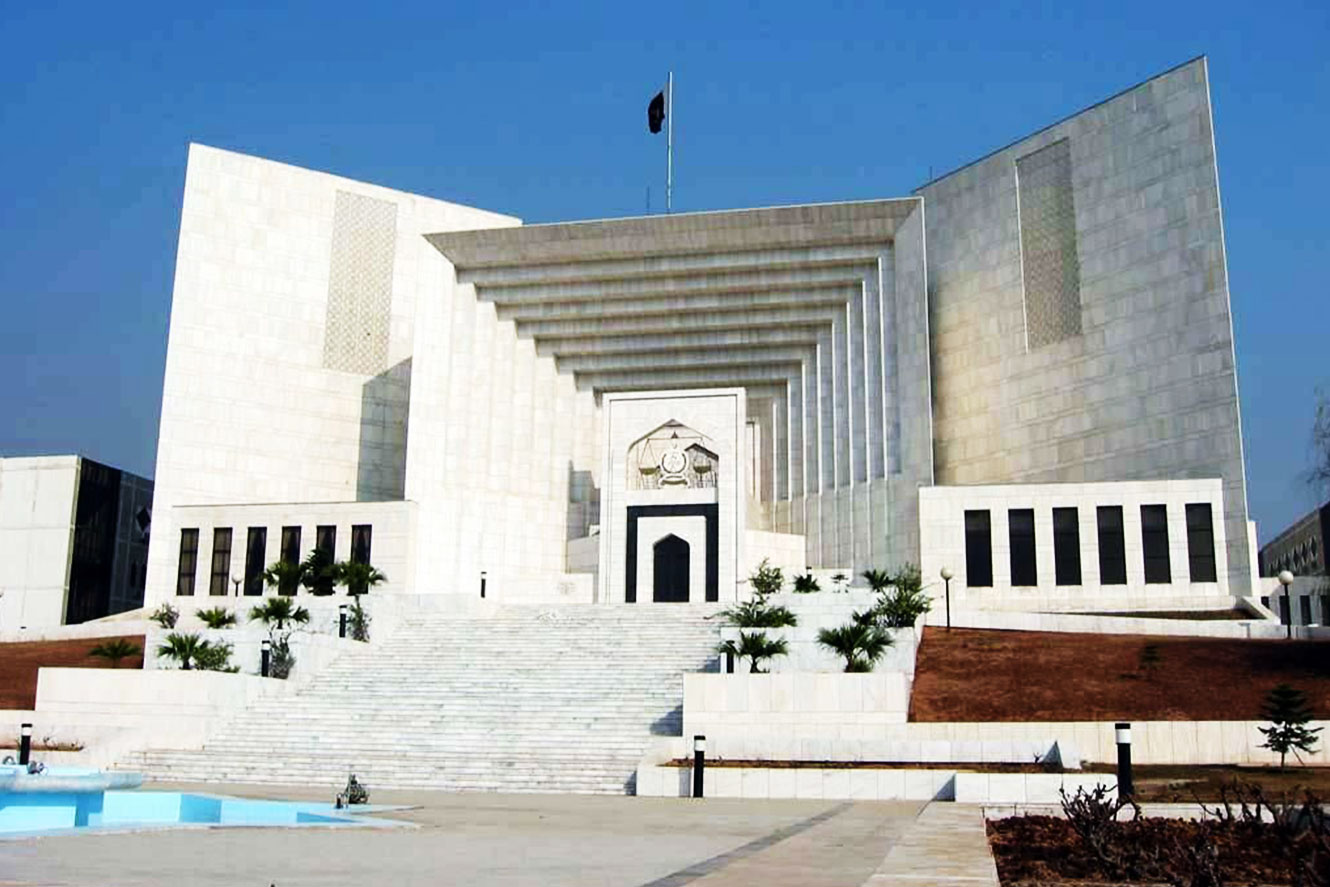
Supreme Court of Pakistan: A Three-Judge Bench comprising of Mian Saqib Nisar, HCJ and Umar Ata Bandial and Ijaz Ul Ahsan, JJ. issued directives to regulate media discussions in sub judice matters.
The present suo motu proceedings were initiated by the Supreme Court against one Arshad Sharif – the anchor of show ‘Power Play’ aired on ARY News channel – wherein the panelists’ discussion pertained to inquiry of the Federal Investigation Agency (FIA) against former President Asif Ali Zardari. The court issued a notice to Arshad Sharif seeking his explanation for the content of his show, whereupon he tendered an unconditional apology to the court.
Notice was also issued to the Pakistan Broadcasters Association (PBA) asking as to whether there existed any code of professional ethics for the media, whether the same was being followed and if not, what kind of action should be initiated against the delinquents. PBA submitted that a statutory code of conduct namely, Electronic Media (Programmes and Advertisements) Code of Conduct, 2015 did exist; Clause 4(3) whereof prohibited airing of subjective commentary on sub-judice matters by media licensees. However, despite the same, sub-judice matters were being openly discussed in talk shows.
The Court observed that there was a need to strike balance between freedom of speech and right to fair trial. It noted the similarity between Indian law and Pakistan law regarding protection of the right to fair trial and protection from prejudicial comments with regards to sub judice matters as in both the countries, the freedom of speech was subject to reasonable restrictions. The judgment in Sahara India Real Estate Corpn. Ltd. v SEBI, (2012) 10 SCC 603 holding that excessive prejudicial publicity leading to usurpation of functions of the Court interferes with legal proceedings by encroaching upon the right to be presumed innocent until proven otherwise, was also considered by the Court.
In view of the above, the Supreme Court issued a writ of mandamus to the Pakistan Electronic Media Regulatory Authority (PEMRA) to ensure that the parameters laid down in the Code of Conduct are adhered to in letter and spirit and no violations thereof be tolerated. [Discussion in TV Talk Show with regard to a Sub-Judice Matter, In re,2018 SCC OnLine Pak SC 3, decided on 12-09-2018]









0 replies