
A century of goodwill belongs to the Firm, not the family: What Calcutta HC’s Fox & Mandal ruling means
Calcutta High Court ruled that the goodwill and reputation of Fox & Mandal belong to the firm, not to the family of its former partners.

Bringing you the Best Analytical Legal News


Calcutta High Court ruled that the goodwill and reputation of Fox & Mandal belong to the firm, not to the family of its former partners.

Partnership firm registration in Maharashtra is set to go digital, with the State amending the Indian Partnership Act, 1932 to enable online applications, digital signatures and electronic verification.
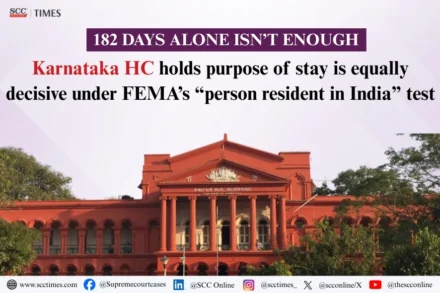
The Court held that the respondents-firm were “persons resident in India” and several FEMA Regulations relied upon by the Directorate of Enforcement became inapplicable. Since these Regulations govern transactions involving persons resident outside India, they could not be invoked against respondents who were legally resident in India under FEMA.
The legislative intent behind Section 122(1-A) of the Act of 2017 is solely to identify the person at whose instance the violations took place and if the person had retained the benefits, the person would be liable to a penalty as mentioned therein.
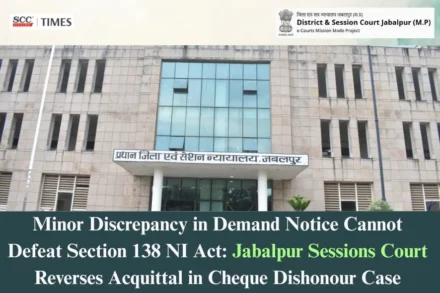
“Acquittal in cheque dishonour case was set aside on the grounds that mere clerical discrepancies in the actual amount due and the amount mentioned in the demand notice under Section 138 proviso (b) NI Act do not negate the existence of a legally enforceable liability and mere denial is not enough to rebut the presumption under Section 139.”

With respect to noticee’s liability as a partner, the noticee submitted that she resigned within short span of time and did not receive any remuneration or profit from the firm. Further, she was not a part of decisions or involved in day-to-day affairs of the firm.

“Technicality cannot be attached with a notice served under Section 21 of the Arbitration and Conciliation Act, 1996 as that would defeat the objective of the statute, which provides for a speedy resolution of the disputes.”

In the present case, Clause 12 of the partnership deed indicated that the Partnership Act, 1932 and its Rules shall cover only those aspects not specifically mentioned in the deed.
It is the case of the prosecution that accused actively connived along with the co-accused in projecting herself to be a partner along with the complainant to obtain an overdraft facility from the bank.

Delhi High Court: In a review petition filed under Section 114 read with Section 151 of the Civil Procedure Code on behalf

Supreme Court: Explaining the law on vicarious liability under the Negotiable Instruments Act, 1881, the bench of Ajay Rastogi and Sanjiv Khanna*,

Tis Hazari Courts, New Delhi: Devanshu Sajlan, MM NI Act-05, while noting the ingredients of Section 138 of the Negotiable Instruments Act,
Kerala High Court: N.Nagaresh, J., pronounced a landmark judgment regarding right to practice of Chartered Accountants. The Bench held, “The decision of
Punjab and Haryana High Court: The Division Bench comprising of Ravi Shanker Jha, CJ., and Arun Palli, J., heard the instant petition

National Company Law Tribunal (NCLT): A Division Bench of Chandra Bhan Singh (Technical Member) and Suchitra Kanuparthi (Judicial Member) dismissed an application