2026 SCC Vol. 8 Part 2:8 Supreme Court rulings on arrest, cheque bounce, contempt and more
Eight rulings in SCC Vol. 8 Part 2 cover grounds of arrest, deficiency in bank service, contempt and cheque bounce.

Bringing you the Best Analytical Legal News


Eight rulings in SCC Vol. 8 Part 2 cover grounds of arrest, deficiency in bank service, contempt and cheque bounce.
Key Supreme Court rulings on Article 227, RTE, Teachers Eligibility Test, custody, GST rebate, etc.
Key Supreme Court rulings on Section 36 in Arbitration and Conciliation Act, bail, sale of assets of corporate debtor, suit for injunction, etc.
5 Supreme Court rulings on when an FIR can be quashed, how S. 436-A bail applies to UAPA-like reverse-burden offences, and what it takes to unwind a confirmed SARFAESI auction sale.
Explore the latest Supreme Court Cases in 2026 SCC Vol. 6 Part 3 on share capital, quashing of proceedings or complaint, committee of creditors, and more.
The Court examined the scope of Section 299 CrPC in a case involving an absconding accused, evidence recorded during a co-accused’s trial, and its subsequent use after the accused’s arrest.
Explore the latest Supreme Court Cases in 2026 SCC Vol. 6 Part 2 on freedom of speech, preventive detention, separate trials, pandemics, and more.

The Court held that the offences involved in the case are not heinous offences nor does it constitute any offence of mental depravity rather the same relates to a petty private dispute between the parties. Due to the complete settlement between the petitioner and the respondent, the possibility of conviction of the petitioner was remote and bleak.
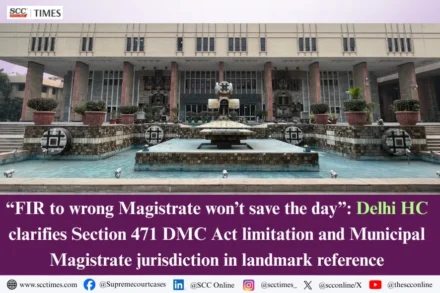
The Court was called upon to decide the recurring questions concerning the interpretation of Sections 466-A, 467 and 471, Delhi Municipal Corporation Act, 1957, particularly regarding the limitation applicable to prosecutions for unauthorised construction under Section 332 of the Act.

In the present case, the Gauhati High Court examined the validity of a murder conviction based primarily on confessional statements recorded under Section 164 CrPC and alleged extra-judicial confessions.
In the present case, the petitioner was convicted in three separate cheque dishonour cases under Section 138 of the Negotiable Instruments Act arising from a single loan transaction and was sentenced to pay substantial fines, with three months’ simple imprisonment in default in each case.

In the present case, the petitioner was granted anticipatory bail with a condition to keep his location on, on his mobile and share the live location with the investigating officer.

“The facts of the present case disclose a peculiar and rather disturbing situation, wherein an educational institution has been drawn into the ambit of a criminal investigation solely Banker’s lien on the ground that it received a fee payment through an online transaction from a parent who is allegedly involved in a cyber offence.”
“In absence of any material to show that the advertisement was at the instance of Rahul Gandhi, reliance on advertisement by itself could not lead to the assertion that it was published by him with the requisite intention to defame.”

“Although this Court recognizes that police personnel also have the right of private defense and may use force in appropriate circumstances, it is well settled that where death occurs or grievous injuries are caused to the accused, the procedure mandated by the Supreme Court must be strictly followed.”

“The statutory right of the wife to maintenance cannot be permitted to be parted away and infringed by setting up a case that she had the capacity to earn.”


“In the absence of any allegation of commission of the offences by an unlawful assembly, as chargesheet has not been filed under Sections 147 as 147 and 149 of the IPC, the petitioners cannot be held liable for the alleged acts of causing hurt or assault by any of the protestors, even if the allegations are accepted of accepted as true.”

“If, any statements are published or spoken any imputation concerning any person intending to harm or knowing or having reason to believe that such imputation will harm the reputation of such person, it is said that it is expected to defame that person.”

“The allegations in the present case are not merely of a single isolated incident but reveal troublesome conduct of the accused spanning over several months, involving physical intimidation and digital harassment.”