Settlement demand extortion or negotiation? Bombay HC quashes FIR over demand of ₹25 lakh each by flat purchasers
The Court held that an exorbitant settlement demand, without an intentional threat or fear of injury, does not attract Section 385 IPC.

Bringing you the Best Analytical Legal News


The Court held that an exorbitant settlement demand, without an intentional threat or fear of injury, does not attract Section 385 IPC.
The Calcutta High Court found the complaint lacked essential ingredients, the summons were mechanical, and the complainant was a stranger to the loan.
The High Court held that continuation of criminal proceedings against an adult woman under the Immoral Traffic (Prevention) Act, 1956 would amount to abuse of the process of law where the material did not disclose any specific act constituting the alleged offences.
Delhi High Court stayed an FIR registration order, observing that a simple breach of contract cannot be forcefully converted into a criminal action.
The Allahabad High Court quashed FIR under the POCSO Act, holding that continuation of the criminal proceedings would serve no fruitful purpose in the peculiar facts of the case.

The Court held that a registered sale deed supported by receipt of consideration and transfer of title cannot be contradicted by an unregistered agreement, and in the absence of dishonest intention from inception, no offence of cheating under Section 420 IPC is made out.
The allegations in the FIR, even if accepted in their entirety, do not disclose the commission of any offence, nor does the material collected during the investigation cure that deficiency. The continuation of such a prosecution, more than six years after the incident, would amount to an abuse of the process of the Court, warranting the exercise of the inherent jurisdiction under Section 482 CrPC.
The Court held that while prosecuting offences arising out of the alleged sale or use of Chinese manjha, a Magistrate must record reasons demonstrating application of mind before taking cognizance and issuing summons.
Supreme Court clarified that compassionate appointment and compassionate financial assistance are distinct benefits under the Haryana Compassionate Assistance Rules, 2019, and held that Rule 23(1) cannot be invoked to defer a claim for compassionate appointment during the pendency of criminal proceedings.

“The land in question, though administered by a corporate body, is essentially trust property held for the benefit of the community, and any irregularity in its alienation is a matter of legitimate public concern.”

In the case at hand, a woman filed a complaint against her brother-in-law alleging that he created her fake social media accounts, accessible in public domain, containing defamatory content about her and her family.

In the case at hand, criminal proceeding was initiated against the post of ‘Plant Head’ of a company.

“If two views are possible during the course of enquiry, the Court should lean in favour of holding the accused to be juvenile in borderline cases.”

“Facts emerged in investigation not only indicate lack of sensitivity but dereliction of duty on part of accused, and act and omissions of accused violate the provisions of law and rules.”

The Court reiterated that heinous offences and crimes against society cannot be quashed merely on the basis of compromise.

Supreme Court answered in affirmative that if the status under Section 82 CrPC is nullified i.e., the person subjected to such a proclamation, by virtue of subsequent developments is no longer required to be presented before a Court of law. Then, the prosecution still proceeds against such a person for having not appeared before a Court during the time that the process was in effect.

“There must be a close proximity between the positive act of instigation by the accused person and the commission of suicide by the victim.”
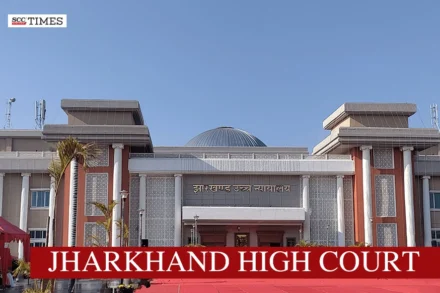
In the present case, the petitioner has helped one lady against the allegation of incumbent sitting Chief Minister, which clearly suggests that maliciously the case was registered against the petitioner and the investigation was also made with pre-occupied mind.

The Court said that it is not understandable that how if someone shouts ‘Jai Sriram’ it would outrage the religious feeling of any class especially when the complainant himself states that Hindu — Muslims are living in harmony in the area the incident by no stretch of imagination can result in antimony.