








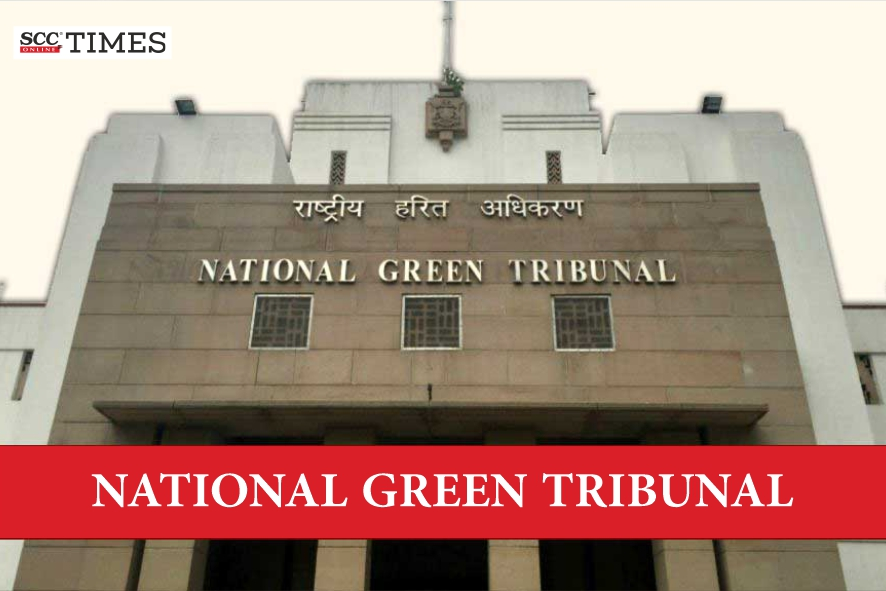
National Green Tribunal: Taking suo motu cognizance on news Item titled “Agriculture Runoff causing groundwater pollution in Punjab Making Drinking Water unsafe Reveals Study” appearing in The Times of India dated 12-10-2023, a division bench comprising of Sudhir Agarwal, J., and Dr. A. Senthil Vel (Expert Member), directed the Chief Secretary of Punjab to submit a comprehensive reply and appear in the next hearing and also ordered the demarcation of contaminated groundwater sources as unfit for drinking purposes and ensured safe water availability.
In the instant matter, a news report published in the Times of India on 12-10-2023, highlighted the alarming groundwater pollution in Punjab caused by agricultural runoff, rendering drinking water unsafe and posing health risks. The report, based on research by the Indian Institute of Technology (IIT) Mandi, revealed that groundwater exploitation, particularly in the southwestern region, led to contamination with heavy metals and radioactive substances, earning Punjab the moniker of the “cancer capital of India.” The NGT noted that despite advance notice, the Punjab Pollution Control Board (PPCB) failed to provide sufficient information on groundwater quality. Subsequently, the NGT impleaded various respondents, including central and state pollution control boards, IIT Mandi, and relevant government departments.
“Very unfortunate picture has been shown on the part of State of Punjab, particularly, when the issue involved is very serious creating health hazard in the State of Punjab on account of contamination caused in the ground water, anthropogenic and also geogenic.”
The NGT noted that replies were filed by Central Pollution Control Board (CPCB) and Department of Water Supply and Sanitation, State of Punjab (DWSS), but a lackluster response was provided by DWSS, which attempted to shift responsibility and did not address the contamination issue adequately. The NGT noted that additional research highlighted the spatio-temporal evolution of groundwater quality in Punjab, identifying various toxic elements causing health risks, including high levels of uranium, arsenic, manganese, and fluoride.
After considering the responses, the NGT found the State of Punjab’s reply lacking and directed the Chief Secretary to provide a comprehensive response and appear in the next hearing. Additionally, the NGT ordered the immediate demarcation of contaminated groundwater sources as unfit for drinking and mandated the provision of safe water. The NGT instructed the State to submit its response one week before the next hearing, i.e., 17-05-2024.
[In re: News Item titled “Agriculture Runoff causing groundwater pollution in Punjab Making Drinking Water unsafe Reveals Study” appearing in The Times of India dated 12.10.2023, 2024 SCC OnLine NGT 285, order dated 19-03-2024]
Advocates who appeared in this case :
Mr. Vikrant Pachnanda, Counsel for the CPCB
Ms. Manpreet Kaur, AAG, Counsel for the State of Punjab
Ms. Sunieta Ojha, Counsel for the Punjab PCB
Mr. Jasbir Singh, Advisor for the Water Quality, Dept. of Water Supply & Sanitation, State of Punjab (R – 4)









0 replies