Settlement demand extortion or negotiation? Bombay HC quashes FIR over demand of ₹25 lakh each by flat purchasers
The Court held that an exorbitant settlement demand, without an intentional threat or fear of injury, does not attract Section 385 IPC.

Bringing you the Best Analytical Legal News


The Court held that an exorbitant settlement demand, without an intentional threat or fear of injury, does not attract Section 385 IPC.

“Where a criminal proceeding is manifestly attended with mala fide or where the proceeding is maliciously instituted with an ulterior motive for wreaking vengeance on the accused and with a view to spite him due to private and personal grudge, the High Court while exercising its inherent power can proceed to quash the proceedings.”

“There was not a single whisper that the accused forced the prosecutrix or threatened her or had sexual intercourse on false promise of marriage. Though the victim was minor, she did not have any problem in staying with the accused and his family. Therefore, the Court held that the criminal proceedings would cause injustice.”

“As far as the present case is concerned, the interim order passed by the Magistrate cannot be said to be gross illegality or irregularity. The petitioner could very well approach the same court seeking order, modifying or vacating the aforesaid order if there are sufficient reasons. That apart, appeal is provided under Section 29 of the PWDV Act against the aforesaid order”

“Any compromise or settlement with respect to the offence of rape, against the honour of a woman, which shakes the very core of her life and tantamounts to a serious blow to her supreme honour, offending both, her esteem and dignity, is not acceptable to this Court.”
Supreme Court acknowledged that the petitioner’s admission had been delayed through no fault of his own. It requested the Director of IIT Dhanbad to utilize his good offices to facilitate the petitioner’s ability to complete the coursework for the time already elapse.

Supreme Court: In a criminal appeal filed against the order passed by the Karnataka High Court, wherein the Court allowed the petition

Supreme Court highlighted that the provision for filing curative petitions was incorporated in Order XLVIII of the 2013 Rules.

by Sanjana Sachdev† and Sanskriti Sinha††
Apart from the statutory power of recall of an ex parte order conferred under the first proviso to Section 209 U.P. Revenue Code, 2006, every Court or Tribunal would have an inherent power to recall an ex parte order to secure the ends of justice.
Allahabad High Court reiterated that at the stage of taking cognizance, the Court should not get in the merits of the case, and at such stage, the Court’s power is limited.
If during course of investigation some credible evidence have been collected, charge sheet has been filed, cognizance has been taken, discharge application has been rejected by the Trial Court by speaking and reasoned order and that order has been upheld by the Revisional Court, by a speaking and reasoned order, then Arvind Kejriwal must participate in the trial proceedings.
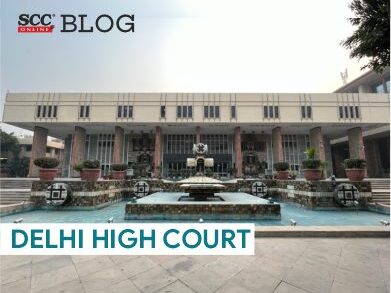
The Delhi High Court dismissed an application filed for “recall of earlier order” under Section 151 of CrPC and held that the settled things could not be permitted to be unsettled at the behest of a person who had not been careful enough with regard to his rights and claims.
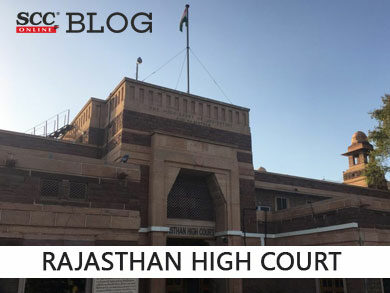
Rajasthan High Court: The Court exercising its inherent powers under Section 482 of Criminal Procedure Code (Code), quashed the First

“The High Court, while forming an opinion whether a criminal proceeding or complaint or FIR should be quashed in exercise of its jurisdiction under Section 482 CrPC, must evaluate whether the ends of justice would justify the exercise of the inherent power”

“If a man has been wronged, so long as the wrong lies within the human machinery of administration of justice, that wrong must be remedied.”

Delhi High Court: Expressing that, the revisional jurisdiction is not meant to test the waters of what might happen in the trial,
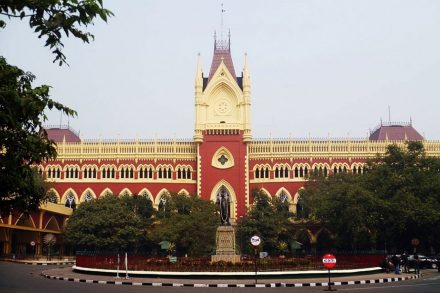
Calcutta High Court: Bibek Chaudhari, J., considered the question as to whether Section 482 CrPC is applicable in relation to an application under
Allahabad High Court: Chandra Dhari Singh, J., expressed that, Merely because the litigation has reached a revisional stage or that even beyond

Himachal Pradesh High Court: Vivek Singh Thakur, J., while exercising powers under Section 482 CrPC, allows the present petition, stating, “… power