








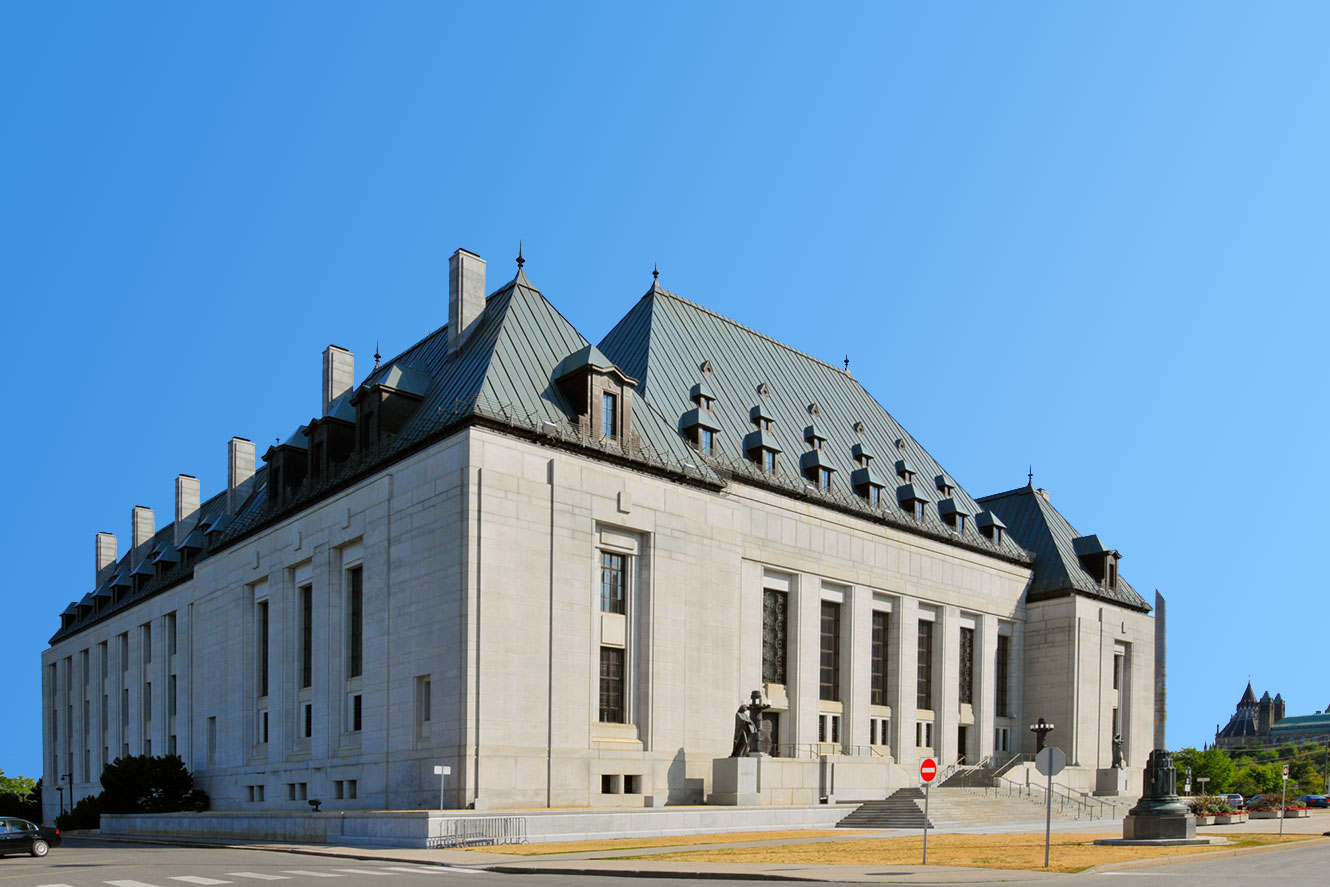
Supreme Court of Canada: While dealing with the constitutionality of Sections 230.1 and 245 (2) of National Defence Act conferring power on the Minister of National Defence to appeal from decisions of court martial, the Court upheld the constitutionality of the provisions and said that this principle is a basic tenet of our legal system. It safeguards the rights of the individual and the integrity of the justice system, and it satisfies the criteria to be considered a principle of fundamental justice.
In the present case, C was charged with two child pornography offences. C brought a motion for a mis-trial on the basis of the prejudice arising from denial of re-examination of evidences. The military judge dismissed the motion and gave a further limiting instruction to the panel. C was found guilty. On appeal, a majority of the Court Martial Appeal Court found that the mistrial ought to have been granted and ordered a new trial. The Minister of National Defence (the “Minister”) appealed as of right to this Court, pursuant to Section 245(2) of the National Defence Act, arguing that the military judge made no error in declining to grant a mistrial. C brings a motion to quash the Minister’s appeal, on the basis that Section 245(2), which gives the Minister the authority to appeal to this Court, violates Sections 7 and 11(d) of the Charter.
The question on this appeals was whether provisions of the National Defence Act that give the Minister the authority to appeal from decisions of a court martial or Court Martial Appeal Court infringe the right to liberty under Section 7 of the Charter, and if so, whether the limitation is justified under Section 1 of the Charter. It was also argued by criminal defence counsel that the law infringes the right to trial by an independent tribunal under Section 11(d) of the Charter.
The Court after perusal of the arguments advanced held that the military judge did not made any error in declining to grant a mistrial. The decision of whether to grant a mistrial falls within the discretion of the judge, who must assess whether there is a real danger that trial fairness has been compromised. That discretion is not absolute, but its exercise must not be routinely second?guessed by the court of appeal. The Minister, like the Attorney General or other public officials with a prosecutorial function, is entitled to a strong presumption that he exercises prosecutorial discretion independently of partisan concerns. The mere fact of the Minister’s membership in Cabinet does not displace that presumption. The law presumes that the Attorney General, also a member of Cabinet, can and does set aside partisan duties in exercising prosecutorial responsibilities, and there is no compelling reason to treat the Minister differently in this regard. Accordingly, Parliament’s conferral of authority over appeals in the military justice system on the Minister does not violate Section 7 of the Charter. As to the argument that the impugned provisions violate the right to an independent tribunal guaranteed by Section 11(d) of the Charter, it cannot succeed. The Court therefore held the allowed the appeals and upheld the constitutionality of the Sections 230.1 and 245(2) of the National Defence Act. [R. v. Cawthorne, 2016 SCC OnLine Can SC 7 , July 22, 2016]








0 replies