








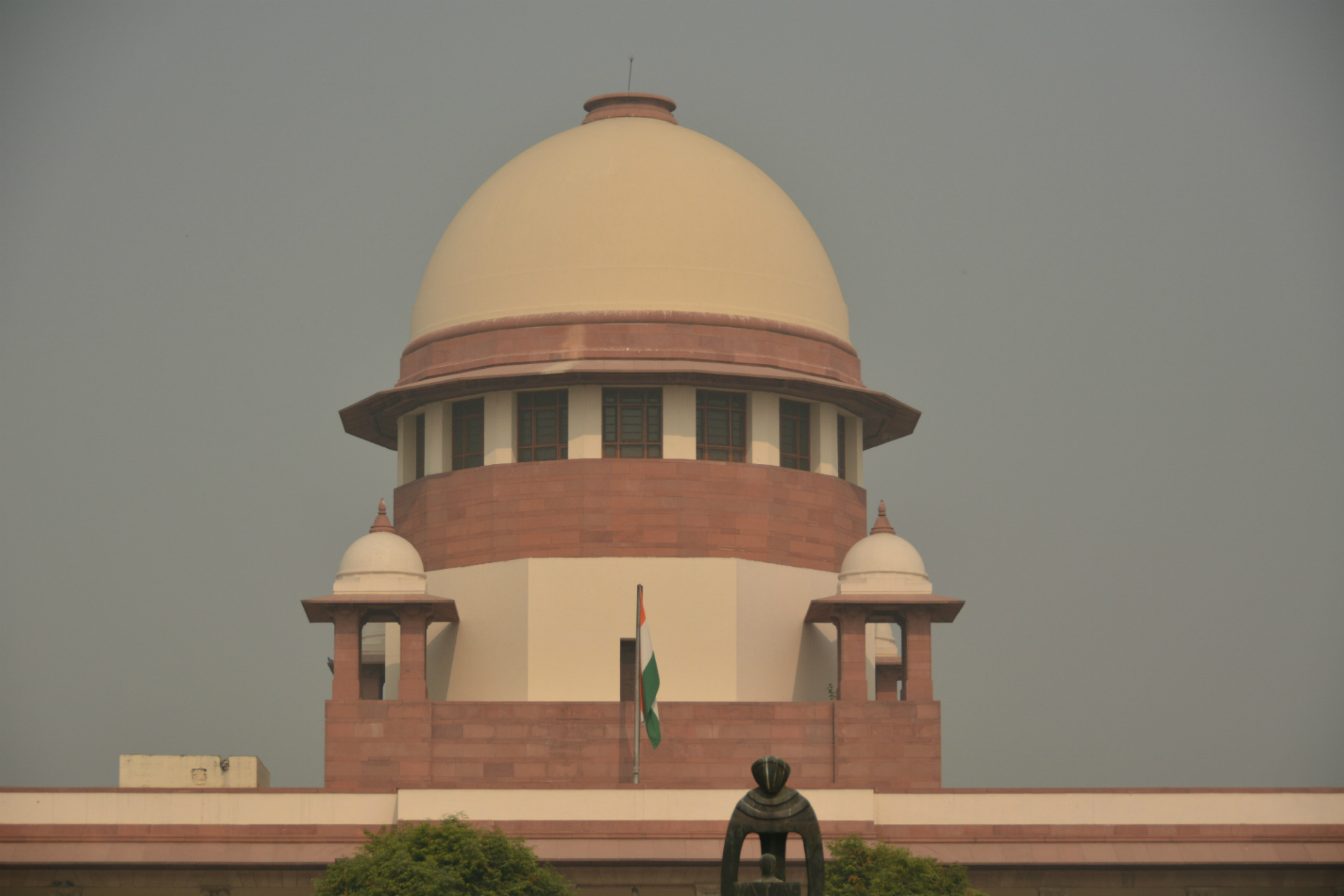
Supreme Court: In the matter relating to use of force by the police personnel during the peaceful protest march by the Jammu & Kashmir migrants upto Delhi on 07.08.2007, the Court held that the doctrine of sovereign immunity does not apply to cases of fundamental rights violation and hence cannot be used as a defence in public law.
The migrants, who are living in most miserable conditions and it became difficult for them to survive, had alleged that when they reached near Katra in Jammu & Kashmir, the police personnel had beaten up and manhandled these migrants in a most brutal and barbaric manner. Facts of the case showed that Police authorities informed the migrants that the competent authority shall be informed and that they should return peacefully and not march ahead to disturb the ongoing Amarnath and Vishnu Devi Yatris. The agitated protestors, however, took strategic positions alongside the road and started pelting stones on the police personnels who were trying to initiate dialogues and even used their Lathis which they were carrying.
The bench of A.K. Sikri and R.K. Agrawal, JJ noticed that initially it was the petitioners/ protestors who took the law into their hands by turning their peaceful agitation into a violent one and in the process becoming unruly and petting stones at the police. On the other hand, even the police personnel continued the use of force beyond limits after they had controlled the mob. In the process, they continued their lathi charge. They continued to beat up all the three petitioners even after overpowering them. They had virtually apprehended these petitioners making them immobile. It was held that such situation could clearly be avoided.
However, referring to the recent incidents of violence provoked by the separatists in Kashmir, the Court said that it is unfortunate that more often than not, such protestors take to hooliganism, vandalism and even destroy public / private property. In the process, when police tries to control, the protestors/mob violently target policemen as well. All these situations frequently result in police using force. This in turn exacerbates public anger against the police.
Considering the facts of the case and finding that even the petitioners are to be blamed to some extent, the only relief that the Court granted was to award compensation of ?2,00,000 to petitioner No.1 and ?1,00,000 each to petitioner Nos. 2 and 3, which is to be paid within a period of two months. [Anita Thakur v. Govt. of J & K, 2016 SCC OnLine SC 814, decided on 12.08.2016]






0 replies