



NCLT

Breakdown of Supreme Court verdict in Bhushan Power & Steel Insolvency case
“The Corporate Debtor in the present case was running into substantial losses which has now become a profit-making entity earning substantial profits. The SRA — JSW invested huge amounts in modernization and expansion of the entity. Not only that but thousands of employees have been earning their livelihood on account of the Corporate Debtor running as an on-going concern due to the Resolution Plan being implemented by the SRA — JSW.”
Creditor’s name not essential in balance sheet for acknowledgment of debt to extend limitation period; Supreme sets aside NCLAT Order; Allows IFIN’s plea
The judgment reaffirmed the principle that entries in a corporate debtor’s balance sheet can constitute an acknowledgment of liability under Section 18 of the Limitation Act, provided they indicate a subsisting jural relationship between the parties, even if the financial creditor is not named explicitly. The Court emphasised that such entries must be interpreted liberally and in context, considering the overall tenor of the balance sheet and the surrounding circumstances.

NCLT can invoke inherent powers to permit withdrawal of voluntary liquidation, when no third-party rights are affected: NCLT
In the present case, initiation of the voluntary liquidation was a voluntary commercial decision taken by the shareholders. It is open to the shareholders, where no prejudice is caused to any stakeholder, to reconsider and reverse their decision, particularly when the process has not proceeded to an irreversible stage, such as distribution of assets.

CAM advises JSW Energy on financing India’s largest thermal power acquisition under IBC
Cyril Amarchand Mangaldas acted as legal counsel to JSW Energy Limited (as successful bidder) for availing credit facility of INR 12,475 Crore from State Bank of India for implementation of resolution plan.
‘Resolution plans comply with IBC and CIRP Regulations’; NCLT approves Adani Properties acquisition of two HDIL assets
Reiterating that the commercial wisdom of the CoC is to be given paramount importance for approval/rejection of the Resolution Plan, the NCLT held that the Resolution Plans in the present case met the requirements of the IBC and the IBBI Regulations, and thus, had to be approved.
A Significant Legal Conundrum in Section 7 under the Insolvency and Bankruptcy Code, 2016
by Mridul Chitransh* and Milan Asati**
NCLT grants exclusion of 854 days to Resolution Professional; directs completion of CIRP
The RP sought exclusion of the time it took for NCLT to decide the applications filed under Section 19 of the IBC regarding the non-cooperation by the Company.
‘Interlocutory and Consensual Order’; NCLAT denies relief to BYJU’s in appeal filed against NCLT’s status quo order on its shareholding in Aakash
“The impugned order is exclusively interlocutory in nature which is yet to be considered on merits and yet to be given a final shape till the conduct of the final hearing when the interim reliefs prayed for, are heard and decided by the Tribunal.”
IBBI introduces Non-submissions of Repayment Plan strengthening Insolvency Resolution Process
Enhancing creditor strength through faster debt recovery.
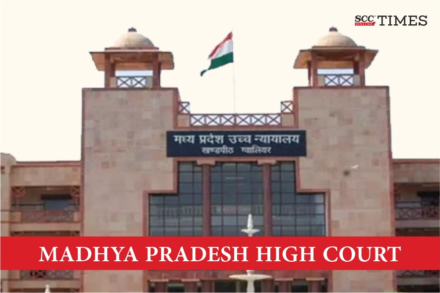
Sole proprietorship firm don’t fall under definition of “debtor” under S. 94 of IBC; MP High Court refuses to halt recovery proceedings
“Section 94 of IBC gives remedy to “debtor’ only to either apply personally or through a Resolution Professional to the Adjudicating Authority for initiating the insolvency resolution process.”
Protection of minority shareholder rights | NCLT lays down structured buy-out mechanism to resolve deadlock between shareholders
The NCLT gave the first right to buy shares to the petitioners and then the Deccan Group. If neither party purchased the other’s shares, the NCLT would consider winding up the company under Section 242(1)(b) of the Companies Act.
Force Majeure doesn’t absolve Corporate Debtor from contractual obligations; NCLT directs initiation of CIRP against Corporate Debtor
The NCLT acknowledged the impact of force majeure events, particularly the unprecedented rise in coal prices and operational disruptions caused by the COVID-19 pandemic on Corporate Debtor.
NCLT rejects Vedanta Ltd.’s demerger plan over non-disclosure of SEPCO’s debt and procedural irregularities
“The present one is a case where material facts have not been disclosed by the Applicant Company, violating Section 230 (2)(a) of the Companies Act, 2013, which in our considered opinion is bound to prejudice the public interest at large.”
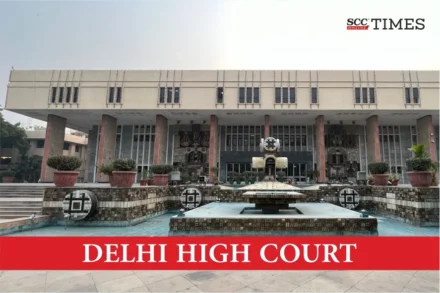
Despite acknowledging ECL’s violations, RBI failed to act; Delhi High Court upholds direction to RBI to intervene
It is an elementary principle that when a public authority is vested with specific powers, it is duty bound to act accordingly. Therefore, any failure to exercise statutory powers gives rise to a cause of action to secure performance of such duty by way of issuance of writ of mandamus under Article 226.
Supreme Court’s Ruling in China Development Bank Creates Further Confusion on Third-Party Securities
by Prachi Johri* and Rishi Thakur**
Delhi High Court sets aside PMLA proceedings by ED against Bhushan Power & Steel Ltd. in view of Section 32A of IBC
A plain reading of Section 32A IBC reveals that once a resolution plan is approved under Section 31, the Corporate Debtor shall not be prosecuted for an offence committed prior to the commencement of the CIRP. However, this immunity does not extend to the erstwhile officers and persons responsible for the conduct of its business prior to CIRP.

Call for Submissions | NLS Business Law Review [Volume 11(2)]
Editorial Board to the NLS Business Law Review is calling for submissions for Volume 11(2) of the Journal
NCLT dismisses Akshay Kumar’s insolvency plea against Math tutoring platform, Cue Learn
“The essence of the IBC lies in resolving insolvency matters through a process driven approach, and any deviation from its prescribed scope would undermine the legislative intent of the Code.”