Landmark Judgments on Banking Laws by the SC and HC’s in 2022 (RDDB, SARFAESI, RBI, BRA Enactments) Part II
by Siddharth R. Gupta† and Prakriti††
Cite as: 2023 SCC OnLine Blog Exp 29

Bringing you the Best Analytical Legal News


by Siddharth R. Gupta† and Prakriti††
Cite as: 2023 SCC OnLine Blog Exp 29
The service of medical education falls under the category of “educational institution” as defined under the GST law, and accordingly, it was held that the medical education services provided by the appellant to the students will attract nil rate of GST. Further, as the appellant’s hospital is engaged in providing diagnosis and treatment of the patients, hence, their services can be termed as “health care services”, and accordingly held that the said services will be exempt from the payment of GST.
Supreme Court: In a suit for specific performance the Division Bench of Indira Banerjee* and Hrishikesh Roy, JJ., explained the
Supreme Court: The Division Bench comprising of Hemant Gupta* and V. Ramasubramanian, JJ., reversed concurrent findings of Trial Court and Punjab and
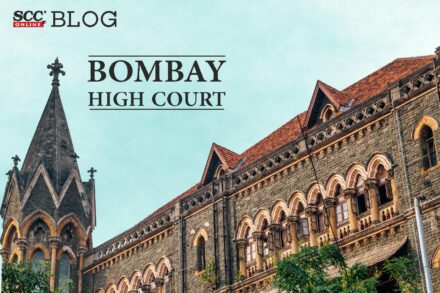
Bombay High Court: The Division Bench of V.M. Deshpande and Amit Borkar, JJ., expressed that a transaction by a natural guardian of
Supreme Court: The bench of L. Nageswara Rao and BR Gavai, JJ has, in two judgments, has held that where the plaintiff’s
Karnataka High Court: Hemant Chandangoudar, J. allowed the petition and quashed the impugned order. The facts of the case are such that
“Merely because no provision in the Act makes the transaction void or says that no title in the property passes to the purchaser in case there is contravention of the provisions of Section 31, will be of no avail. That does not validate the transfer referred to in Section 31, which is not backed by “previous” permission of the RBI.”
Chattisgarh High Court: Sanjay K Agrawal J., dismissed the second appeal being devoid of merits. The facts of the case are such
Customs, Excise and Services Tax Appellate Tribunal (CESTAT): The Coram of Dilip Gupta, J. (President) and C.L. Mahar (Technical Member) allowed an
Supreme Court analyses whether the right of pre-emption can be enforced for an indefinite number of transactions or it is exercisable only the first time.
Jharkhand High Court: Rajesh Shankar, J., disposed off the petition directing the respondents to remove the seal of the hotel premises and
Supreme Court: The 3-judge bench of Ranjan Gogoi, CJ and Deepak Gupta and Sanjiv Khanna, JJ has held that the power of
Rajasthan High Court: A Division Bench of Sandeep Mehta and Abhay Chaturvedi, JJ. accepted a writ petition for parole and directed the
Madhya Pradesh High Court: S.K. Awasthi, J. dismissed the petition on the ground that trial court and not Special Court are competent
Jammu and Kashmir High Court: A Single Judge Bench of Sanjeev Kumar, J., dismissed this writ petition, claiming relief by private parties,
Karnataka High Court: A Single Judge Bench comprising of G. Narendar, J. hearing a civil writ petition set aside the order of
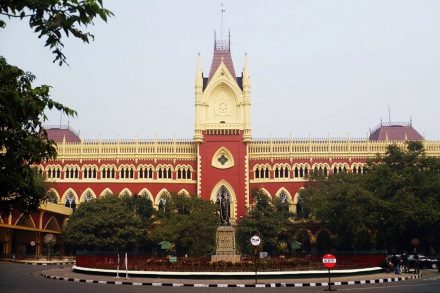
Calcutta High Court: A Single Judge Bench comprising of Biswajit Basu, J. dismissed a civil revision pertaining to grant of relief under