


The Insolvency Law Academy (“ILA”) has begun its 4th Annual Conference at the sprawling cinematic complex, Ramoji Film City, Hyderabad, Telangana (“ILA 2026 Conference”). The theme of the 2026 Conference is “Insolvency Law and Policy: Geopolitics and India’s Journey To 2047”.
Over the period of three years, the ILA Annual Conference has emerged as a distinguished forum in the insolvency sector, fostering thought leadership, policy dialogue, professional exchange, and drawing wide recognition and participation. Building upon the success of its previous editions, the Hyderabad conference seeks to hold a vibrant dialogue among academia, practitioners, regulators, and the judiciary on the insolvency and related issues emerging from the geo-political developments.
Opening Session: ILA: Progress and Prospects
Beginning the much-awaited conference, Mr. Sumant Batra, Insolvency Lawyer, President, ILA, and Former President, INSOL International, delivered an insightful address providing a snapshot of all the key milestones, work in the pipeline, and focus areas for the future of the ILA.
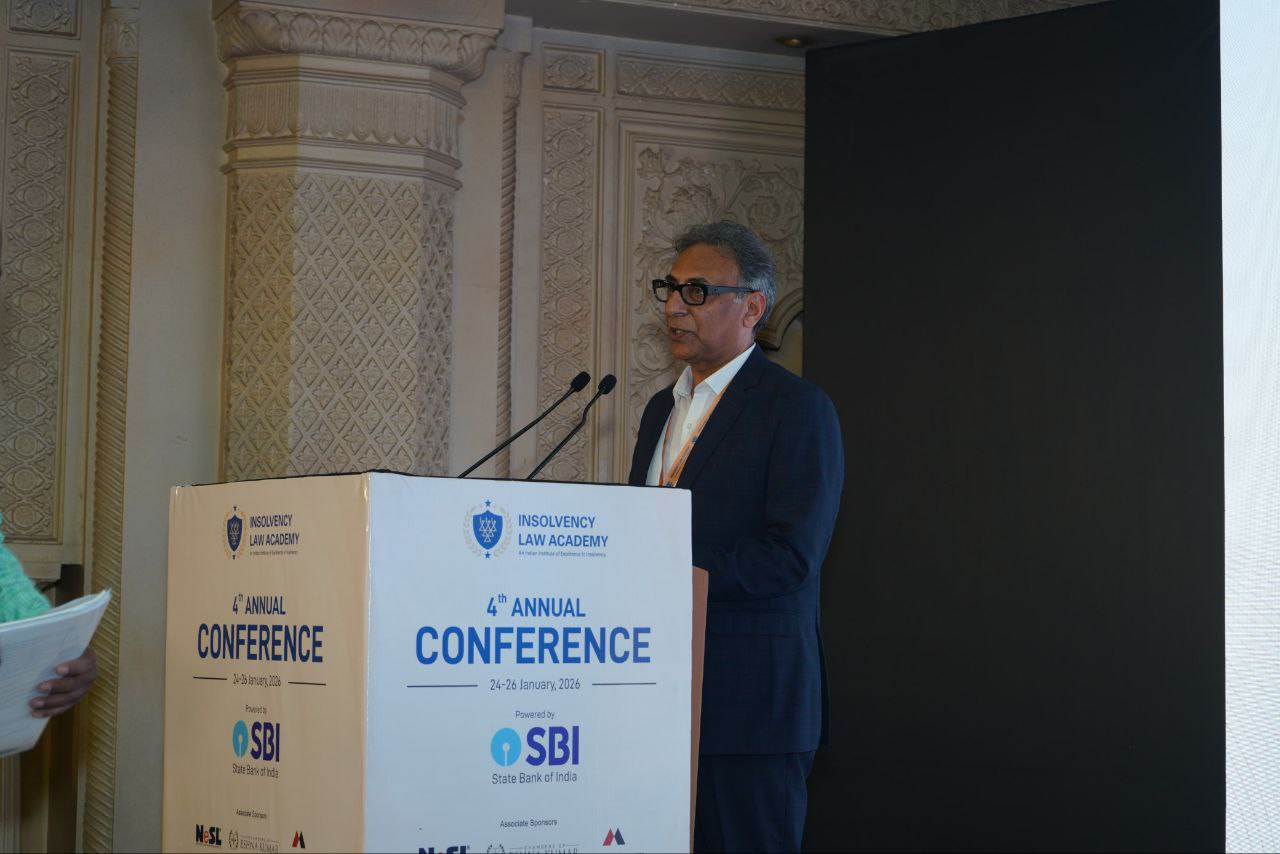

In his speech, Mr. Batra honoured Late Mr. Patrick Ang, Lawyer and Former Managing Partner of Rajah & Tann, Singapore, and Late Mr. Arun Jaitley, Former Finance Minister of India, for their contribution to the field of insolvency. He also reminisced about the birth of ILA and the role of the late Mr. Bibek Debroy, Policy Advisor, in the same.
Thereafter, he mentioned a few focus areas for ILA in the past and the future, namely, climate change and insolvency, individual insolvency, cross-border insolvency, recognition of foreign judgments in India, implementation of UNCITRAL Model Law in India, insolvency for MSMEs in India, risk of debt restructuring, failure reduction and dignified exit, Insolvency Scholars’ Forum, Emerging Scholars’ Group, and much more.
Lastly, he concluded by thanking the audience and guests for joining the conference and remarked that, “The time has come now to turn around the assets that are not contributing optimally to the economy, so that these assets can go back and churn into the economy and produce and contribute to our GDP.”
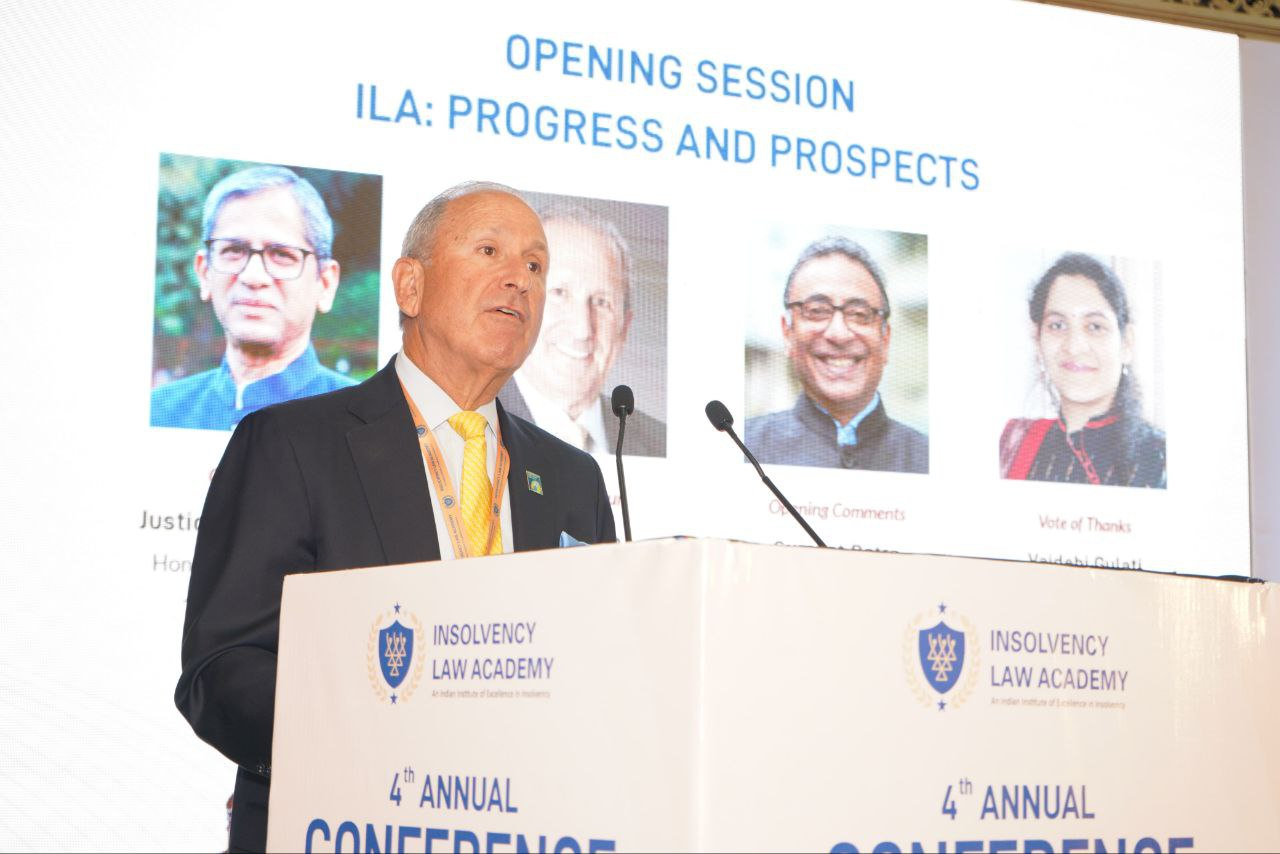
Taking over from Mr. Batra, Mr. Mark Bloom, Chair, International Insolvency Institute and Chair, Baker McKenzie’s North America Global Restructuring Practice, Miami, delivered the Chief Guest’s address.
At the outset, Mr. Bloom briefly spoke about the International Insolvency Institute (“III”), its mission, its members, its place in the global insolvency world, and its work and support for the development of local and cross-border insolvency regimes around the world. He explained that the III was a global non-profit limited membership organization of approximately 450 members from more than 60 countries, dedicated to advancing and promoting insolvency as a respected discipline in the international field. It seeks to act as a catalyst for modernization and improvement of international insolvency systems around the world.
“The ambitious national goals of escalating growth in GDP, industrial output, and development of a robust 21st century infrastructure to facilitate that growth are enhanced and advanced by a streamlined system of insolvency laws to provide the structure and predictability that are necessary to attract and promote capital investment, encourage entrepreneurial risk, and provide second-chance opportunities for businesses to restructure in order to create enterprise value and preserve jobs that drive the economy forward.”
Mr Bloom also strongly expressed support for the commendable work of ILA in India and stated that the progress made by India was nothing short of remarkable due to the streamlining of fragmented bankruptcy laws via the adoption of the Insolvency and Bankruptcy Code, 2016(“IBC”). He remarked, “The positive impact that has begun to emerge under the new and revamped system increased credit availability, reduced non-performing assets for banks, and shifted toward market-driven solutions.”
“Nowhere, though, have we seen greater and more commendable focus on the modernization of insolvency laws and the harmonization of those laws with the overarching national policy objectives than here in India, including, and since, adoption of the IBC in 2016.”
Lastly, he concluded his address by complimenting ILA’s work and accomplishments and expressed his gratitude for being invited to the conference.
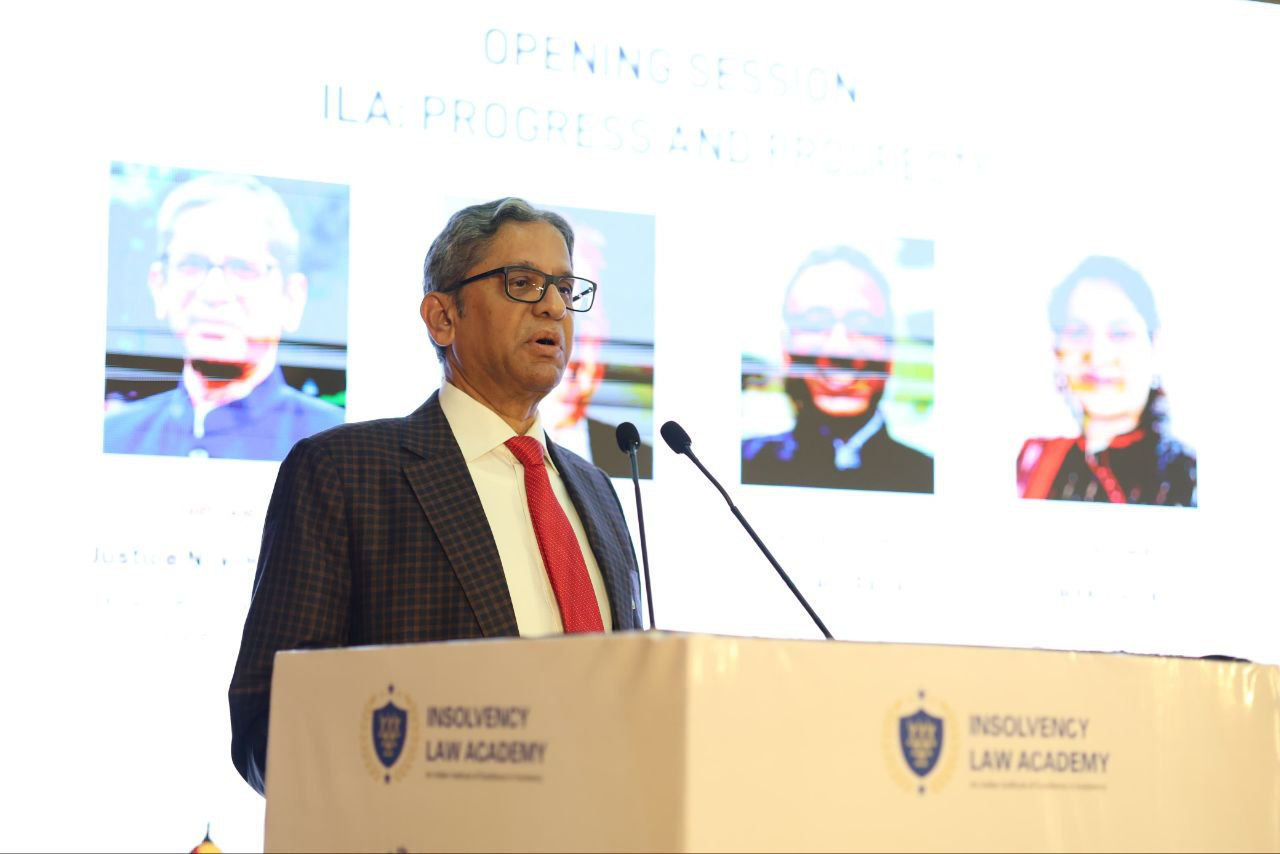
Speaking from a judicial perspective, Justice N.V. Ramana, Former Chief Justice of India, delivered an erudite address wherein he mentioned how he became involved in the world of business and insolvency. He explained how company cases before the establishment of the National Company Law Tribunal (“NCLT’) and the National Company Law Appellate Tribunal (“NCLAT”) would take years and result in the company value and assets being sold for scraps.
“Insolvency was not seen as an economic consequence but a social, moral, and deeply human situation. What initially began as a question of moral obligation transformed into a framework for economic humility.”
Justice Ramana underscored how, over time, as economies became more complex, insolvency law also became more elaborate, structured, and focused. Yet concern regarding failure remained the same, as modern insolvency law recognises that failure is not always the result of moral wrongdoing, but also risk, uncertainty, and economic cycles. Highlighting several global geopolitical issues such as tariffs, climate change, COVID-19, wars, etc., he emphasised that in an interconnected world, insolvency was not an anomaly, but rather a risk assumed within the global economic architecture.
“Modern insolvency law seeks not pressure, but resolution, not retribution, but renewal. Therefore, the insolvency frameworks must be responsive, adaptive, and sensitive to these shocks.”
While mentioning the issues in the previous insolvency process of India, such as over-governance, regulatory inconsistency, procedural delays, and excessive compromises, Justice Ramana shed light on the adoption of IBC. He reasoned that the judiciary had to balance efficiency with the conscientiousness of promises, and due process could not be distorted for the sake of speedy improvement.
“We must remember that investors’ confidence is sustained, not merely by speed or flexibility, but by fairness, consistency and institutional credibility, which are possible only if due process is followed.”
Thereafter, he explored the performance of the new insolvency regime by stating a few statistics that reflected improvement in not just insolvency processes of companies but also in stabilization of banks, improvement of credit discipline, clearing of banks’ balance sheets by providing an exit mechanism to non-performing assets(“NPA”), and reinforcement of confidence in banks, markets, and businesses.
However, he remarked, there were still areas for improvement such as, persistent delays in admission and resolution timelines, acute shortage of NCLT and NCLAT members and infrastructure, lack of institutional capacity, need for stricter qualification, training, and service conditions for tribunal members, increasing litigation, procedural bottlenecks, and tactical delays, and sector-specific challenges, especially in real estate, aviation, and emerging environmental liabilities.
Justice Ramana further added that the judiciary also played a crucial role in the success of the insolvency law, which was a process-driven economic legislation. He stated that the effectiveness of an insolvency depended less on individual judicial decisions and more on creditors’ commercial wisdom, certainty, timelines, and predictability. Judges and adjudicators must therefore adopt an attitude of principled restraint in not only insolvency law but also broader commercial litigation and arbitration.
Thus, he underlined the central principles of minimal judicial interference, a corrective resolution mechanism, strengthening insolvency to preserve the rule of law in economic governance, institutional capacity building, and continuous reform to preserve the original promise of time-bound resolution.
“The way forward, therefore, is not radical reinvention but institutional course correction. Dialogue, research, and reflections are essential to responsible reform.”
In conclusion, Justice Ramana expressed hope for the improvement of IBC and inclusion of allocation for improvement of the NCLT and NCLAT infrastructure in the upcoming budget.
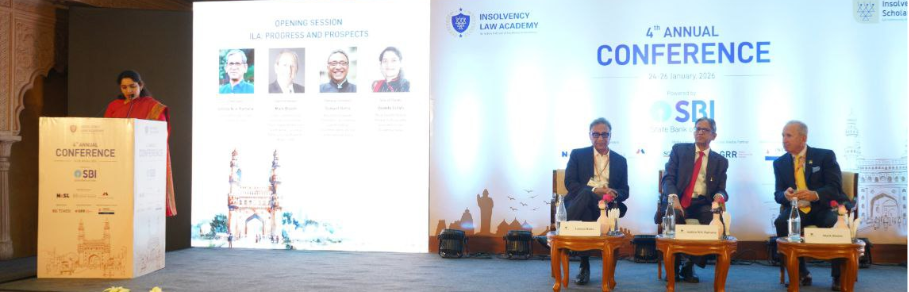

The opening session concluded with a vote of thanks by Ms. Vaidehi Gulati, Research Associate, ILA, wherein she thanked the distinguished dignitaries, speakers, delegates, and everyone for providing their time, guidance, insights, and encouragement.
SESSION 1: Global Developments: From Pessimism to Promise?
Kicking off the session with a brief introduction of the session, Mr. Batra, the moderator, shed light on the changing global arena and geopolitical tensions that impacted economies, trade, policy, and institutions. Thereafter, he introduced the esteemed panellists, namely, Mr. Mark Bloom; Ms. Antonia Menezes, Senior Financial Sector Specialist, The Insolvency and Debt Resolution, World Bank Group; Mr. James Sprayregen, Vice President, Hilco Global, USA, Past President, INSOL International; and Mr. Scott Stuart, Chief Executive Officer, INSOL International, London.
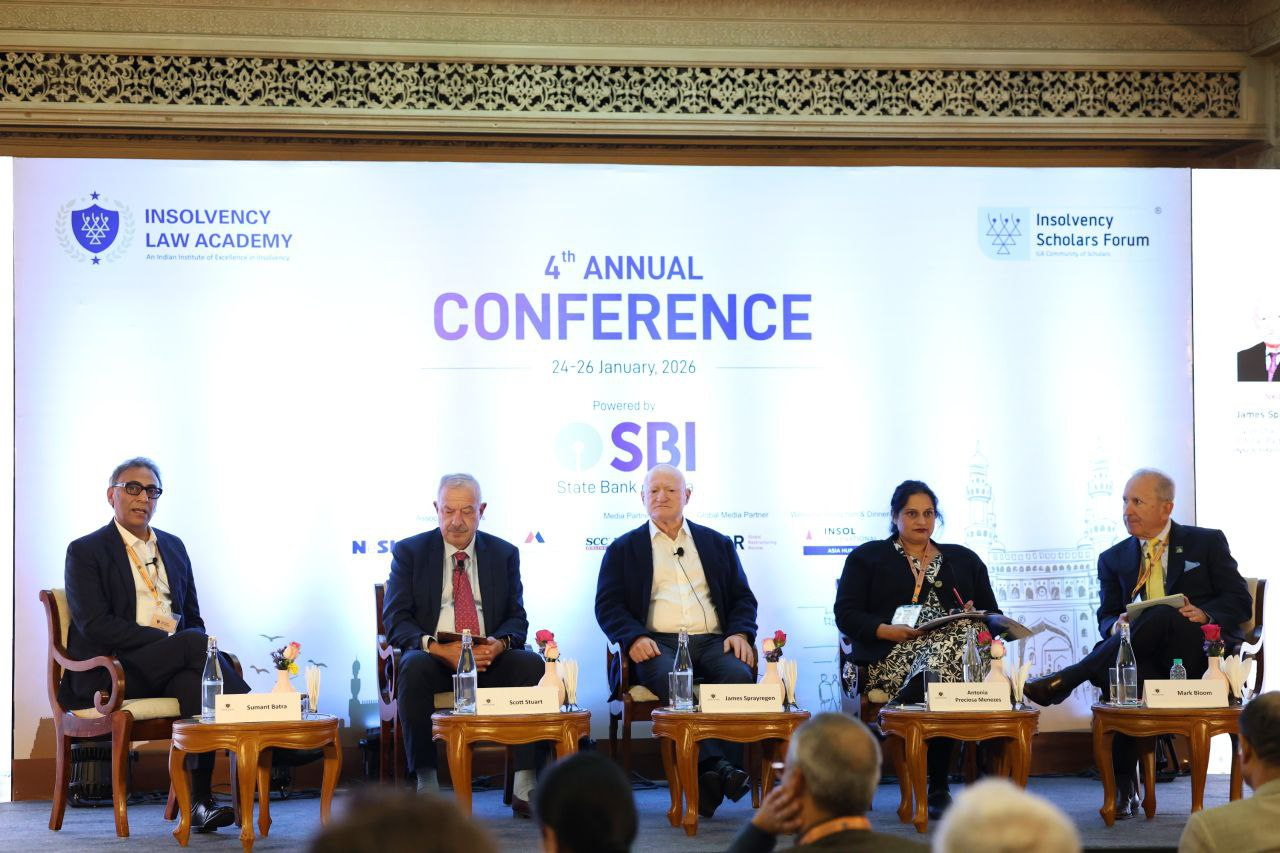
Underscoring the present tension between pessimism and promise, given the global situation, Mr. Bloom explained that trade protectionism, tariff wars, and reactionary policies have moved from geopolitical arenas into commercial and restructuring strategies. He spoke about the aggressive use of pre-insolvency planning and insolvency proceedings due to geopolitical and economic uncertainty, increasing use of non-local forums for multinational business restructuring, and the reasons for reliance on the US Chapter 11 insolvency regime by international debtors.
Taking the discussion forward, Mr. Scott Stuart delved into global reactions to the shaping of the insolvency industry. He explained the balance between the practical and the political, forum shopping, and adaptation of emerging economies to the successes and failures of other insolvency regimes. He also agreed that reduced reliance on courts and greater emphasis on out-of-court solutions, turnaround strategies, and market-driven tools could lead to better results and rehabilitation of businesses.
Regarding the restructuring trends previously and in the future, Mr. James Sprayregen reflected on the journey of the US Bankruptcy Code since 1978, from reasoned law to lobbied amendments and a surprising lack of predicted increase in insolvency filings despite geopolitical shocks and tariff disruptions. Mr. Sprayregen also talked about Chapter 11 of the US Code, which had little uncertainty, thus making out-of-court negotiations more likely without going through the formal process that everyone wants to avoid.
Speaking from a global perspective, Ms. Antonia Menezes presented macroeconomic and data-driven insights grounded in World Bank and IMF research. She stated that though 90% of advanced economies have surpassed pre-pandemic per capita income levels, the recovery remained uneven, with many emerging and developing economies still below pre-pandemic benchmarks. Thus, tighter financing conditions, declining risk appetite, and weaker balance sheets were expected to elevate insolvency risks, particularly in these jurisdictions in 2026. Ms. Menzes also spoke about household debt and personal insolvency, increasing use of out-of-court and hybrid restructuring tools, digitisation of insolvency systems, and the emerging role of AI in case management and dispute resolution.
In conclusion, the panellists explored the growing influence of private credit and private equity in distress situations, the rise of claims trading, increasing opportunistic insolvency players in restructuring processes, the use of new technology and AI, and more.
SESSION 2: Failure, redemption and Dignified Exit: A Study of Failure and Bankruptcy Through the Eyes of Indian Cinema
ILA and the Indian Cinema Heritage Foundation commissioned research to study how filmmakers have, over the century, treated the subject of bankruptcy or financial failure of man and its complex association with society. A film’s perceptual content can be analysed as a realist, as a semiotician, and as a narrative theorist focusing on how we cognize a film’s fiction. The results of this study were presented by Mr. Sumant Batra and Mrs. Asha Batra, Founder Trustee, Indian Cinema Heritage Foundation.
In this interesting session, Mr and Mrs Batra discussed from the lens of indian cinema, the nuances of how failure pans out, how people respond to failure, the stigma and alienation, the support system or the absence of it, and how that has evolved over a period of time as our economy, society, and thinking have evolved.

Mrs. Asha Batra underscored the importance of cinema as not just an archive but also a participant in history, a social document holding a mirror to society. In this regard, she presented a few Indian movies that showcased key principles of insolvency, such as the accumulation of debt, debt, and exit. Movies such as Do Bigha Zameen and Mother India represented the Indian agrarian society in the initial stages of the Indian economy, Naukri and Apna Haath Jagannath addressed the urban unemployment crisis, Diwar and Kala Bazaar shifted the narrative towards corruption, and Guru and Phas Gaya Obama, which displayed liberalization and globalization.
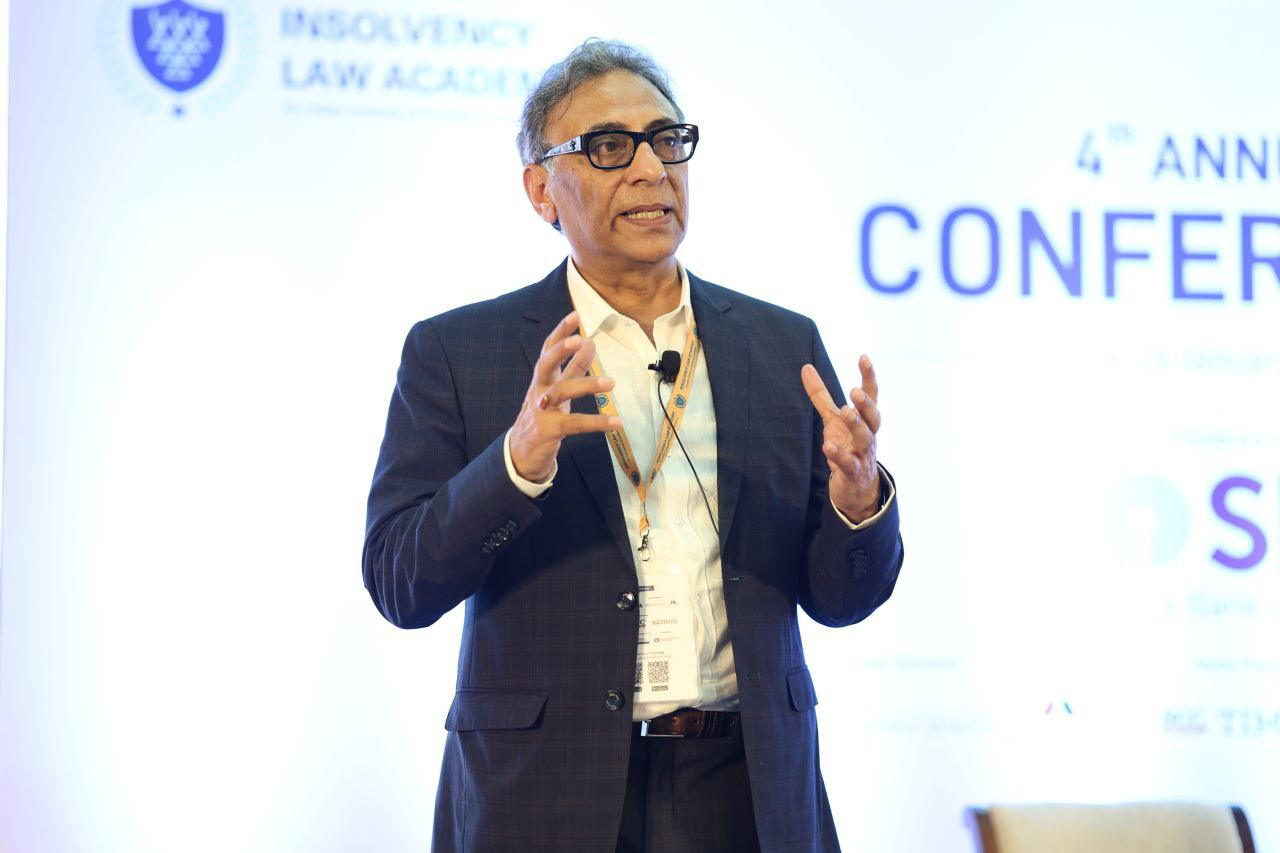
Concluding the session, Mr. Batra emphasized the social fabric that was interconnected with the economy and the human emotions of the people who constituted corporations. He remarked that, “There is no priority for redemption, there is no priority for human dignity, and the social fabric comprises not of the enterprises, it is comprised of unity, and if that integrates, there is bound to be unrest in the society.”
Lastly, he spoke about individual insolvency, the need for a legal-policy regime in India for it, and the challenges that await this journey.
Thus, the insightful Day 1 of the 4th ILA Conference ended with a short thank-you note by Mr. Batra.