


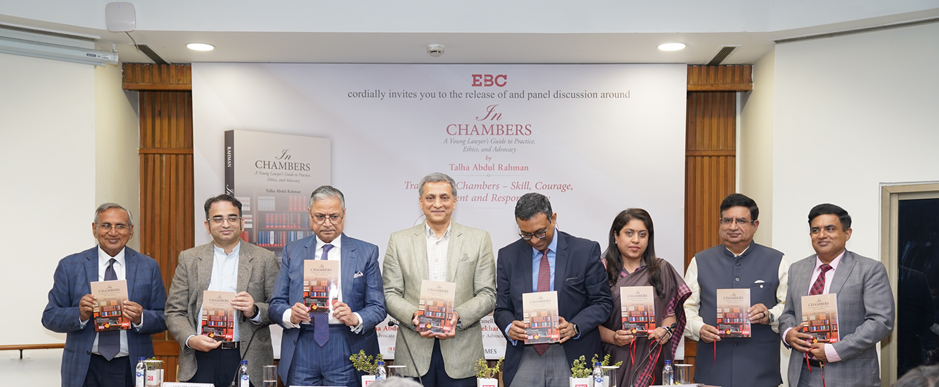
On a remarkable evening that brought together some of India’s most respected legal minds, the Eastern Book Company (‘EBC’) hosted the release of “In Chambers: A Young Lawyer’s Guide to Practice, Ethics and Advocacy” authored by Mr. Talha Abdul Rahman, Advocate-on-Record, Supreme Court of India. The programme drew a packed audience of advocates, students and members of the legal fraternity, becoming a celebration of learning, mentorship and the values that shape the journey of every young lawyer.

The programme opened with Ms. Prachi Bhardwaj, Senior Associate Editor at EBC, who introduced the book as a guide shaped by experience and early lessons at the Bar. The introduction highlighted how the work brings together practical wisdom, ethical grounding, and the realities of chamber practice that define a young lawyer’s first steps.
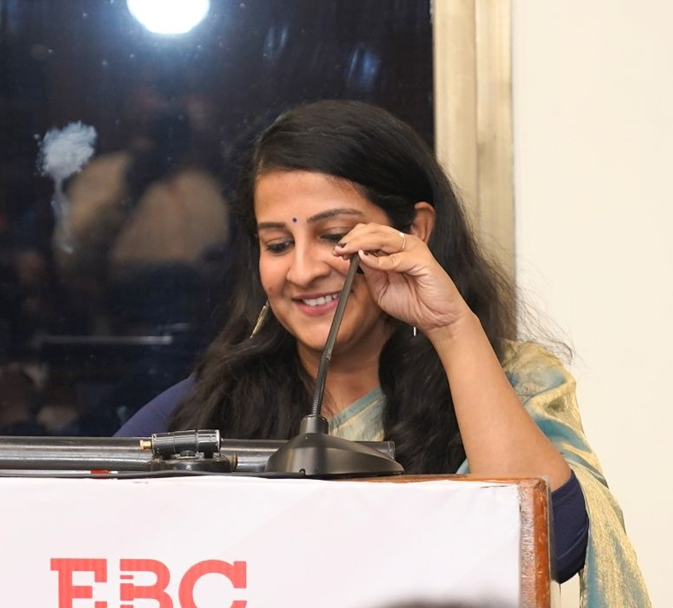

Among the dignitaries were Mr. Gopal Subramaniam, Senior Advocate and Chief Guest, and Mr. Shyam Divan, Senior Advocate and Guest of Honour. Mr. Rajshekhar Rao, Senior Advocate, participated as a panellist, and the discussion was led by Ms. Liz Mathew, Senior Advocate. The author, Mr. Talha Abdul Rahman, was warmly received for bringing the legal community together to celebrate a work rooted in mentorship and ethics.
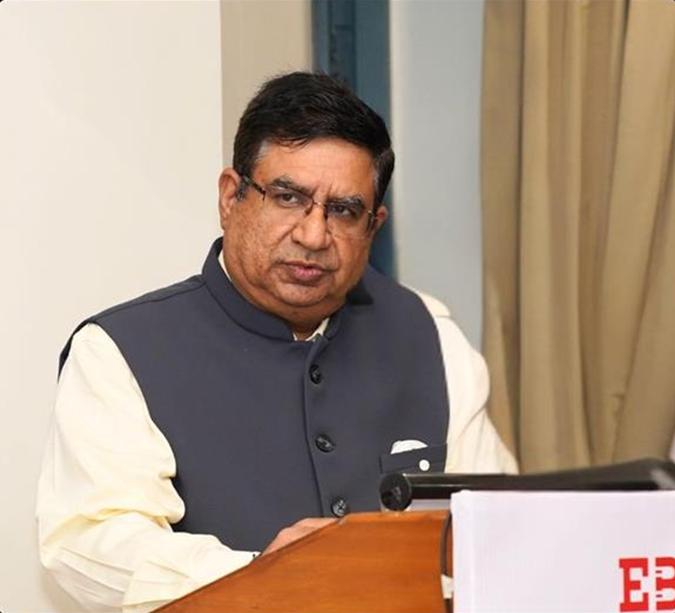

Delivering the welcome address, Mr. Sumeet Malik, Director, EBC, situated the book within EBC’s stewardship of authors and ideas since 1942 and traced the publishing house’s growth from a bookselling enterprise to a trusted legal publisher and research platform. He referred to the Supreme Court Cases and its digital evolution through SCC Online, along with initiatives such as HCC, EBC Reader, EBC Learning, and Mercury, to describe a tradition that balances reverence for the past with innovation for the future. He observed that while a good author explains doctrine, a great author illuminates what the law ought to be, and that a work like “In Chambers: A Young Lawyer’s Guide to Practice, Ethics and Advocacy” serves as a silent senior for young lawyers by transmitting craft, judgment, and ethics that classrooms cannot fully impart. He added;
“Law schools, for all their rigor, often teach doctrine but cannot always impart craft. The skills of practice, judgment, ethics, and professional instincts are learned unevenly, and sometimes not at all, within formal classrooms. It is here that a well-written book like this step into the vacuum.”
MENTORSHIP AND EARLY LESSONS IN THE PROFESSION
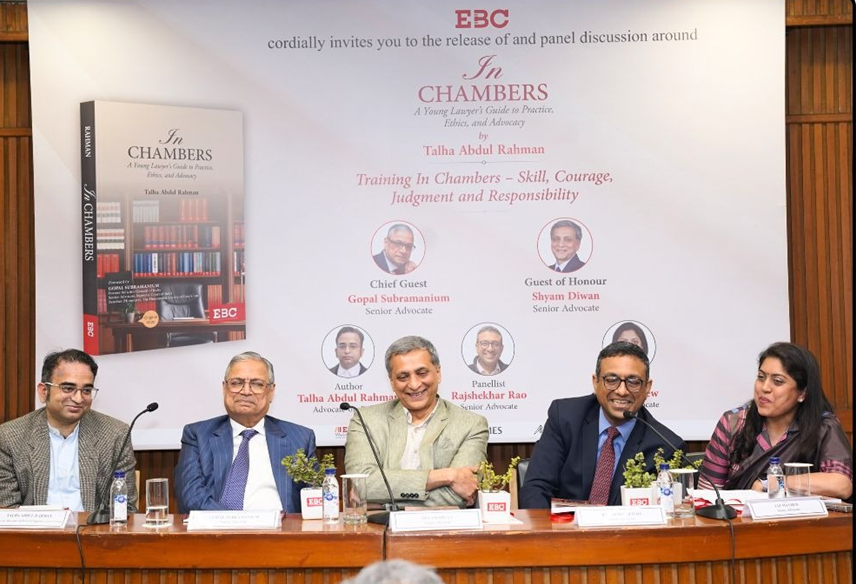

Moderating the discussion, Ms. Liz Mathew described the book as a bridge between law school theory and the realities of practice, stating that it brings chamber conventions out in the open for young lawyers who may not otherwise have access to them.


Mr. Shyam Divan reflected on his early years in Bombay and on the discipline of observation that shapes a junior. He recalled a lesson that on any given day a young lawyer may learn a little of what to do, but often much more of what not to do by watching closely. He also recounted the instruction he received that where a lawyer has both a paid brief and a pro bono brief, the pro bono brief must take priority so that no client can say that the counsel was chasing money.


CONVENTIONS OF THE BAR AND COURTROOM DIGNITY
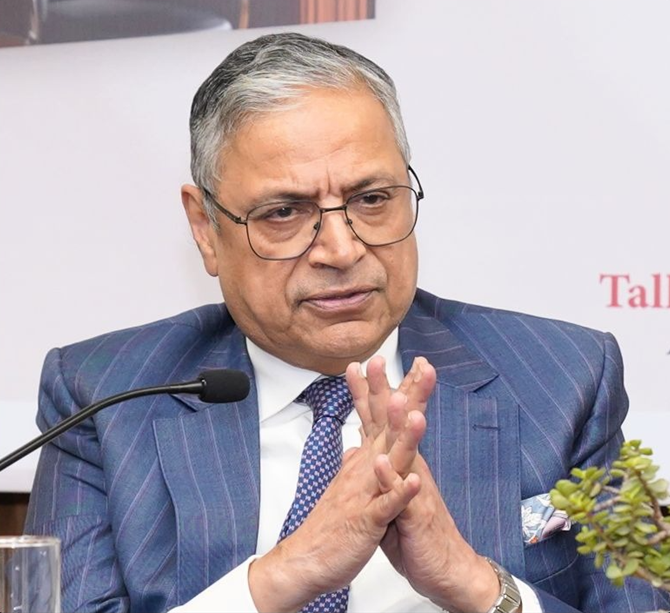
Mr. Gopal Subramaniam spoke about growing up around legendary lawyers and about the nourishment that comes from watching judges who embodied very high standards of personal rectitude. He urged juniors to seek validation first within themselves and then from peers known for integrity and faithfulness to the Court. He underlined that dignified procedure must be matched by accuracy in stating facts and recalled how a single off-the-record assertion once undid an otherwise certain victory. He emphasised that such conventions be documented and shared with younger members of the Bar, and added,
“In a courtroom, there are two dynamic forces at work. One is the lawyer, and the other is the judge, and both must have a shared set of values and a shared set of understandings and how to actually negotiate in that interpersonal exchange so that the right thing happens.”

READING, REFLECTION AND THE ROLE OF AI
Mr. Divan made a case for rediscovering books, both law and non-law, as essential to legal imagination. He spoke of maintaining a case diary and following recent judgments to track how principles evolve. Echoing the author’s caution, he said that so long as a lawyer uses AI as a slave it is acceptable, but the quality of work suffers the moment AI becomes a master and takes the reins.
Mr. Subramaniam added that reading across genres has significant benefits for the lawyer’s mind and that changes in reporting and Courtroom practice today call for principled, sustained study. He also noted that there has been a change in Court conventions and practices in recent years, which makes such principled study all the more necessary for the Bar. He observed that justice must be performed in a setting open to public scrutiny and conducted with dignity, without anger or malice, and where both sides are effectively heard and accommodated.
VISIBILITY, SOCIAL MEDIA, AND PROFESSIONAL RESTRAINT


Mr. Rajshekhar Rao noted that while visibility is a reality of modern practice, there are lines that must not be crossed. He said that true recognition flows from work inside the Courtroom, serious writing, and speaking at substantive forums. Mr. Subramaniam observed that self-advertising diminishes the habit of self-critique, which is central to a lawyer’s growth. Additionally, Mr. Divan encouraged building a niche through steady scholarship without allowing early specialisation to become a cage.
CHOOSING CHAMBERS AND BUILDING A PROFESSIONAL IDENTITY
Mr. Subramaniam reassured young lawyers that while chambers are valuable, one is not at a disadvantage without a senior if one cultivates structured habits of preparation, reading, and , and he added that seniors remain available for conversation and affirmation when good work is seen. Mr. Divan suggested that it can be advantageous to join someone on the cusp of designation and to become indispensable through dependable, timely work and noted that peers in chambers often become a lawyer’s moral compass.
Mr. Rao spoke about kinship and resilience in an unforgiving profession and about quiet habits such as arriving early, preparing notes, and offering precise page references that silently shape a junior’s future.
GENDER, REPRESENTATION AND THE PATH AHEAD
The discussion turned to gender representation at the Bar. Mr. Subramaniam said that India is a deeply patriarchal society and called for proactive steps including deliberate representation in chambers and serious attention to judicial appointments, affirming that in terms of competence, quality and integrity women are as good as anyone else. He said,
“If you want to give de facto recognition to gender equality, then there has to be more proactive steps. There have to be more proactive choices which have to be made. There have to be more proactive policies to ensure that at least, say, a 40% to 50% of your chambers consists of people of another gender.”
Mr. Divan noted that women often carry an added burden but that there are now many examples in practice to inspire younger lawyers to stay the course. Ms. Mathew reflected that while she did not face discrimination in her early years, bias becomes visible as women advance. She appreciated her mentors for shielding her from prejudice and recognized the privilege of having such experiences, while underscoring that a pushback at higher positions still needed to be addressed to ease the path for those who follow. Ms. Mathew also expressed her gratitude for those pathbreaking women in the field who made it easier for her and her peers to be in the industry and hoped to do the same for her juniors.
THE EMOTIONAL LOAD OF ADVOCACY
Drawing from a passage reproduced in the book, Mr. Subramaniam’s advice to a young lawyer after an adverse order captured the programme’s emphasis on self-reflection and resilience. He wrote that one must remember to be one’s own laboratory and carry out experiments in truth and reason. He added that a sense of community ensures a lawyer never feels isolated and can always find a colleague to share burdens on difficult days.
AUTHOR’S ADDRESS
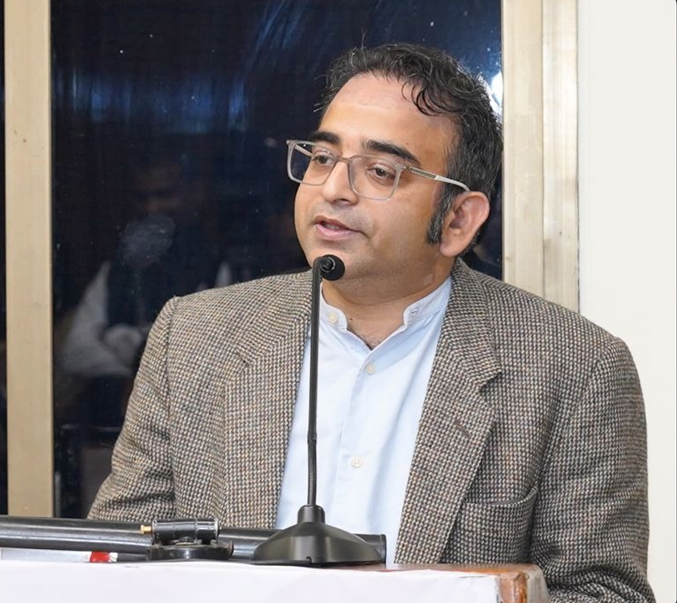

In his much-awaited remarks, Mr. Talha Abdul Rahman described his book as a companion for the uncertain early years of practice, engaging with ethical questions and calling for introspection in a vocation that is strictly a profession and not a business or a service.
“A book, even though it’s written in solitude, it finds meaning only when it enters the community.”
Tracing experience across Bombay, Lucknow and Delhi, he explained that the guiding idea of the book is simple: it is about how to be useful to the chamber, to colleagues, to the senior, to the Court, and ultimately, to the advancement of law.
The programme ended with heartfelt thanks to the organisers, the editorial and production staff, and an audience that remained deeply engaged throughout the insightful conversation.