


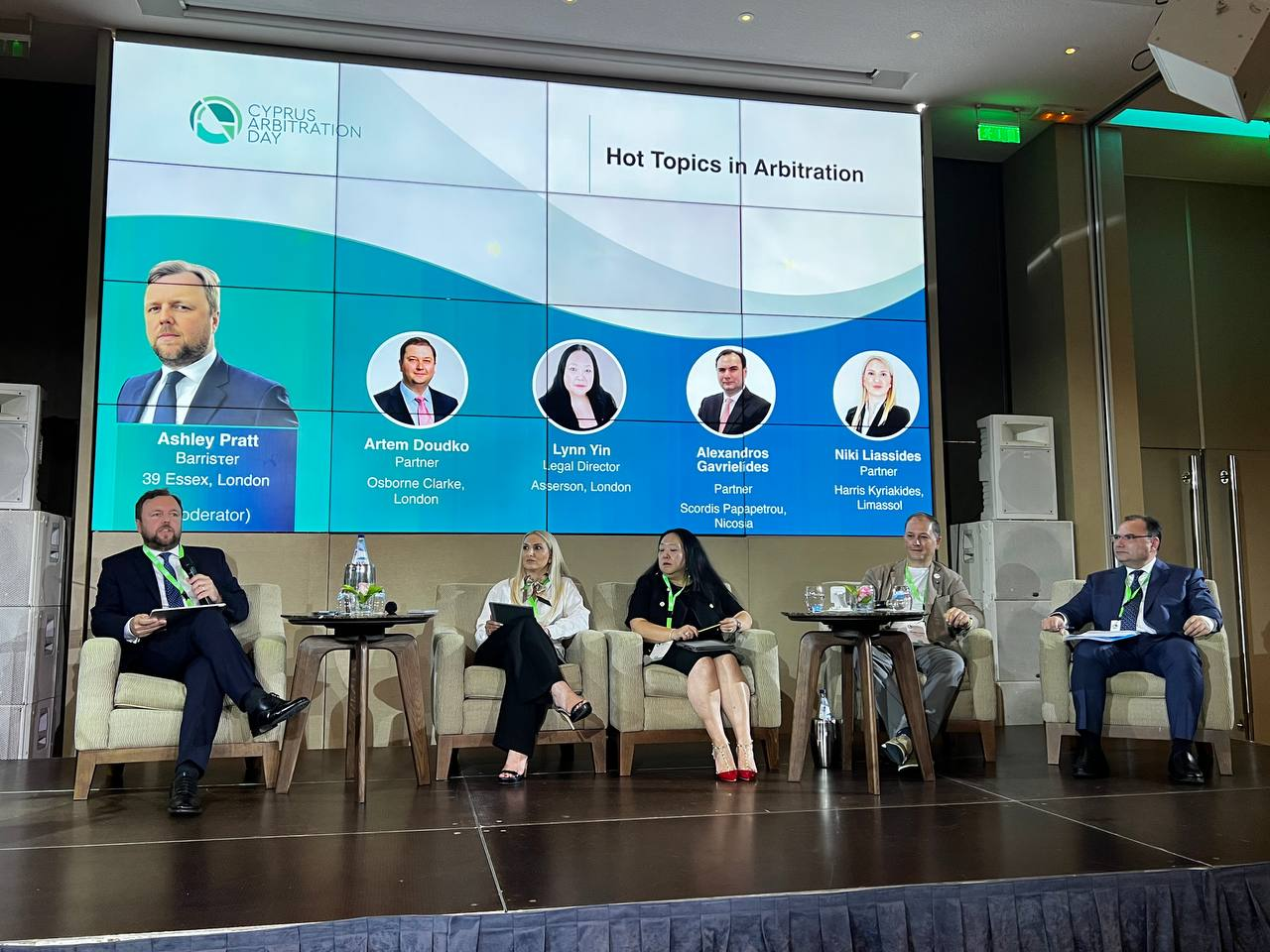
The last panel discussion of the conference titled “Hot Topics in Arbitration” focused on growing complexity of international arbitration considering geopolitical instability, sanctions regimes, enforcement difficulties, and evolving legal frameworks.
The panel was moderated by Mr. Ashley Pratt, Barrister, 39 Essex, London, and empanelled by esteemed professionals namely, Mr. Artem Doudko, Partner, Osborne Clarke, London; Ms. Lynn Yin, Partner, Asserson, London; Mr. Alexandros Gavrielides, Partner, Scordis Papapetrou, Nicosia; Ms. Niki Liassides, Partner, Harris Kyriakides, Limassol.

Force Majeure and Drafting Challenges amid Geopolitical Crises- Ms. Niki Liassides
A. Force Majeure & Geopolitical Issues:
Kickstarting the session, Ms. Liassides began by emphasizing that international arbitration has been fundamentally challenged by a succession of geopolitical crises over recent years. Rather than isolated disruptions, the international commercial environment was now characterized by continuous instability arising from events such as the COVID-19 pandemic, Russia—Ukraine war, conflicts in the Middle East, economic sanctions, and global supply chain disruptions. She explained that these developments have generated a broad range of disputes, including:
-
Inability to deliver goods due to sanctions or export controls;
-
Delays in infrastructure and construction projects;
-
Shipping and logistics interruptions caused by war zones or trade route closures;
-
Financing disruptions linked to banking restrictions and sanction compliances.


Underscoring that the main question was whether such events automatically qualified as force majeure, arbitral tribunals do not automatically accept that war, sanctions, or economic crises satisfy the force majeure threshold. Instead, they apply a structured legal analysis focused on several key factors, which were as follows:
-
Contractual Wording: The wording of the force majeure clause is critical. Tribunals examine whether the relevant event falls within the scope of the clause. Clauses may make express references to war, armed conflict, sanctions, embargoes, government actions, or events beyond the parties’ reasonable control, or some events might be considered as consequences of war rather than acts of war.
-
Causation: The affected party must demonstrate that the force majeure event directly caused the inability to perform contractual obligations.
-
Foreseeability and Mitigation: Tribunals also scrutinize whether the event was foreseeable and whether the affected party took reasonable steps to mitigate the consequences. Mitigation has become one of the most heavily examined aspects of force majeure claims.
-
Suspension versus Termination: Many geopolitical events create delays rather than impossibility. Consequently, tribunals frequently examine whether contractual obligations should be suspended; deadlines extended, or contracts terminated entirely.
B. Drafting Lessons for the Recent Crises:
Following up on her inputs, Ms. Liassides addressed how lawyers should adapt drafting practices in response to these developments. She explained that historically, force majeure clauses were often treated as boiler plate provisions, i.e., parties would include standard wording in their contracts without considering how these provisions would operate in practice during a major geopolitical crisis. However, recent crises have demonstrated that this generic drafting was no longer adequate, and there was a need for sophisticated risk-specific clauses.
She added that lawyers were now increasingly expected to anticipate geopolitical risks and allocate them explicitly within contractual frameworks in advance. Such modern drafting had specific mentions to war, armed conflicts, cyberattacks, sanctions, export controls, supply chain disruptions, pandemics, government restrictions, and even energy shortages. Drafting of sanction-related clauses has also become essential as they affect finances, insurance, and even participation in the proceedings. Furthermore, not only must the mitigation obligations be clearly regulated in the contracts, but even the arbitration clauses had to be reconsidered. Ms. Liassides also highlighted that arbitral institutions were responding to these developments, citing updates in ICC force majeure clauses as an example.
C. Challenges of Sanctions in International Arbitration Proceedings:
From a procedural perspective, Ms. Liassides highlighted some operational difficulties that sanctions create in arbitration proceedings, such as delays in payments, difficulties securing legal representation, increased compliance obligations for all participants, and expanded due diligence requirements concerning ownership structures and sanctions exposure.
Ms. Liassides concluded by noting that arbitral institutions and tribunals were becoming significantly more proactive in managing sanctions-related risks as they, increasingly, were requesting sanctions-related disclosures, seeking additional information from parties, developing internal compliance frameworks, and exercising active procedural management.
Sanctions, Fundamental Rights, and Enforcement of Awards- Mr. Alexandros Gavrielides
A. Access to Arbitration for Sanctioned Parties
At the outset, Mr. Gavrielides clarified that sanctions do not prevent sanctioned parties from commencing arbitral proceedings. He illustrated that access to justice, at least in the EU, was a fundamental right, and EU institutions have repeatedly emphasized that sanctions must respect such rights.
Nevertheless, he stated that sanctioned parties frequently encounter substantial practical obstacles such as, banking over-compliance and difficulties processing payments despite arbitration related transactions being excluded from sanction application, which cause delays and increase costs. Though these operational barriers may interfere with effective access to justice, Mr. Gavrielides opined that a case-by-case analysis had to be undertaken to ascertain the same.


Regarding EU sanctions, he explained that there were two situations regarding the ability of sanctioned parties to obtain arbitral awards:
-
Claims Affected by Sanctions: Where a claim concerns a contract directly or indirectly affected by EU sanctions, Article 11 of EU Regulation 833/2014 applies. This provision prohibits satisfaction of such claims when brought by Russian parties. Accordingly, even though a sanctioned party is not prevented from commencing arbitral proceedings to advance a claim falling within the scope of application of Article 11, the arbitral tribunal is prohibited from satisfying this claim, i.e. from making an award in favour of the sanctioned party.
-
Claims Outside Article 11: Where claims are unrelated to contracts affected by sanctions, the prevailing view was that tribunals may still issue awards in favor of sanctioned parties. He argued that EU sanctions should not generally prevent tribunals from issuing awards unless the claim falls specifically within Article 11. He referred to the English cases involving PJSC National Bank Trust v Boris Mints, where courts recognized that access to justice includes not merely the right to have a claim adjudicated, but also the right to obtain judgment.
According to Mr. Gavrielides, this prohibition does not merely create a defense rather, arbitral tribunals themselves have a duty to ensure compliance with Article 11, regardless of whether the respondent raises the issue. Consequently, an award rendered in breach of Article 11 would likely face refusal of enforcement across EU Member States. However, he found this approach problematic because it allows losing parties to evade valid arbitral awards and undermines the effectiveness of the fundamental right to access justice.
Applying similar reasoning, Mr. Gavrielides argued that other than claims under Article 11 of Regulation 833, EU sanctions do not preclude tribunals from making an award in favour of a sanctioned party, as this would constitute an impermissible interference with the right of access to justice.
Thus, he discussed some proposed alternatives to refusal of enforcement:
-
Recognition Without Enforcement: He considered this approach ineffective because it offers no practical relief.
-
Stay or Suspension of Enforcement: In this approach, the enforcement can be stayed or suspended till the sanctions are listed. This approach may better align with the New York Convention but still leaves prevailing parties without meaningful remedies.
-
Enforcement Subject to Protective Conditions: Arguing that this was the “least unsatisfactory” option, he stated that under this model the enforcement could proceed by putting the funds into frozen or restricted accounts till sanctions remained. This ensured that sanctions compliance is maintained while preserving the integrity of arbitral awards.
Lastly, he concluded by observing that sanctions and fundamental rights are “uncomfortable bedfellows,” requiring careful balancing by tribunals and national courts.
The Arbitrator’s Perspective- Mr. Artem Doudko
On the topic of geopolitical changes and sanctions, Mr. Artem Doudko provided insights from the perspective of both counsel and arbitrator. He stated that tribunals continued to approach sanctions and geopolitical disputes through structured legal analysis, despite increasing complexity. Thus, he highlighted a few key issues in the current landscape:
-
Scrutiny of Arbitrator Impartiality: According to him, one of the most significant emerging issues is heightened scrutiny of arbitrator impartiality. This includes expanded disclosure obligations, examination of affiliations with sanctioned jurisdictions or entities, potential assumptions of bias based on nationality, and increased mentions of social media statements as evidence of partiality.
-
Choice of Seat and Neutrality: He observed that parties were increasingly selecting arbitration seats perceived as geographically neutral, and the concept of neutrality itself was evolving.
-
Institutional versus Ad Hoc Arbitration: Mr. Doudko also noted that institutional arbitration offered advantages over ad hoc arbitration, particularly regarding handling of payments, management of sanctions compliance, and administrative support. Institutions have generally adapted more effectively to sanctions-related operational issues.
-
Trend of Anti Injunctions Suits: He stated that this issue impacted arbitrators directly, like the issue of how they get paid.
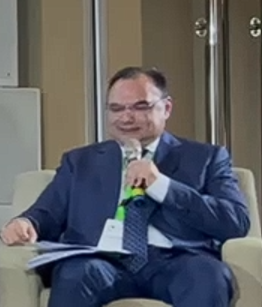

Addressing the issue of conflicts of interest as he wears both hats, Mr. Doudko emphasized the importance of thorough due diligence and stressed that arbitrators must err on the side of caution and decline appointments where necessary.
“A lot of complexity, but we still keep dealing with it in a structured legal way, and that’s the only thing that we can do in these complicated times.”
On the topic of end-users of arbitration, Mr. Doudko addressed a broader institutional question of who represents arbitration to the outside world and how the arbitration community can better communicate its value. He argued that arbitration professionals spend significant time discussing arbitration internally at conferences and specialist events, but insufficient effort is made to explain arbitration to those outside the field. Thus, he suggested the community to engage with commercial clients, in-house counsels, transactional lawyers, business executives, and policymakers.
Reform of PRC Arbitration Law and Enforcement in China- Ms. Lynn Yin
A. Amendment of Chinese Arbitration Law
Answering the question on the first major revision to the Chinese Arbitration Law, Ms. Yin mentioned that the statute had not been amended since 1995 and now the much-awaited update aimed at aligning Chinese arbitration law more closely with international standards and conventions. She underscored that the most significant development was the creation of a formal legal structure for enforcement of arbitral awards within China, even for countries which had no treaty with China.
She stated that historically, enforcement in China was regarded as highly uncertain. However, now there was every prospect of enforcement, and the new framework significantly improves it a little more. She added that award creditors of foreign awards may now seek enforcement based on the debtor’s place of residence, location of assets, creditor’s place of residence, or any location reasonably connected to the dispute.
Ms. Yin also mentioned that the reforms established a legal basis for foreign arbitral institutions to administer arbitrations within mainland China, particularly in free trade zones and potentially other strategic regions.
Underscoring that the Chinese principle of enforcement had always been based on reciprocity, she explained the evolution from “strict reciprocity” to “presumed reciprocity.” Previously, Chinese courts required proof that foreign courts or arbitral institutions had enforced Chinese judgments before reciprocal enforcement would be granted. However, under the new approach, enforcement may proceed unless there is evidence that the relevant foreign jurisdiction has refused to enforce Chinese judgments or awards. Ms. Yin described this shift as transformative and emphasized that it substantially improves confidence in enforcing arbitral awards in China.


B. Renewable Energy Arbitration:
Regarding the recent increase in renewable energy arbitrations, Ms. Yin explained that this increase was due to growing global energy demand, expanding use of artificial intelligence and data infrastructure, climate change, changing climate policies, volatility in fossil fuel markets, and geopolitical instability. Noting this, she underscored that governments and international institutions were actively encouraging investment in renewable energy which has led to rapid development in sectors such as wind energy, solar PV, thermal solar energy, green hydrogen, biomass projects, etc.
Since these industries are still evolving, the legal and contractual frameworks governing them were also continuously developing. Thus, there was significant uncertainty and increased likelihood of disputes. She substantiated her argument by highlighting how disputes can arise at virtually every stage of a renewable energy project lifecycle. Furthermore, recent geopolitical developments posed further problems.
Ms. Yin explained that this made arbitration the preferred dispute resolution mechanism for renewable energy disputes because projects are usually multi-jurisdictional, technically complex, internationally financed, and commercially sensitive. In such cases, arbitration offers several advantages, such as neutrality, flexibility, international enforceability, and procedural adaptability.
She also stressed the need for careful drafting of arbitration clauses across all project contracts as disputes become extremely difficult to manage if arbitration clauses are inconsistent across the interconnected contracts.
Thus, the last session of Cyprus Arbitration Day 2026 ended with insightful discussions on coping with geopolitical tensions, navigating sanctions, growing complexities of disputes, renewable energy arbitrations, and more.
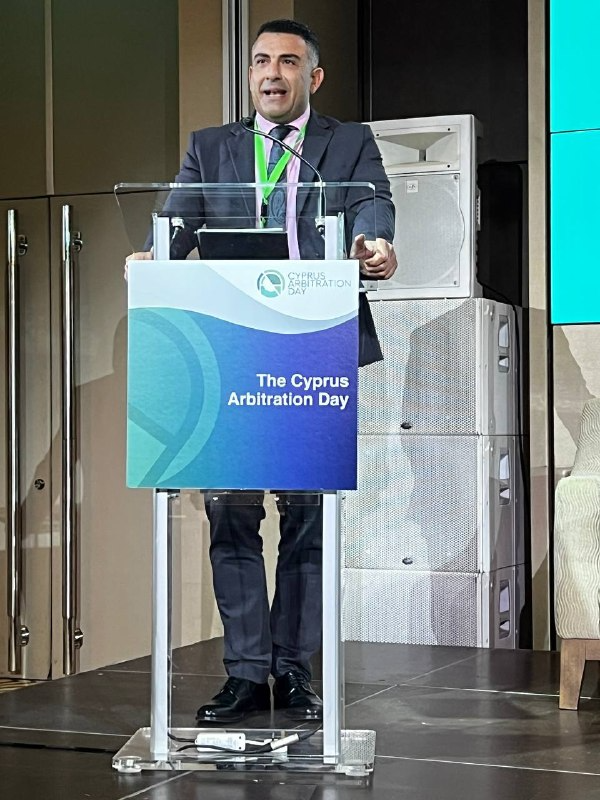

The eventful Cyprus Arbitration Day 2026 concluded with closing remarks by Mr. Agis Georgiades.
Read other Cyprus Arbitration Day 2026 reports HERE.