


The conference officially began with a detailed panel discussion on “Unsettled Legal Doctrines” namely, Iura Novit Curia, Precedent and Res Judicata in international commercial arbitration.
The panel was moderated by Mr. Kevin Nash, Director General, LCIA, London, and empanelled by esteemed professionals namely, Dr. Alexander Milionis, Attorney, Niedermüller, Lichtenstein; Ms. Eleni Lentziou, Senior Associate, CGA, Nicosia; Mr. Christodoulos Christodoulou, Senior Associate, Chrysostomides Advocates, Nicosia; Mr. Kyriakos Pittas, Partner, Soteris Pittas, Limassol.


In the first part of the panel discussion, Mr. Alexander Milionis and Ms. Eleni Lentziou discussed the applicability, scope and risks of applying Iura Novit Curia in international arbitration.
Panel 1: Unsettled Legal Doctrines — Iura Novit Curia
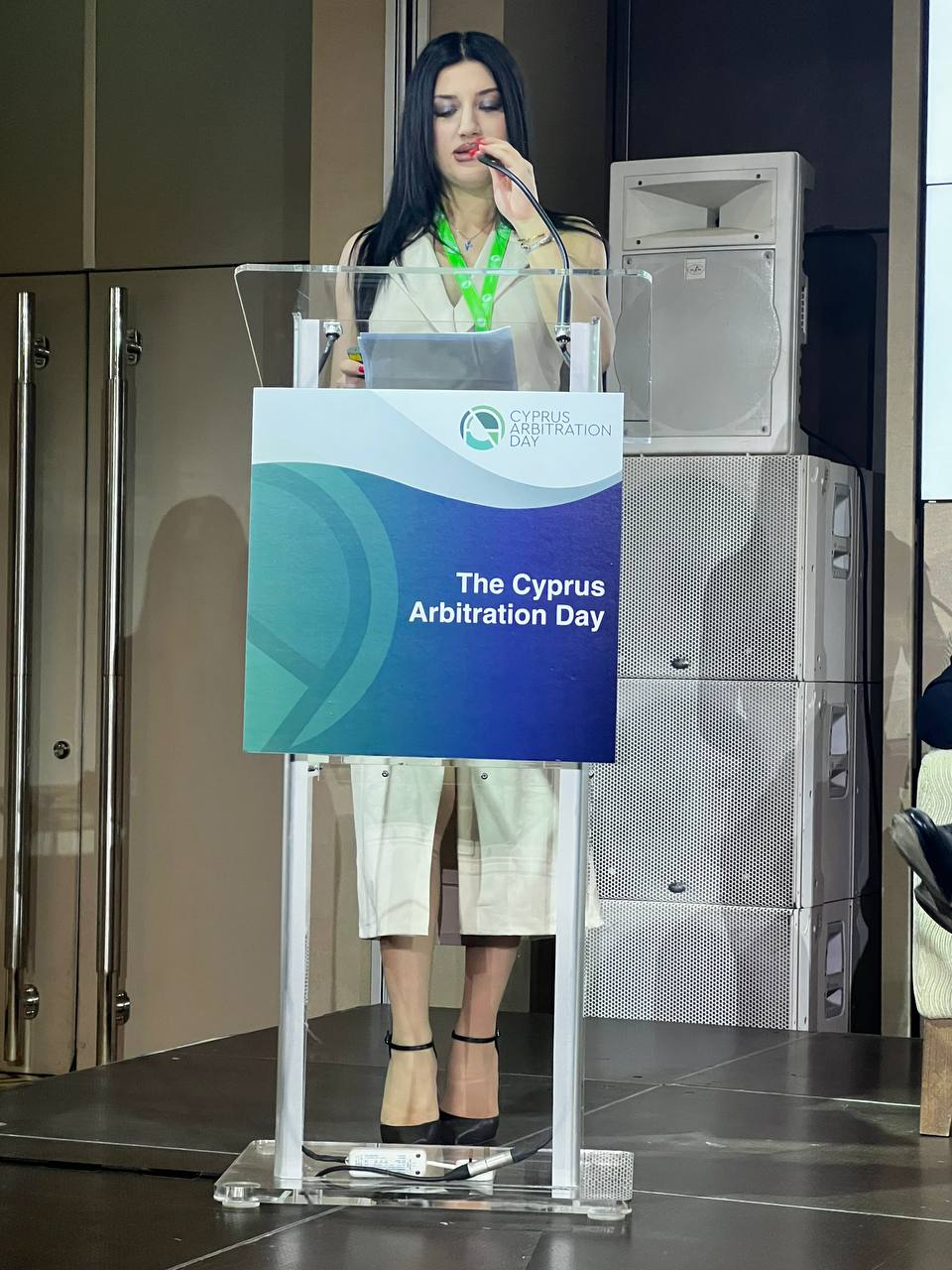
Ms. Eleni Lentziou
Ms. Lentziou opened the discussion by explaining the doctrine of Iura Novit Curia or Iura Novit Arbiter, describing it as the tribunal’s authority to develop its own legal reasoning and, where necessary, apply or substitute legal rules that the parties got wrong or did not raise, while remaining bound to the factual record presented during proceedings.
She emphasized that this doctrine is interpreted differently across legal traditions. In common law systems, tribunals are expected to remain within the legal framework established by the parties rather than independently constructing new legal arguments. According to her, this distinction is particularly important in international arbitration, where arbitrators and practitioners often come from different legal traditions, civil law, and common law with fundamentally different instincts about a tribunal’s role. She remarked that, “These differences are not just academic. They have real consequences of how awards are drafted, how they hold up under scrutiny, and ultimately whether they can be enforced.”

Ms. Lentziou illustrated that foreign law is generally treated as a matter of fact that must be pleaded and proven through evidence and expert testimony. If it isn’t sufficiently proved, the court may simply fall back on applying its own law. This might seem like technicality, but it reflected that in common law systems, law is not something the court is assumed to know automatically, rather the parties are expected to argue and establish it.
She underscored that this was significant in international arbitration, where tribunals may attempt to fill gaps in the parties’ presentation of foreign law, particularly where the tribunal is composed of arbitrators from different legal backgrounds and the governing law may be unfamiliar to all of them.
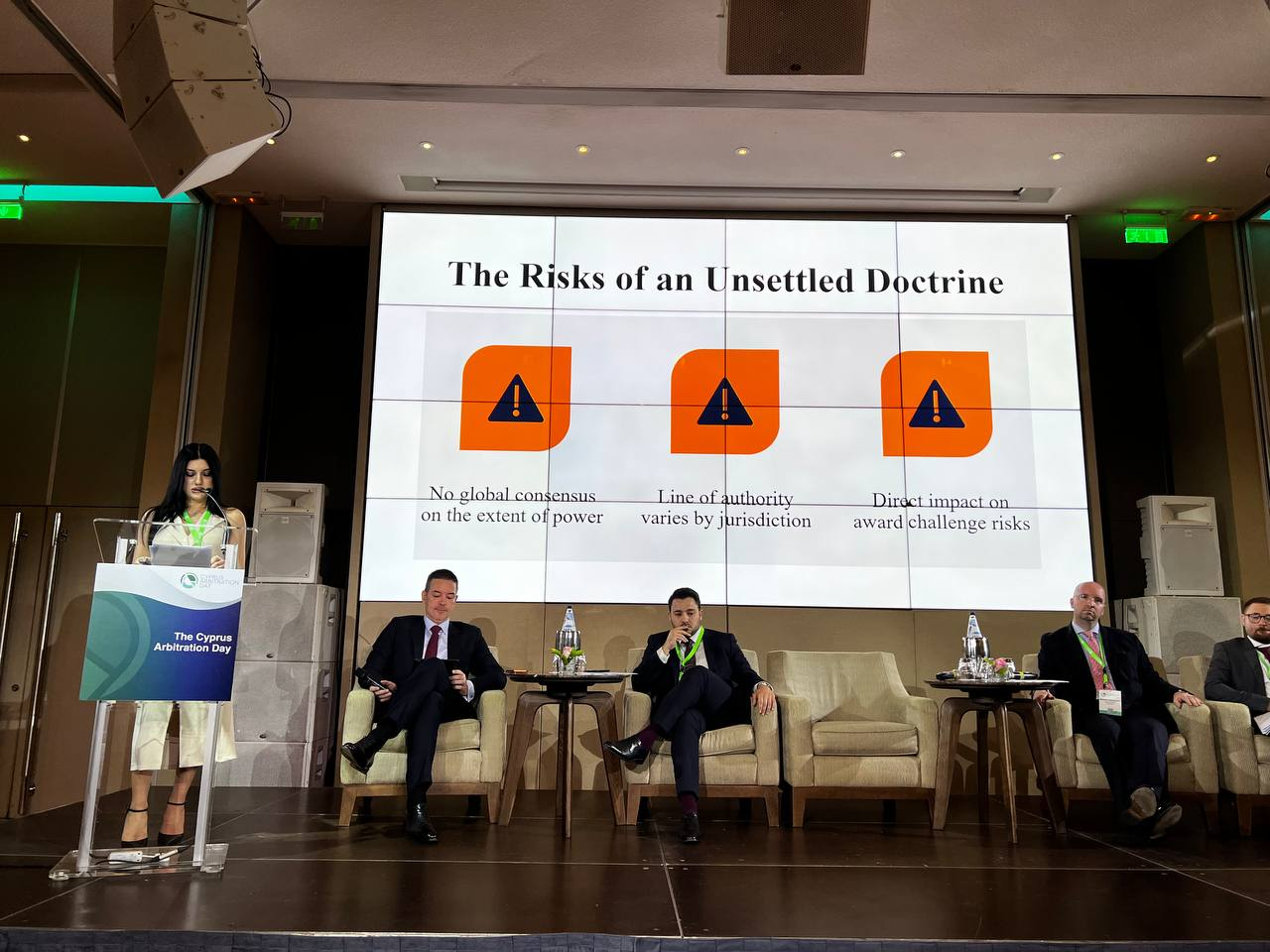
“There is no consensus across jurisdictions on how far this power extends and when it can be used. Different countries draw the line in different places, and that directly affects the risk of an award being challenged and refused enforcement.”
Regarding the risks of a tribunal invoking Iura Novit Curia, she stated that tribunals that introduce legal theories not argued or addressed by the parties risk creating “surprise awards,” potentially violating procedural fairness and the parties’ right to be heard. Such procedural irregularities may lead to challenges against recognition and enforcement under the Convention on the Recognition and Enforcement of Foreign Arbitral Awards, 1958 (New York Convention). However, she clarified that merely adopting a different legal analysis does not automatically amount to overreach.
“A tribunal doesn’t automatically cross that line just because it applies a different legal analysis than the parties argued. The line is subtle and that subtlety is exactly what makes the doctrine unsettling.”
Referring to the updated English Arbitration Act 1996, Ms. Lentziou noted that tribunals seated in England had the discretion to take initiative in identifying facts and law, provided procedural and limitation safeguards are respected. She also highlighted UK institutional rules, including those of the London Court of International Arbitration, which permit tribunals to conduct independent inquiries after allowing parties an opportunity to comment.
She proceeded to outline four principal safeguards in the common law approach:
-
No Introduction of New Facts — Tribunals may develop legal reasoning only from facts already on record; this is a non-negotiable baseline.
-
Opportunity to Comment — Parties must be allowed and given a fair opportunity to address any new legal point raised by the tribunal.
-
Foreseeability Test — Tribunals should avoid deviations that produce outcomes parties could not have reasonably anticipated.
-
Seat Sensitivity — Tribunals must remain aware of how courts at the seat of arbitration interpret tribunal authority and align their practice accordingly.
Thus, Ms. Lentziou suggested that a sensible approach would be to allow the parties to establish the content of applicable, and the tribunal has the power, not the obligation, to do its own research. If the tribunal does so, then it gives the parties an opportunity to comment, and if the law on a specific point hasn’t been established, the tribunal may apply whatever legal rule it considers appropriate. She also underscored the importance of establishing this procedure at the very beginning of the arbitration.
“There is a meaningful difference between refining legal analysis with an existing framework and building an entirely new legal framework from scratch, particularly where the governing law is foreign, where the risk of error and perceived overreach is considerably higher.”
Concluding her remarks, she stated that the doctrine remained unsettled because there is no uniform guidance from institutional rules or national legislation, and the outcomes depend heavily on the specific context and the enforcement standards at the seat. International arbitration occupies a “flexible middle ground” between strict party control and unrestricted judicial initiative. She argued that the legitimacy of Iura Novit Arbiter depends not on tribunals claiming legal knowledge, but on transparency, sticking to the facts, maintaining procedural fairness, and ensuring parties have a meaningful opportunity to be heard.
Following Ms. Lentziou’s presentation, Mr. Kevin Nash questioned whether a practical line or test could be drawn between permissible legal reasoning and impermissible “surprise awards.” In response, Ms. Lentziou reiterated the importance of inviting comments of the parties on a legal aspect not argued or foreseen by the parties. According to her, this process of inviting comments functions as the critical “safety valve” against due process violations.
Also Read: Eve of Cyprus Arbitration Day 2026: India-Cyprus relations, BITs, AI | SCC Times
Dr. Alexander Milionis
At the outset, he explained that Iura Novit Curia, i.e., the court knows the law, is deeply embedded and widely accepted across civil law jurisdictions. He noted that while implementation varies among countries, the general principle remains consistent: parties present the facts, but courts and tribunals are primarily responsible for the correct legal characterization and application of the law. Consequently, judges and arbitrators are not confined to the legal arguments advanced by the parties and may independently identify and apply relevant legal provisions.
Dr. Milionis emphasized that this judicial culture naturally extends into international arbitration which is being conducted in civil law jurisdictions. Arbitrators are expected to know and correctly apply the law, often conducting independent legal research where necessary. However, despite the tribunals’ broad authority, “surprise decisions” remain a major procedural concern. To avoid unfair surprise, tribunals in civil law systems commonly provide “indications” or warnings to parties regarding legal issues under consideration.

He added that there was a thin line between giving legal indications to prevent surprise decisions and the appearance of offering legal advice or assisting one side. This could create a perception of bias, thereby increasing the possibility of challenges to the independence of the arbitrator as well as the award.
Thus, Dr. Milionis identified several risks associated with the doctrine in international arbitration:
-
Setting aside challenge to the award due to incorrect application of law
-
Setting aside challenge to the award arising from surprise decision or unforeseeable legal reasoning
-
Challenge to the arbitrator’s neutrality or the award due to allegations of partiality stemming from tribunal interventions/ indications to the parties on a legal point
Accordingly, he described the process as a “tightrope walk,” he stressed the need for tribunals to find an appropriate balance between procedural fairness and judicial initiative.
Comparative Analysis Between Different Jurisdictions:
-
Liechtenstein: Speaking from the perspective of his home jurisdiction Liechtenstein, Dr. Milionis described it as a highly arbitration-friendly jurisdiction with a tolerant approach toward both Iura Novit Curia and surprise decisions. He explained that in Liechtenstein, arbitral awards are unlikely to be set aside merely because tribunals relied on legal arguments not raised by the parties or not discussed with the parties beforehand.
-
Switzerland: Dr. Milionis noted that Swiss arbitration law also recognizes the doctrine, but it was not so tolerant towards surprise decisions as Swiss courts focus primarily on “foreseeability.” An award may face annulment not simply because the tribunal relied on legal arguments not raised by the parties, but because the outcome was unforeseeable for the parties.
-
France: He explained that in contrast with the other two regimes, France adopts a significantly stricter stance because although it accepts the doctrine, tribunals are expected to comply with the adversarial principle (principe du contradictoire), requiring parties to be informed and heard before tribunals rely on new legal grounds.
Case Studies:
-
Quique v. Luizão: Dr. Milionis discussed the arbitration dispute involving Spanish football manager Quique Sánchez Flores Guixa and Brazilian football player Luiz Gustavo Oliveira da Silva (Luizão), seated in Switzerland. In this dispute, the Swiss Supreme Court annulled the award after the tribunal relied on legal provisions not argued by the parties and applied a legal rule that was inapplicable to the dispute. The Court considered the award as not only a surprise decision, but also unforeseeable.
-
Engel Austria GmbH v. Don Trade1: This case involved Austrian company Engel Austria GmbH and Russian company Don Trade in an arbitration proceeding seated in Paris under Austrian law. Although the tribunal correctly applied Austrian law, the award was nevertheless set aside by the Paris Court of Appeal because the legal instrument relied upon, had not been discussed with the parties beforehand.
In his concluding remarks, Dr. Milionis stressed that Iura Novit Curia must be exercised carefully and judiciously in international arbitration in civil law jurisdictions. He recommended that tribunals should ensure accurate legal application while respecting party autonomy, avoid surprise decisions while preserving impartiality, acknowledge the different legal traditions, and remain sensitive to the law of the arbitral seat. Lastly, he emphasized that greater procedural transparency could significantly reduce the number of arbitral awards challenged or set aside.
Taking over from Dr. Milionis, Mr. Nash asked him how a tribunal could raise a legal point without appearing to assist one side or prejudge the merits.
Responding, Dr. Milionis acknowledged the difficulty and emphasized that tribunals may engage in legal discussions with parties but must avoid crossing the line into legal advice or strategic guidance, including mentioning possibilities for objections when certain objections have not been raised. He warned that even minor interventions, like mentioning the statute of limitation, not previously raised could create grounds for challenge in some jurisdictions.
Also Read: Human Judgment vs AI Efficiency: The Question That Opened Cyprus Arbitration Day 2026
1. ICC NO. 14220/AVH/JHN