


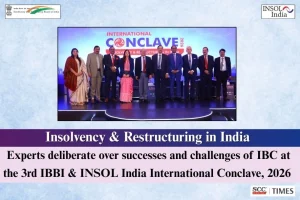
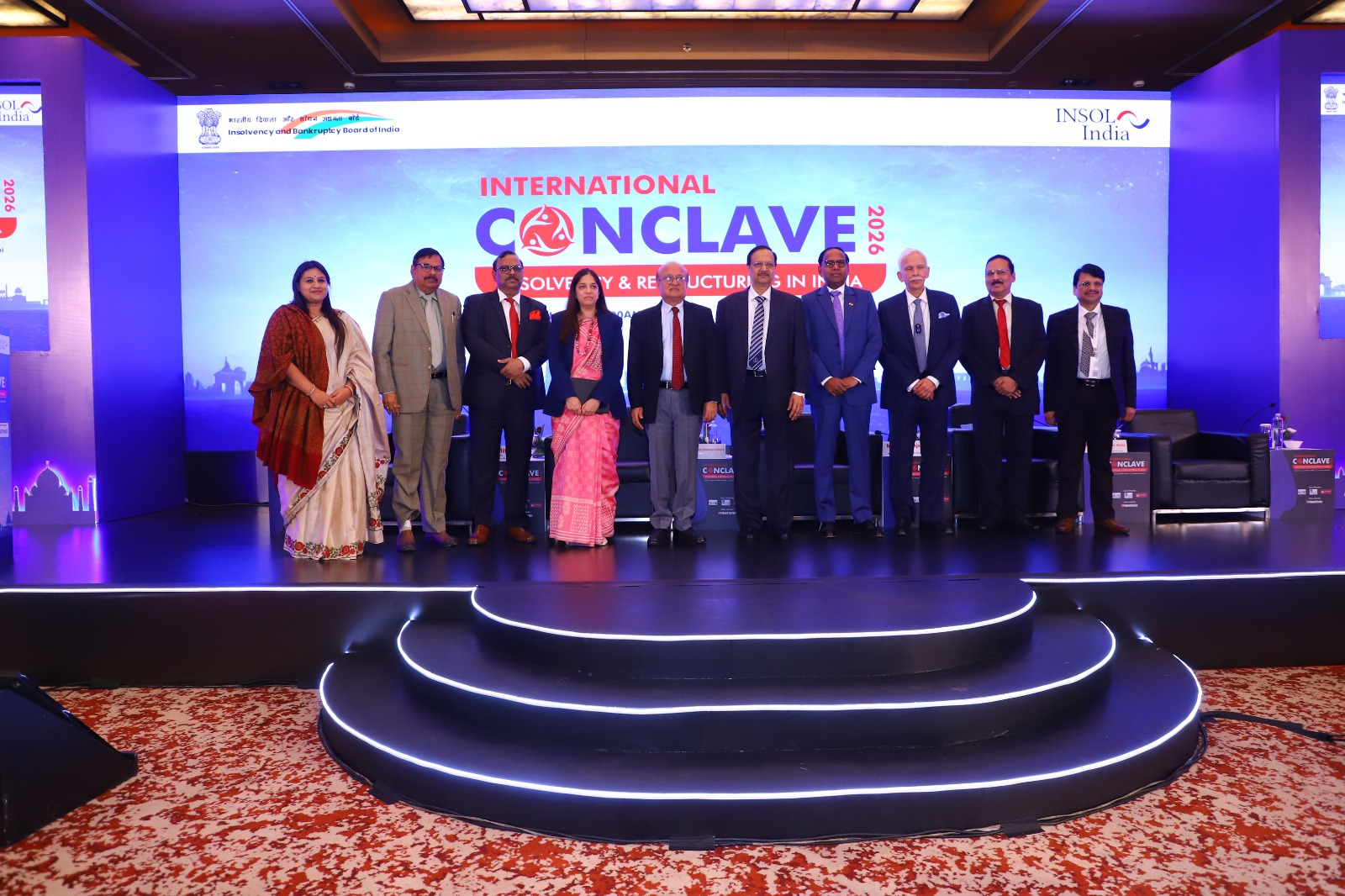
The Third Edition of the International Conclave, jointly organised by the Insolvency and Bankruptcy Board of India (“IBBI”) and INSOL India, was held on 28 January 2026 at Le Meridien, New Delhi.
Building on the momentum of earlier editions, the 3rd International Conclave aimed to serve as a flagship platform for policy dialogue, thought leadership, and professional collaboration, contributing meaningfully to the continued strengthening of India’s insolvency and restructuring framework. With speakers and attendees from diverse jurisdictions, this Conclave inspired a collaborative approach to addressing key challenges in insolvency and restructuring.
INAUGURAL SESSION
The Conclave began with a welcome address by Ms. Pooja Mahajan, President, INSOL India, wherein she spoke about INSOL India, its objective, and the Conclave. She also expressed her gratitude towards the guests for attending and IBBI for partnering with them.
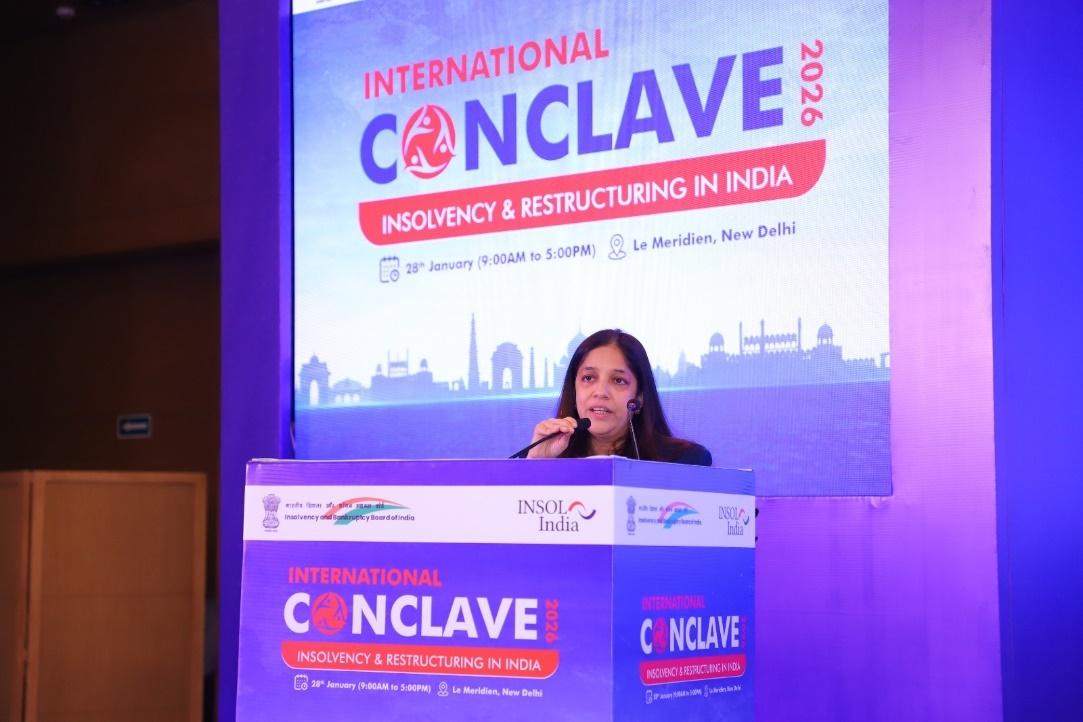

Reflecting on India’s journey in the last 10 years since the introduction of the Insolvency and Bankruptcy Code, 2016 (“IBC”), Ms. Mahajan highlighted the fundamental changes brought about by it, such as a reduction in Non-Performing Asset (“NPA”) levels, imposition of credit discipline, unlocking of banks’ balance sheets, etc. She added that the commitment of the government and stakeholders to make this reform a success was reflected in its desire to constantly innovate and course-correct, including through proposed amendments to the IBC.
Lastly, she gave a brief introduction of the panel discussions that would take place in the Conclave.
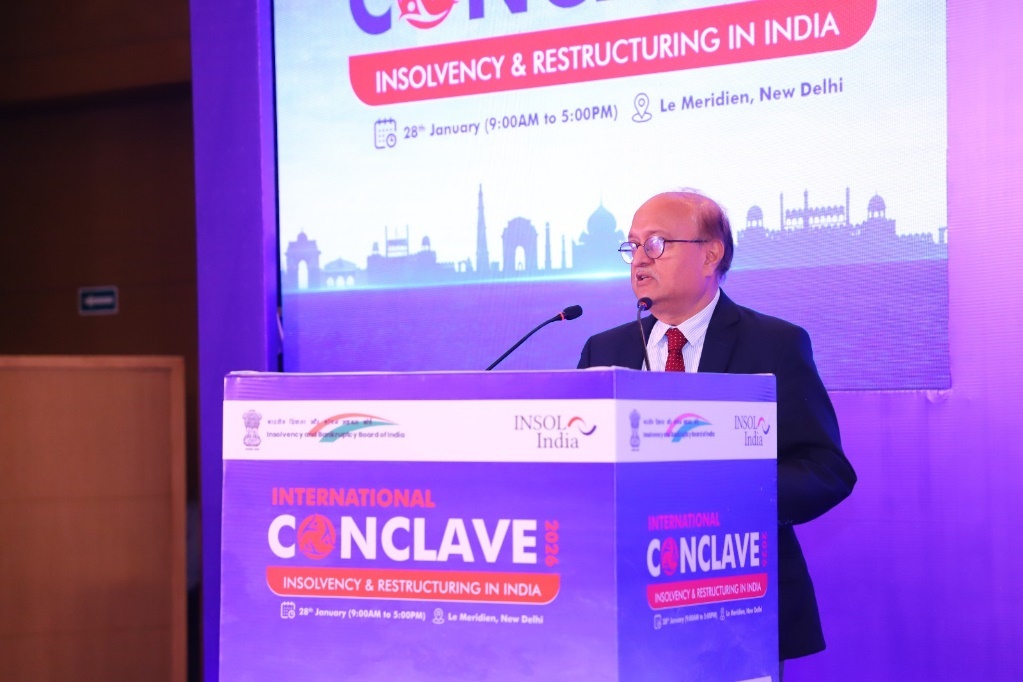
Taking over from Ms. Mahajan, Mr. Ravi Mittal, Chairperson, IBBI, delivered his special address wherein he outlined three aspects to ascertain the effectiveness of a law, namely, what the law is, how it is implemented, and what happens to the offender. With this lens, he underscored the positive outcomes of enforcing IBC, such as companies paying back debts due to fear of being forced into the insolvency process, settlement of Rs. 14.5 lakh crores of debt, reduction in records of default, and decline in interest rate of debt.
On the aspect of implementation, he stated that India’s international ranking as an insolvency regime in the S&P Global Ratings Report had improved one rank due to an improvement in average realization from 10-15% to 30%. Mr. Mittal also highlighted that the increase in the number of IBC cases resolved in India since 2020 is almost double the amount.
Regarding the last aspect of the aftermath of implementation, Mr. Mittal mentioned a study by IIM Ahmedabad, which stated that there was a considerable improvement in sales, turnover, liquidity, employee expenses, and market cap of companies that were resolved.
He concluded by expressing hope that the upcoming amendments to the IBC, which would introduce concepts like cross-border insolvency, group insolvency, out-of-court settlement processes, etc., would improve India’s performance further.
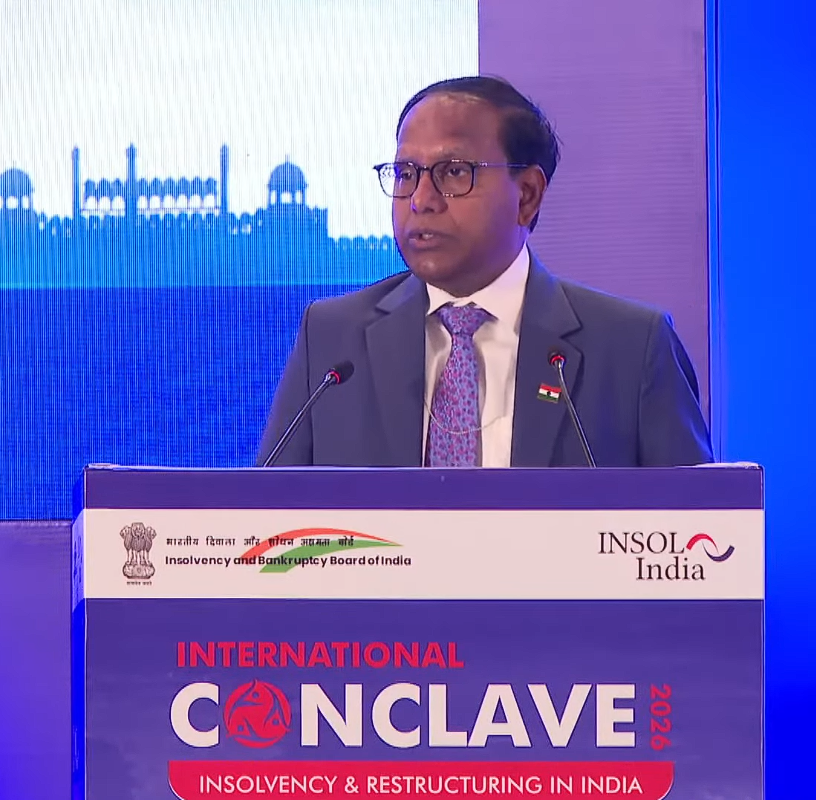

In his special address, Mr. M. Nagaraju, Secretary, Department of Financial Services, began by highlighting the pivotal juncture at which India stood, wherein India was transforming in a manner that was reshaping industries, creating opportunities, and positioning itself as a global leader. He stated that to harness the full potential of this growth momentum, India must continue to strengthen its institutional frameworks, foster innovation, and ensure that growth is inclusive and resilient.
Underscoring the success of the IBC, from behavioural change in creditors to recovery of crores of debt, Mr. Nagaraju stated that the IBC had transformed the insolvency landscape by fostering transparency, accountability, and efficiency in debt resolution and laying the foundation for a more resilient and robust economy. He also mentioned that the constant amendments had kept the IBC in tandem with the practical problems. He added that IBBI, as the regulator, had taken several measures to strengthen the IBC ecosystem by not only amending and making regulations, but also organizing regular training and capacity-building programs for insolvency professionals, adjudicating authorities, and other stakeholders to improve institutional capability and effectiveness.
Mr. Nagaraju also highlighted how the government and IBBI had leveraged information technology by introducing digital platforms to automate and streamline processes, thereby making the system more efficient, accurate, and faster, and ultimately leading to better outcomes for all the stakeholders.
Regarding the upcoming seventh amendment or the IBC Amendment Bill 2025(“the Bill”), he stated that the Bill seeks to address some key challenges, such as delays in resolution and liquidation, low recovery rates, group insolvency process, cross-border insolvency, and creditor-initiated insolvency processes. Furthermore, the Department of Financial Services had also been undertaking several measures, such as periodical review of large accounts of PSBs, active collaboration with IBBI to minimize such delays, and issuance of general advisories to PSBs on handling Corporate Insolvency Resolution Process (“CIRP”) cases.
In conclusion, Mr. Nagaraju stated, “Together, we can build a framework that remains efficient in process and sustainable in outcome. Let us seize this moment to reaffirm our commitment to building an India where businesses thrive, investors trust, and citizens prosper.”

Thereafter, the Chief Guest, Justice (Retd.) Ramalingam Sudhakar, President, NCLT, delivered an insightful address wherein he reflected on India’s journey from a “polluted insolvency system” to the present IBC ecosystem. Previously, India’s insolvency laws failed to be effective, and the IBC was a renewed attempt that was tailor-made to simplify the process of insolvency resolution. This led to a change from a debtor-in-control to a creditor-in-control model, which gave investors clarity.
Emphasizing that insolvency is not about recovery alone, but about resolution, Justice Sudhakar mentioned that over 32,000 corporates in distress had been resolved in the last ten years and nearly Rs. 19.75 Lakh Crores had returned to the financial system. He attributed this success of the IBC largely to the domain expertise of the adjudicating authority, supported by regular discussions, adoption of best practices, creation of dedicated tribunals, and continuous engagement with the regulator, IBBI.
“The efficiency of an insolvency court comes from effective case management and dedicated courts with sufficient members.”
Reiterating the study by IIM Ahmedabad, he too highlighted the great post-resolution improvements in corporate performance, employment, and financial health. He also mentioned the glowing review by CRISIL regarding the IBC’s remarkable performance.
Thereafter, Justice Sudhakar spoke about the deterrent effect of the IBC, observing that a large number of cases are settled before admission, demonstrating that the law achieves outcomes even without formal adjudication. This behavioural change, he argued, was the true measure of the IBC’s success in enforcing corporate discipline.
Addressing concerns about delays, he pointed out that 87% of the IBC cases filed before the NCLT had been disposed of, with resolutions amounting to over ₹19.75 Lakh Crores in value. The amount of NPAs had declined, bank profitability had increased, and debt recovery from IBC made up more than 50% of the total debt recovery calculated by the RBI.
For further improvement, Justice Sudhakar suggested an increase in NCLT strength, better infrastructure, and a separate insolvency and bankruptcy vertical with proper infrastructure. He highlighted the success of pre-pack insolvency while suggesting further refinement through stakeholder inputs and urged greater focus on MSMEs, individual and personal insolvency, warning that unresolved grassroots-level debt could lead to exploitative lending and social instability.
In conclusion, Justice Sudhakar underscored India’s growing role as a model for insolvency reform for countries in Asia, Africa, and South America, noting that Indian institutions, judges, and regulators are increasingly contributing to capacity-building in other jurisdictions. He emphasised knowledge-sharing as a core strength of India, and lending a hand to other countries would provide much-needed geopolitical allies.

Bringing the inaugural session to a close, Mr. Bhushan Kumar Sinha, Whole Time Member, IBBI, delivered a vote of thanks wherein he underscored the importance of the Conclave, thanked the speakers for their insights, reminisced on the introduction of IBC to solve the twin balance sheet problem, India’s insolvency achievements, present issues and future challenges, the 2025 Bill, and much more.
“By offering a faster, more structured, and market-driven insolvency resolution for the stressed assets of the corporate debtor, IBC has not only reshaped the overall credit discipline in the country, but it has also played a pivotal role in improving our ease of doing business.”
He concluded by thanking Mr. Mittal for his guidance and leadership, organizing committees of INSOL India and IBBI for organizing the Conclave, and the guests for their time and presence.
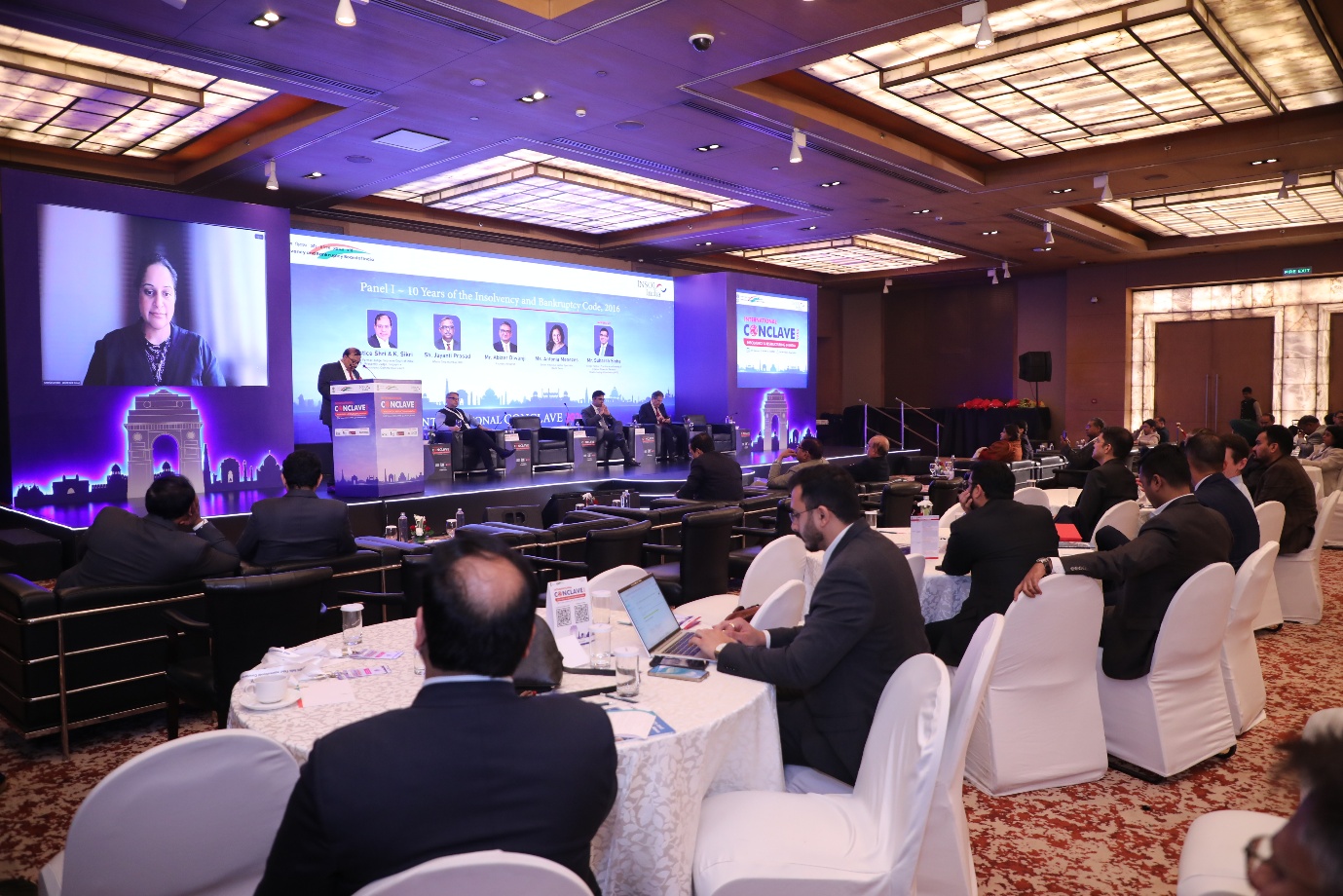
PANEL I: 10 YEARS OF THE INSOLVENCY AND BANKRUPTCY CODE, 2016
The first discussion of the conclave was moderated by Mr. Suharsh Sinha, Senior Partner, Banking & Finance Financial Services Restructuring & Insolvency, AZB & Partners, and consisted for seasoned professionals, namely, Mr. Jayanti Prasad, Whole Time Member, IBBI; Mr. Abizer Diwanji, Founder, Neostrat; Mr. Bahram N. Vakil, Co-founder, AZB & Partners; and Ms. Antonia Menezes, Senior Financial Sector Specialist, World Bank.
Drawing an analogy with human development, Mr. Suharsh Sinha described IBC as an “overachieving child prodigy” which, despite being only ten years old, has rapidly matured through continuous legislative and regulatory evolution. Thereafter, he introduced the panellists and opened the floor for opening remarks.
Kickstarting the discussion, Mr. Jayanti Prasad highlighted the philosophical foundation of the IBC, emphasising that ease of exit was as critical as ease of doing business and the IBC represented a shift towards a fair, predictable, and honourable exit mechanism for distressed businesses. He added that with the creation of a robust insolvency ecosystem, comprising insolvency professionals and entities, valuers, RVOs, the operational informational utility, i.e., the National E-Governance Services Ltd (NeSL), IBBI as the regulator, and adjudicating authorities.
“The IBC is not just a piece of legislation; it is an economic philosophy.”
While mentioning statistics such as admission of over 8,800 CIRPs, and resolution of more than 1,400 cases, he highlighted the empirical successes of IBC, including the behavioural change of corporates and post-resolution financial performance of companies. Additionally, he underscored the evolution of the legal framework, noting multiple amendments that addressed burning issues such as reforms in Section 29A, recognition of homebuyers as financial creditors, protection of corporate debtors under Section 12A, binding effect of resolution plans, and immunity provisions under Section 32A.
Mr. Prasad added that a few pressing challenges had emerged, such as delays in resolution and admission, low realization by creditors, ambiguities in creditor rights, and alignment with global insolvency practices. Thus, he stated, the Bill had been introduced to do the necessary course correction.
Furthermore, he outlined the role of IBBI in creating a cadre of dedicated professionals, driving regulatory responsiveness, building institutional capacity, taking steps for information transparency, and focusing on stakeholder outreach.
He concluded by emphasising that in a decade, the IBC had revived more than a thousand companies, saved lakhs of jobs, restored lakhs of crores of rupees to creditors, and instilled a culture of credit discipline. While IBC had delivered transformative results, challenges of delay, backlog, and global alignment require a sustained, collective effort of all the stakeholders.
Taking the conversation further, Mr. Abizer Diwanji characterised the IBC as a mindset shift for India, observing that it successfully resolved thousands of cases and facilitated recoveries. However, he cautioned against over-reliance on recovery percentages based on numbers mentioned in claims, arguing that claims often include penalties and excessive amounts. Instead, he highlighted recoveries should be compared with liquidation value, noting that IBC had achieved recoveries exceeding 160% of liquidation value.
Drawing from his experience during the 2008 financial crisis, he contrasted the pre-IBC vacuum with the present institutional framework comprising the NCLT, IBBI, and a mature insolvency practice ecosystem. He identified the delay in initiating insolvency by promoters as a key structural issue, observing that it often takes five to six years for distressed companies to approach IBC.
Mr. Diwanji strongly emphasised that IBC is a resolution, not recovery, framework, rooted in the principle of “creative destruction,” i.e., reallocating resources for optimal economic use. He cited successful resolutions such as CG Power and Bhushan Power & Steel as examples where enterprises revived, employment increased, and productive capacity was preserved. He also underscored the creation of a resolution mechanism, which had AIFS and ARCs that worked with distressed funds and corporates, while using IBC as a success.
Ms. Antonia Menezes presented the IBC through the lens of international best practices, particularly the World Bank and UNCITRAL insolvency standards. She observed that the IBC had made a remarkable contribution to India’s credit environment by replacing fragmented recovery mechanisms with a unified, coherent insolvency framework aligned with global principles.
She highlighted the creditor-in-control model, improved statutory timelines, and the robust institutional architecture of IBBI, NCLT, and information utilities as significant strengths. According to her, the most notable achievement of the IBC has been the rapid cultural shift towards improved borrower discipline. Ms. Menzes also appreciated the coexistence of IBC with out-of-court restructuring mechanisms, such as the RBI’s prudential framework, noting that globally, creditors preferred a menu of formal and informal restructuring tools.
On future reforms, she suggested a deeper focus on developing institutional and process capacity, reorganisation tools, including pre-packs and hybrid restructuring models, MSME procedures, and personal insolvency frameworks. She concluded by reaffirming the IBC’s global significance as a major insolvency reform.
Taking the floor from Ms. Menzes, Mr. Bahram N. Vakil emphasised the dramatic improvement in India’s credit culture, pointing to the sharp decline in NPA levels from 11% to 2%. He reiterated that the true success of IBC lies in resolution and revival rather than recovery alone.
He added that statistics depicted substantial increases in sales, employment, and overall financial performance of companies resolved under IBC; in fact, some were booming businesses today.
Mr. Vakil stressed that there was still room for improvement while flagging unsecured retail lending as an emerging area of concern. He strongly supported the introduction of pre-packaged insolvency, personal insolvency reforms, and other proposed amendments, urging policymakers to act proactively in a volatile global economic environment.
Thereafter, the panellists undertook a question and answer session wherein they discussed the most critical IBC amendments, Committee of Creditors (COC) Guidelines, profession of insolvency professionals, role of lenders and COC, best practices for group and cross-border insolvency, how the legal system adapted, and the road ahead.
The panel unanimously acknowledged the IBC as a transformational economic reform, which has reshaped India’s insolvency landscape, strengthened credit discipline, and enabled the large-scale revival of companies. At the same time, the panellists stressed the need for institutional maturity, faster processes, reduced criminalisation of business failure, and timely implementation of proposed amendments to ensure that the IBC realises its full potential in the next decade.
The session concluded with a question-and-answer session with the audience.
PANEL II: ASSET TRACING, ENFORCEMENT & RECOVERY
The second panel of the Conclave was graced by esteemed professional, namely, Mr. Sandip Garg, Whole Time Member, IBBI; Mr. James Noble, Partner, Head of Litigation, Insolvency and Restructuring, Asia, Carey Olsen, Singapore; Mr. Mark J Forte, Partner, Head of BVI Litigation and Restructuring, Coneyers, BVI; Mr. Keith Han, Partner, Oon and Bazul, Singapore; and Ms. Pooja Bahry, Insolvency Professional and Treasurer, Executive Committee, INSOL India. Additionally, the session was moderated by Mr. Saurav Panda, Partner, Shardul Amarchand Mangaldas.
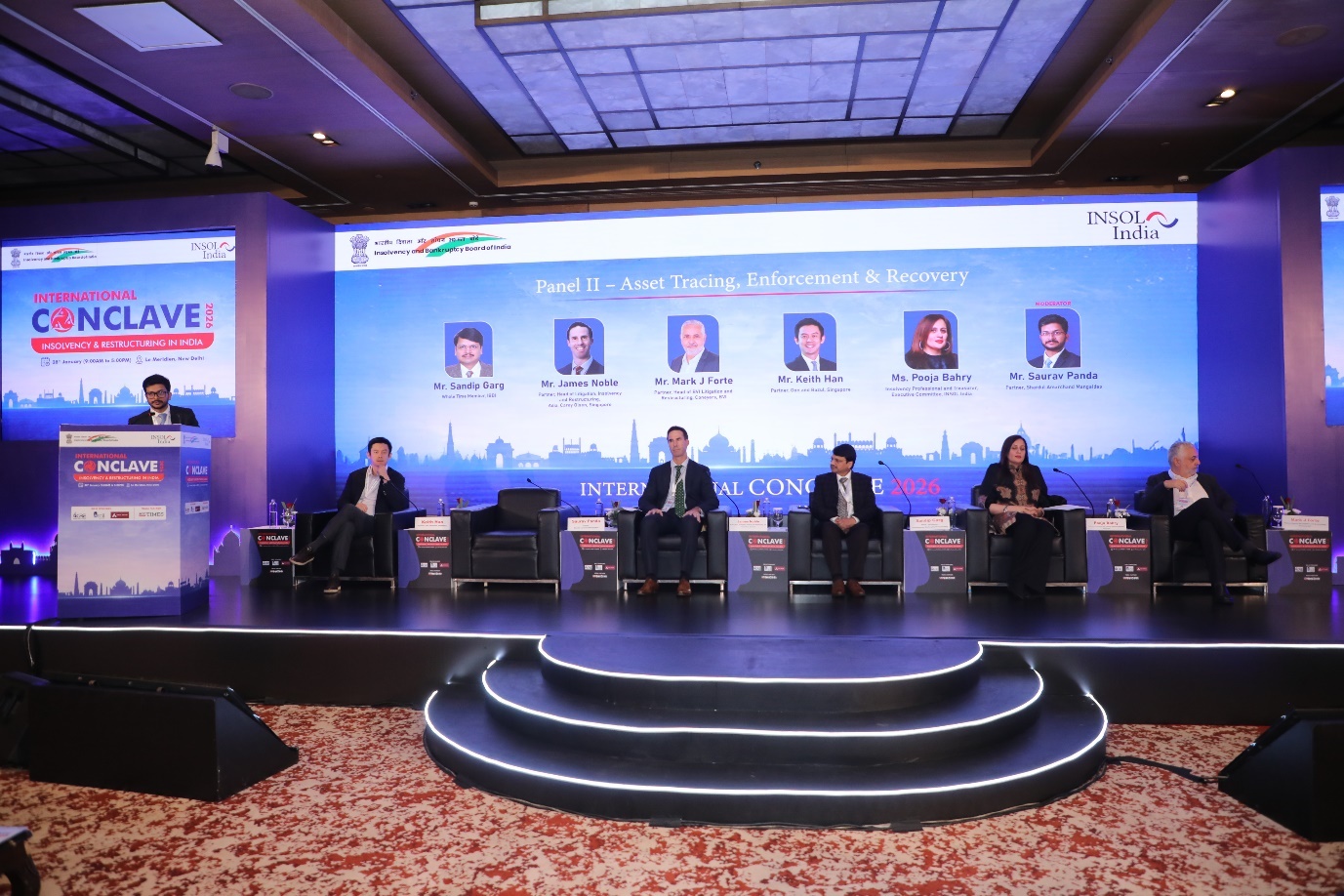
Kickstarting the session, Mr. Saurav Panda introduced the panellists and gave a brief outline of the agenda. He stated that asset tracing was about identifying and locating the assets that ought to form part of the insolvency estate, and asset recovery is bringing the assets back into the estate for the ultimate collective benefit of the creditors. Together, these aspects converted insolvency from a mere paper exercise to a real economic outcome.
“Insolvency is ultimately a form of collective enforcement. The objective is not mere compliance, but to also promote the rule of law and create confidence in the credit ecosystem.”
Furthermore, he mentioned the UNCITRAL Asset Tracing and Recovery Toolkit, which categorised asset tracing and recovery tools into three broad buckets:
-
Information and disclosure measures
-
Asset protection measures
-
Asset recovery measures
Noting the aforesaid, Mr. Panda stated that the Toolkit reflected a clear policy message that insolvency is not really an exit route, but ultimately it is a form of creating more and more accountability.
From a practitioner’s standpoint, Ms. Pooja Bahry stated that asset tracing was described as a core responsibility of insolvency professionals, rather than an optional investigative exercise, as it was fundamental to IBC’s objective of value maximisation. She highlighted recurring challenges in Indian CIRPs, such as complex group structures, related-party transactions, and offshore assets, including subsidiaries, receivables, IP, and bank accounts.
Ms. Bahry underscored that Insolvency professionals were increasingly required to act as investigators, coordinators, and commercial decision-makers, working alongside enforcement agencies such as the ED, SFIO, Income Tax authorities, and the MCA. Thus, cross-border asset tracing is also very important from an Indian insolvency professional’s point of view. Despite jurisprudence, there was a need for a more institutionalized framework, rather than a case-by-case solution.
Emphasising that funding asset tracing exercises was a commercial necessity, she stated that technology such as digital forensics, data analytics, and document reconstruction had become indispensable in modern insolvency practice.
In conclusion, she stressed the need for a predictable framework for information sharing and asset preservation to avoid value erosion due to delayed tracing.
Adding to what Ms. Bahry said, Mr. Sandip Garg provided insights from a regulatory viewpoint. He stated that IBBI had frameworks to enforce cooperation, but there was a timeline gap that hindered the recovery and tracing. While referring to the UNCITRAL Toolkit, he acknowledged that the IBC did not have any provisional measures for the interim period when the CIRP had not commenced after the filing of the application.
Accordingly, he stated that a few measures were being introduced in the proposed 2025 Bill, such as
-
information disclosures to prevent asset siphoning during the pre-admission phase
-
expanding disclosure and cooperation obligations to ex-directors, former employees, auditors, and service providers.
-
Reconsidering the suspect period for avoidance transactions so that it runs from the date of filing rather than the commencement date
However, Mr. Garg added that there was scope for improvement, especially since the launch of the UNCITRAL Toolkit, and hoped for the introduction of more tools.
Addressing misconceptions about offshore jurisdictions, Mr. James Noble clarified that the Cayman Islands and the British Virgin Islands were no longer opaque or uncooperative during asset recovery. Both jurisdictions offer sophisticated common law and statutory tools to assist asset tracing and recovery. These tools included Common law remedies such as filing applications to obtain third-party information, seizing assets, identifying directors and shareholders, etc.
Adding to what Mr. Noble said, Mr. Mark J Forte stated that BVI had a lot of holding companies that held assets in the form of shares of subsidiary companies, usually operating companies. Thus, for asset tracing, these holding companies had to be investigated. He reiterated Mr. Nobles’s emphasis on recognition of the ultimate beneficiary owner of a company, not just the shareholders.
Furthermore, Mr. Forte stated that BVI had a comprehensive insolvency legislation that allowed assistance to 14 countries in terms of asset tracing, if sought. In complex cases, parallel or twin-track insolvencies at operating and holding-company levels might be required, and these jurisdictions allow third-party funding of claims within a liquidation proceeding to maximise value for creditors.
From the perspective of Singapore, Mr. Keith Han explained that Singapore courts have developed strong jurisprudence for urgent and ex parte reliefs against third parties, such as financial institutions, in asset tracing matters. He also stated that gag orders could be sought to prevent tipping off and asset flight.
The panel went on to deliberate key areas of concern, such as litigation funding, appointing receivers, investigating the source of the money trail, non-cooperation by promoters, the role of insolvency professionals, and much more.
The session concluded with a question-and-answer session with the audience.