


The De Novo Moot Court Competition 2026 was organised by the USLLS Moot Court Society (2025—26) under the guidance of its Faculty Convenor, Dr. Rakesh Handa. The event was led by Aviral Singh (Convenor), Aarohi Gupta and Priyanshu Bharadwaj (Co-Convenors), and Yashika Gaur (General Secretary), with the support of team heads Ateev Srivastav and Kriti Singh (Trial), Shreshth Yadav (Mentorship), Urvi Jain (Research and Posting), Deeksha Saini (Social Media), Kartikey Sinha (Sponsorship), P. Shreepati (Events), and Manav Kumar (Hospitality).
The De Novo Moot Court Competition 2026 unfolded over three intensive days as the flagship intramural mooting event of the academic year at the University School of Law and Legal Studies, GGSIPU. Conceived as a full-scale simulation of adversarial court proceedings, the competition drew participation from students across batches who had prepared written memorials, conducted independent legal research, and readied themselves for oral advocacy before a rotating panel of practitioners. This year’s moot proposition was drawn from the domain of consumer protection and product liability, centring on a factually layered dispute involving allegations of manufacturing defects, deficiency in service, and contested obligations under the Consumer Protection Act, 2019. Teams were called upon to address nuanced questions of privity of contract, the legal weight of warranty documentation, and the allocation of liability across manufacturers, authorised service providers, and retailers, issues that sit squarely at the intersection of commercial obligation and statutory consumer rights.
Day I: Researcher Test and Procedural Formalities
The first day commenced with the Researcher Test, a written examination carrying 100 marks designed to assess each team’s designated researcher on their preparedness across the full breadth of the moot problem. Participants were evaluated on their understanding of the factual matrix, familiarity with the applicable statutory provisions, and capacity to identify and articulate the central legal questions in dispute. The test was structured to distinguish thorough preparation from surface-level familiarity, requiring researchers to reason through areas of legal ambiguity rather than rely on rote recall. Following the test, a formal Draw of Lots was held to determine match-ups for Preliminary Rounds I and II. Opposing teams exchanged their written memorials at this stage, initiating the adversarial dimension of the competition and giving participants their first substantive look at the submissions they would face in the oral rounds.
Day II: Preliminary Rounds
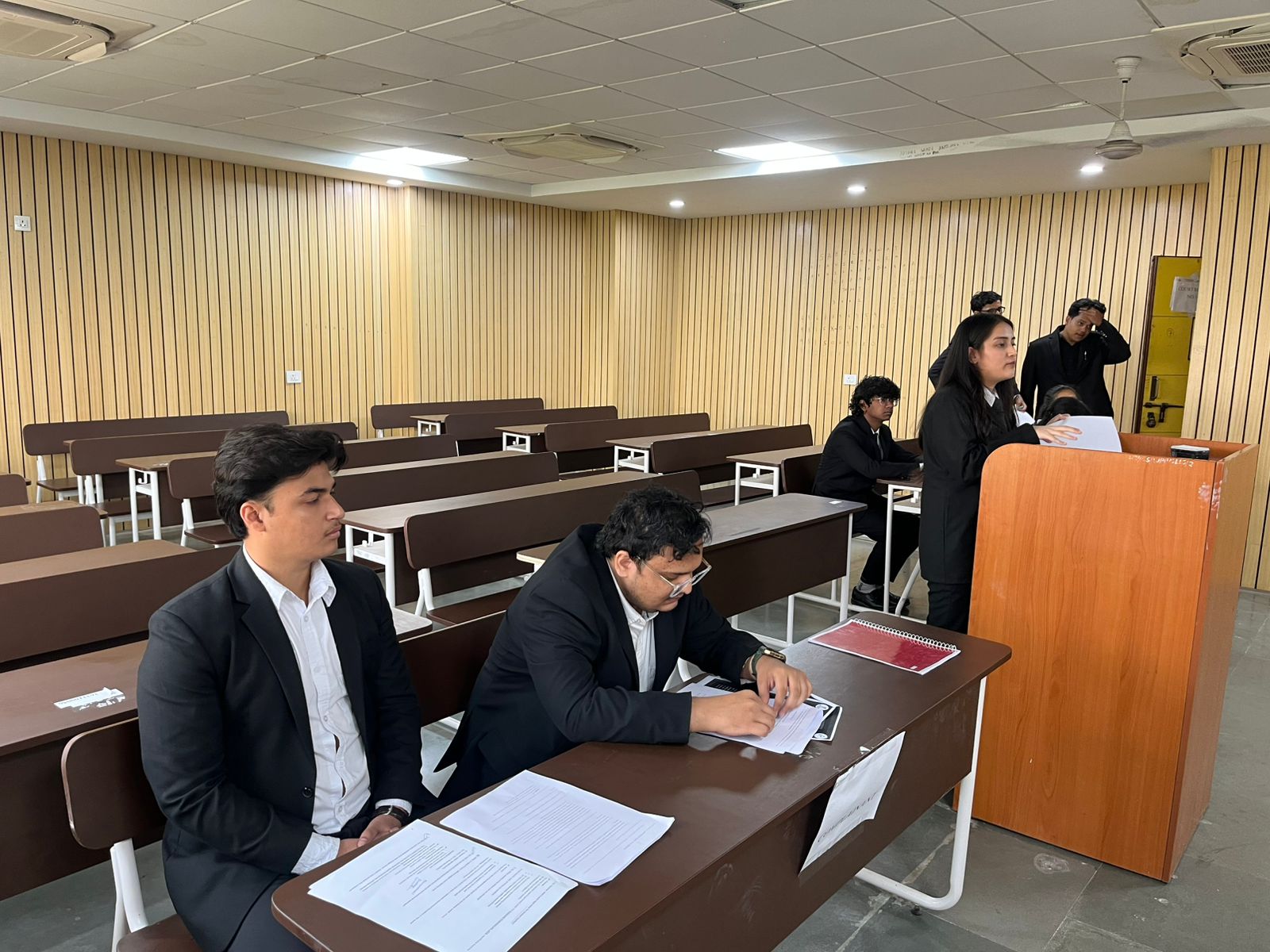
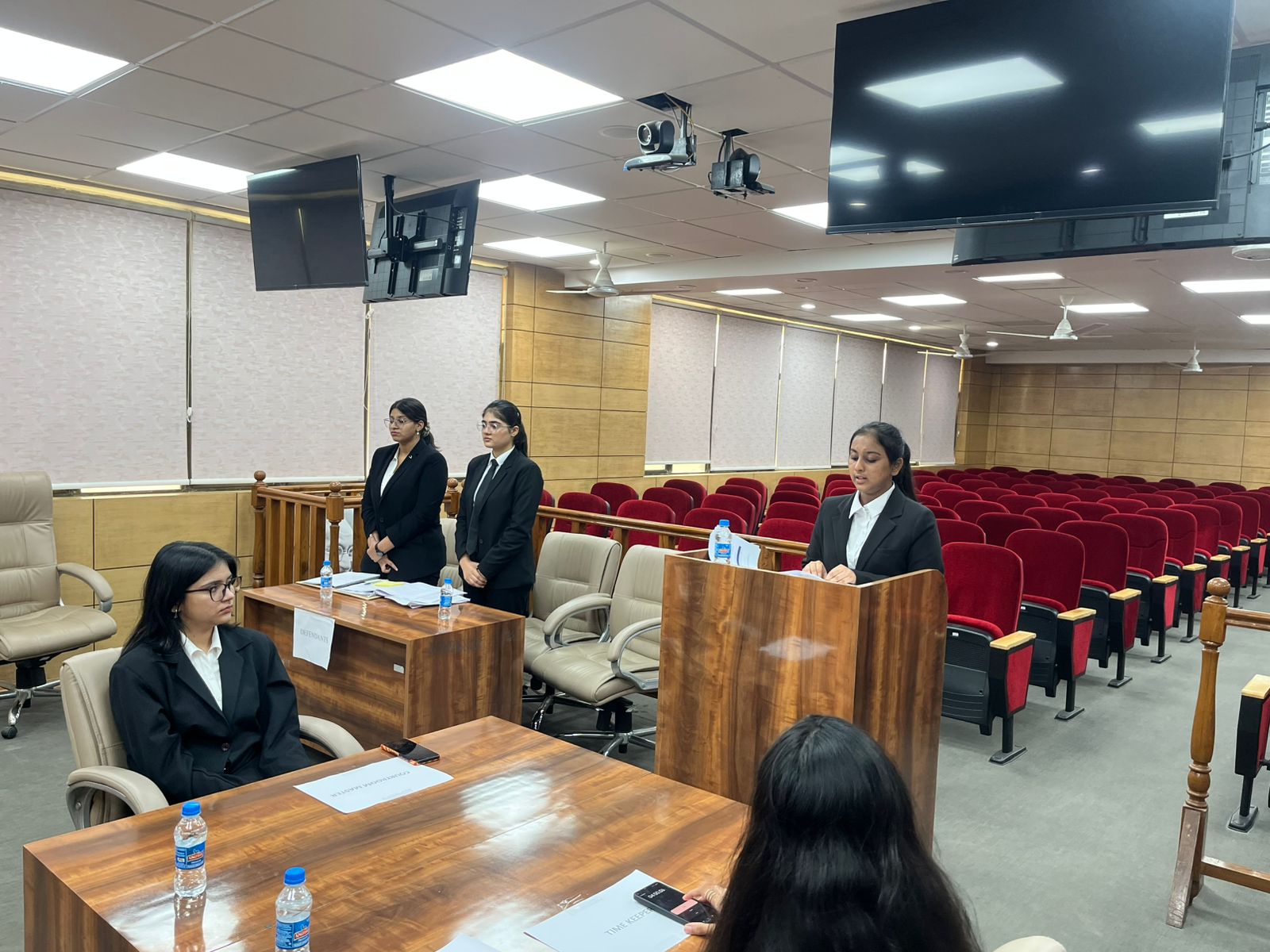
Preliminary Rounds I and II were held across multiple courtrooms throughout the day. Each team was required to argue from both sides of the dispute across the two rounds, alternating between the roles of complainant and respondent. This format tested not only the strength of a team’s prepared submissions but also their flexibility in reframing legal positions and anticipating opposing arguments. The rounds were adjudicated by a panel of first-year students who had been specifically trained for this role by Ms. Mahek Rathee and Ms. Tamanna (Guest Faculty for Research and Mooting, USLLS). Their preparation of the student judges ensured a uniform and fair standard of evaluation across all rooms, with scoresheets calibrated to assess oral clarity, use of legal authority, responsiveness to questioning, and overall courtroom conduct. The rounds were competitive throughout, with several matches remaining closely contested until the final submissions. By the close of proceedings, scores were compiled and verified, and four teams were formally confirmed as advancing to the Semi-Finals on Day III.


Day III: Semi-Finals and Final Round
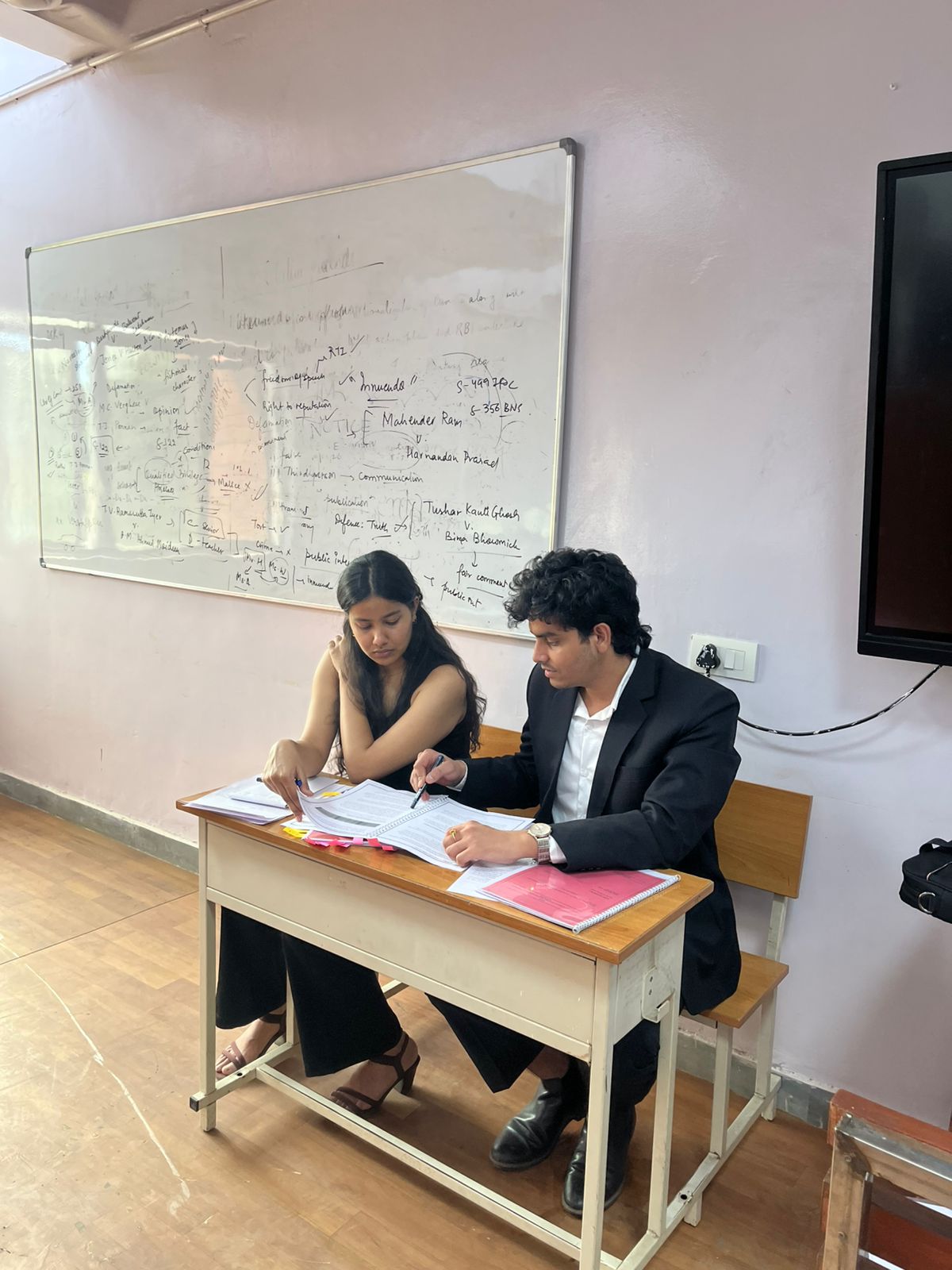
The Semi-Finals were conducted simultaneously in two courtrooms and presided over by a distinguished panel of practitioners who brought considerable experience in litigation and legal practice. The semi-final benches comprised Aarzu Khattar (Founder and Partner, Truce Legal), Adv. Sanjeev Nirwani, Garima Sharma (Advocate, Supreme Court of India), Vara Gaur (Partner, Saga Legal), Sudhir Tevatia, Vishaal G, Nispreah Mittal, and Kusum Lata. The rounds were characterised by probing judicial interventions that pushed participants beyond their prepared submissions, testing their ability to reason on their feet and maintain coherence under sustained questioning. Teams demonstrated a sharper command of the case and a more assured courtroom presence than in the preliminary stage. Following careful evaluation by both benches, TC-09 and TC-51 were selected to contest the Final.
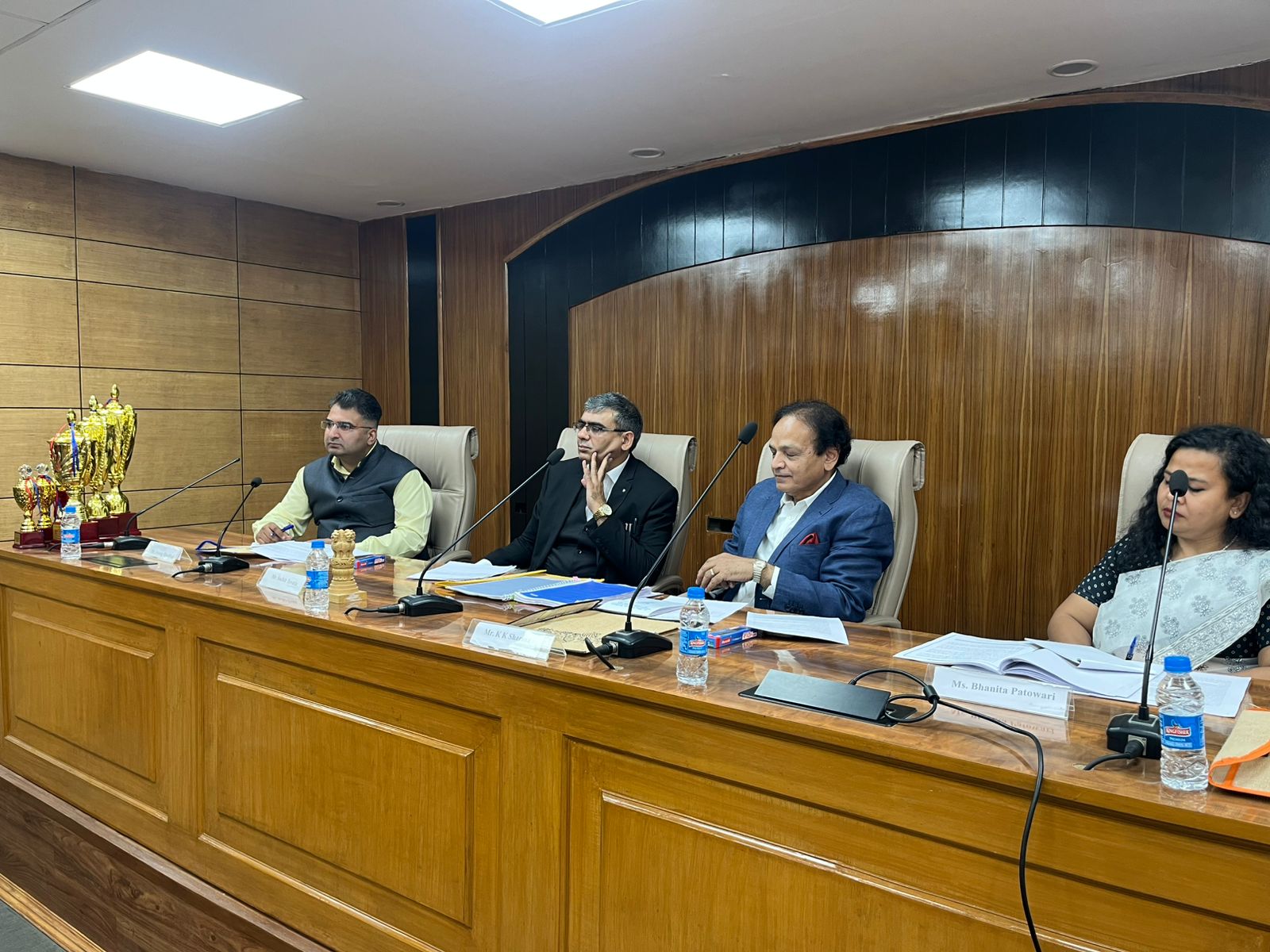
The Final Round was held in the Moot Court Hall and adjudicated by Bhanita Patowari, Sudhir Tevatia, K. K. Sharma, and Anurag Bhardwaj (all Advocates). Both finalists, TC-09 and TC-51, delivered submissions of a notably high standard, drawing on the full depth of their preparation and engaging substantively with the bench throughout. The proceedings were marked by precise cross-referencing of statutory provisions, well-structured reasoning across issues, and a composed handling of judicial interruptions on both sides.
Following the conclusion of arguments, the bench offered feedback to both teams. Adv. Bhanita Patowari noted that the quality of written memorials had been impressive, but encouraged participants to let the structure of their memorial guide, rather than constrain, their oral submissions, observing that the most effective advocacy is responsive to the bench, not merely a recitation of prepared notes. Adv. Sudhir Tevatia commended both sides for their grasp of the consumer protection framework and remarked that the willingness to concede difficult points, rather than resist them, demonstrated a maturity of legal reasoning that is rare at this stage of training. Adv. K. K. Sharma advised that precision in language carries particular weight before a court, and that a well-placed, accurately cited provision will always outperform a broad but imprecise submission. He encouraged the participants to treat every moot as a lesson in economy of expression. Adv. Anurag Bhardwaj, in his closing remarks to the finalists, observed that both teams had handled adversarial questioning with composure, and noted that the ability to maintain a clear thread of argument while under pressure from the bench is precisely the skill that separates a capable advocate from a good one. He encouraged all participants to carry that discipline into their professional practice.
After deliberation, TC-51 was declared the Winner of the De Novo Moot Court Competition 2026.
Results
Winners: TC-51 | Jiya Manav, Vaani Bansal, Shipra Prasad
Runners-Up: TC-09 | Mukti Sharma, Harshit Arora, Ravi Raj
Best Researcher: TC-07 | Aditi Malaviya
Best Memorial: TC-60 | Smriti Parmanandka, Yogita Pahadiya, Kavita Yadav
Best Speakers: Mukti Sharma, Diksha Malik


The De Novo Moot Court Competition 2026 achieved its purpose as a rigorous and formative exercise in legal practice, providing a structured arena where research, written advocacy, and oral argumentation came together under genuine competitive pressure. The Society extends its congratulations to all participants, its gratitude to the judges for their time and insight, and its appreciation to Ms. Mahek Rathee, Ms. Tamanna, and every volunteer whose work behind the scenes made the event possible.