


About MNLU Mumbai
Maharashtra National Law University Mumbai, established under the Maharashtra National Law University Act, is one of India’s leading National Law Universities. It is strengthening its academic, administrative, and financial systems to uphold excellence, transparency, and propriety. The Act aimed to advance legal education and promote socially relevant research to contribute to national development. Justice Alok Aradhe serves as Chancellor, and the Chief Justice of the High Court of Bombay is the Ex-Officio Pro-Chancellor.
About CICTL and The DIALOGUE
The Centre for Information Communication Technology and Law (CICTL) at MNLU Mumbai fosters high-level dialogue on law and technology through specialized symposiums and policy consultations. Its recent initiatives address critical emerging domains, including Artificial Intelligence, data privacy, fintech, and the proposed Digital Competition Bill, 2024. The Centre remains dedicated to building a future-ready legal ecosystem by bridging the gap between academic research and contemporary policy engagement.
The Dialogue is a premier Indian think tank shaping the intersection of technology, law, and governance through rigorous policy research and multi-sectoral stakeholder engagements. By addressing critical domains such as data protection, AI, and fintech, the organization bridges the gap between rapid innovation and balanced regulatory frameworks. Through collaborative consultations and evidence-based insights, it fosters a forward-looking ecosystem to address India’s emerging technological and contemporary policy challenges.
About Shardul Amarchand and Mangaldas
Established in May 2015 as a successor to a storied legal legacy, Shardul Amarchand Mangaldas & Co (SAM & Co) stands as a leading full-service Indian law firm. With a formidable team of over 950 lawyers and 184 partners, the firm operates across seven strategic locations, including Mumbai, New Delhi, and Bengaluru. SAM & Co is widely recognized for its top-tier expertise in high-stakes practice areas such as M&A, private equity, competition law, dispute resolution, and capital markets.
About The Symposium:
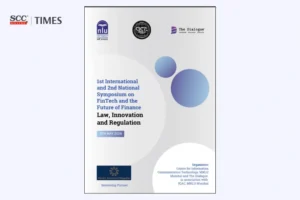
This Symposium explores the transformative power of Fintech and digital public infrastructure, specifically examining how the India Stack has revolutionized financial access and inclusion across the nation. The event highlights the success of the Unified Payments Interface (UPI) and the Account Aggregator framework in reducing transaction costs and formalizing the economy.
Participants will engage with critical contemporary developments, including India’s Digital Personal Data Protection Act, 2023, and the proposed Digital Competition Bill. The sessions offer a vital platform to address the balance between rapid innovation and regulatory oversight, ensuring that data-driven finance remains both efficient and accountable. By bridging the gap between AI governance and distributive justice, this event serves as a timely forum for shaping a responsible and inclusive technological future.
Themes
-
Fintech Regulation and Policy Frameworks
-
Artificial Intelligence in Financial Systems
-
Data Protection and Privacy in Fintech
-
Crypto Assets and Blockchain Regulation
-
Digital Lending and Algorithmic Governance
-
Consumer Protection in Digital Financial Services
-
Competition Law and Fintech
-
Cross-border Data Flows and Financial Regulation
Call For Abstracts:
The paper presentation competition forms the academic core of the Symposium, inviting submissions from students, researchers, policy makers and practitioners. The process will take place in two stages.
Phase 1 — Abstract Submission
Participants will submit abstracts, on the basis of which the organising committee will shortlist thirty (30) authors or teams, applying criteria such as originality, methodological rigour, clarity, and policy relevance.
Phase 2 — Full Paper & Presentation
Shortlisted participants will submit full papers and present their work at the Symposium. Each presentation will be allotted a 30-minute slot, comprising a 20 minute presentation followed by a 10-minute discussion, with results declared on the same day.
Presentations will be evaluated by a panel of experts from academia, regulatory bodies, and leading law firms, using standardised criteria and conflict-of-interest safeguards to ensure fairness. Selected papers will be published in an edited volume with an ISBN number through a recognised publisher. The Symposium will also culminate in a Knowledge Report prepared by CICTL, capturing key discussions, policy insights, and emerging research gaps. Outstanding participants may also be considered for internship opportunities.
Submission Guidelines:
Word Limit
-
Abstract: Maximum 500 words
-
Working Paper: 2000—3500 words
-
Full Paper: 6000—8000 words
Word limits are exclusive of footnotes.
Formatting Requirements
Submissions must be in MS Word (.doc/.docx) format. The manuscript must be in Times New Roman, font size 12, with 1.5 line spacing. Footnotes must be in font size 10 with single spacing.
Citation Style
All submissions must strictly follow the APA 7 citation format. Authors must ensure consistency, accuracy, and proper attribution throughout.
Originality and Plagiarism
All submissions must be original, unpublished, and not under consideration elsewhere.
-
Maximum permissible similarity: 10%
-
Maximum permissible AI-generated content: 20%
Authors must disclose any use of AI tools at the time of submission.
Anonymity and Review Process
Submissions must not contain the name(s) of the author(s), institutional affiliation, or any identifying information. The review process will follow a blind evaluation system to ensure impartiality.
Co-Authorship
A maximum of two authors is permitted per submission. Only one submission per author/team is allowed.
Evaluation Criteria
Submissions will be evaluated on:
-
Originality and innovation
-
Depth of research and use of authorities
-
Clarity and structure of arguments
-
Legal reasoning and analytical rigour
-
Relevance to contemporary policy issues
Participation Details:
-
Abstract Submission Deadline: 27 April 2026
-
Acceptance Notification: 28 April 2026
-
Working Paper Submission: 6 May 2026
-
Full Paper Submission Deadline: 5 July 2026
-
Symposium Date: 9 May 2026
Submission Fees
-
Single Author: ₹2,000
-
Co-authored Submission: ₹3,000
Internship Opportunity
-
The Winners of the Symposium will get an opportunity to intern with Shardul Amarchand Mangaldas and The Dialogue, subject to the position they have won.
Registration
Delegate Registration Fee: ₹1,000
Registration is mandatory for all participants. Delegates will have access to plenary sessions, panel discussions, paper presentations, and networking opportunities.
Participants who have applied for the paper presentation and are not shortlisted will be welcome to attend the Symposium as delegates, without any additional registration fee.
Prizes for Paper Presentation
1st Prize- ₹10K
2nd Prize- ₹7K
3rd Prize- ₹5K